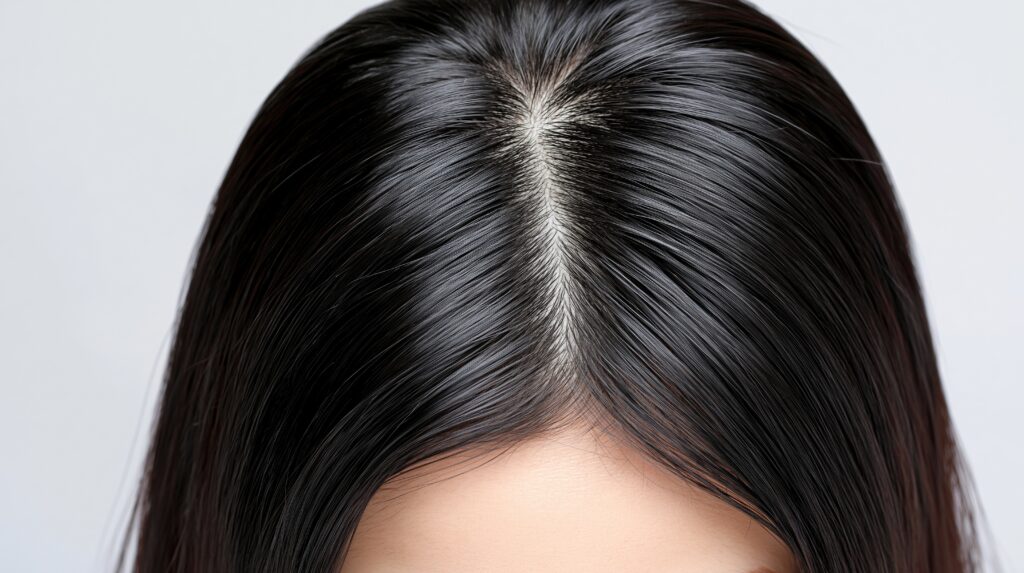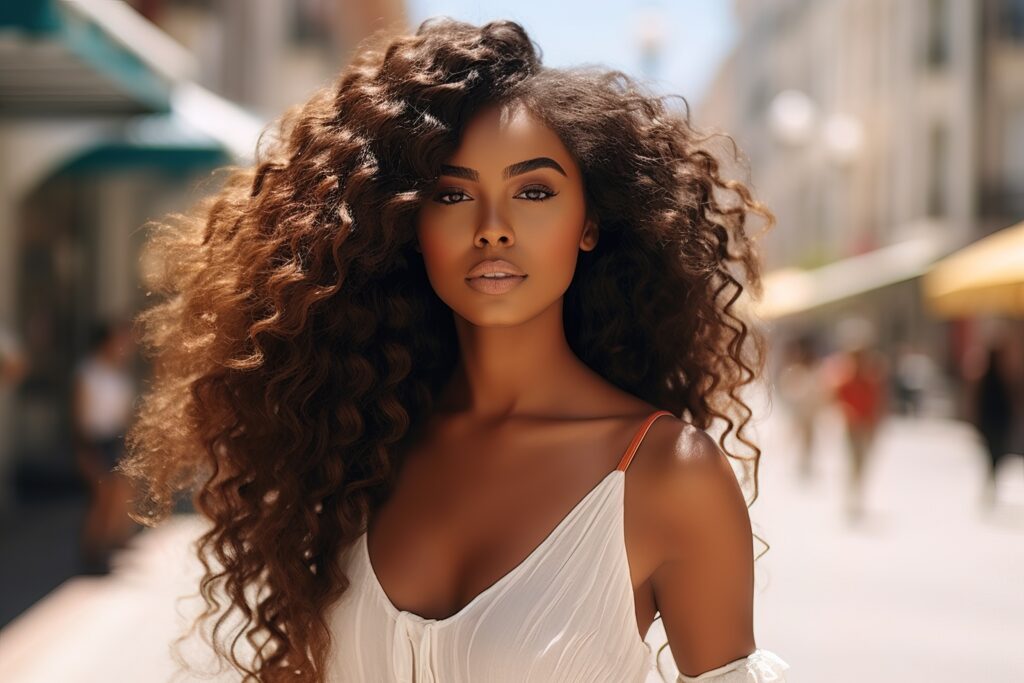
Glass hair is not just a shine trend. It is a surface science challenge.
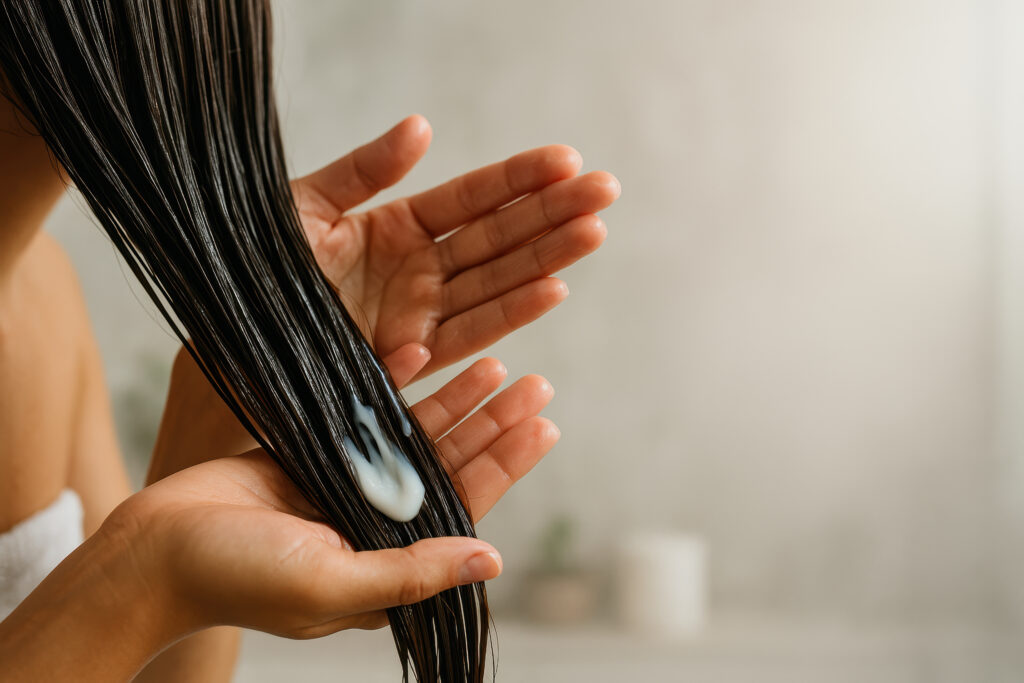
Hair looks glossy when light reflects cleanly from the fiber surface. When the surface is smoother, better aligned, and less disrupted by frizz or damage, light reflects more directly. When the surface is rough, lifted, porous, or disordered, light scatters. The result is dullness, loss of clarity, and a less polished finish.
That is why glass hair fits naturally into the hybrid haircare conversation. A high-shine formula cannot rely on gloss alone. It needs to support surface smoothness, fiber alignment, combability, manageability, softness, and a lightweight sensory finish. For formulators, the goal is not simply to make hair look shiny. The goal is to create the conditions that allow shine to appear.
Glass Hair Starts with Light Reflection
The visual effect of glass hair comes from a simple physical principle: smoother surfaces reflect light more directly. Rougher surfaces scatter light in more directions. On hair, that difference is shaped by the cuticle surface, internal structure, porosity, and fiber alignment.
The BergaCare C-Shine frames gloss as “ordered physics” and connects glossy hair with surface properties, internal structure, and alignment of fibers. It also explains the difference between specular reflection and diffuse reflection, which is useful for formulators because it turns “shine” into something more measurable and technical.
This matters because shine is often treated as a decorative claim. In formulation, it is more useful to think of shine as a visible signal of surface quality. If the fiber surface is smoother, better conditioned, and more aligned, the hair can appear glossier, healthier-looking, and more polished.
BergaCare C-Shine Supports the Gloss Story
BergaCare C-Shine Sun 700/6000/13000 is best positioned as a range of sunflower oil polymers designed to support everyday hair shine. The technical data sheet describes the range as sunflower oil polymers for everyday hair shine, with benefits including high refractive index, film-forming and gloss-enhancing performance, natural sunflower feedstock, EU origin, and several molecular weights depending on hair type.
For formulators, this range has a clear job: support the optical side of glass hair by improving gloss and surface finish while also supporting care, lightness, and manageability. The range structure is important because not every formula or hair type needs the same level of substantivity.
The TDS notes that the higher the viscosity, the higher the substantivity to hair. For thinner or straight hair, grades 700 or 6000 are recommended. For thicker or curly/kinky hair, grades 6000 or 13000 are recommended. This makes the BergaCare C-Shine range useful for building shine concepts across different formats, textures, and consumer needs.
The range is also practical from a formulation standpoint. It is oil-soluble, can be used in rinse-off and leave-in formats, and is recommended at 1–8% in conditioners and emulsions and 0.5–1% in shampoos. Applications include shampoos, conditioners, masks, leave-in serums, and scalp treatments.
AURIST™ AGC Adds Conditioning and Manageability
Glass hair also requires control. If the hair is hard to comb, poorly aligned, fluffy, or difficult to manage, shine becomes harder to maintain. That is where AURIST™ AGC adds another useful angle.
AURIST™ AGC is described as a readily biodegradable alpha-glucan cationic polysaccharide with skin and hair conditioning benefits. Hair benefits include improved combability, manageability, glossiness, fluffiness, and heat protection. Also notable are formulation benefits such as no viscosity increase, clear format compatibility, spray format suitability, no nozzle clogging, and no pH adjustment requirement.
AURIST™ AGC should be positioned as the conditioning and manageability support technology. It helps connect the glass hair story to functional haircare performance: easier combing, better control, smoother appearance, and more flexible format development.
This is especially relevant for leave-in conditioners, styling sprays, mousses, serums, emulsions, rinse-off conditioners, and clear formats. The ingredient supports the practical side of glass hair: not just high shine, but hair that is easier to align, style, and manage.
Lightweight Sensory Polish Still Matters
A formula can deliver shine and still fail if the hair feels greasy, sticky, or coated. Glass hair needs polish, but it also needs movement.
Natura-Tec Plantsil™ XLite fits this role as a lightweight silicone-feel alternative. It can help support slip, softness, shine, and a smoother sensory profile without leaning into a heavy finish. In glass hair formats, this is valuable because high-shine formulas often risk feeling oily or overloaded.
This type of sensory support can be especially useful in serums, leave-ins, glossing creams, lightweight masks, and treatment-style products. The goal is to help the formula feel polished without making the hair feel weighed down.
Fiber Care Helps Shine Look More Credible
Shine is often interpreted by consumers as a sign of healthy-looking hair. That means a glass hair formula can benefit from ingredients that support the broader appearance of fiber quality.
Kalichem Kerashaft ALAB can help support this side of the story through benefits tied to shine, combability, frizz reduction, and breakage-resistance positioning. In a glass hair concept, it helps connect surface polish with manageability and healthier-looking fiber.
BGT Hair-KPro-L can also support the care-forward side of the formula. It gives formulators a way to connect shine and smoothness with fiber-care positioning, especially in products designed around stronger-feeling, healthier-looking hair.
Together, these ingredients help prevent the glass hair story from becoming only cosmetic shine. They support the idea that a polished finish should also be tied to better-feeling, more manageable hair.
Hydration Supports Softer, Smoother Hair Feel
Hydration remains useful in a glass hair concept because consumers often connect hydration with softness, flexibility, and healthy-looking appearance.
Givauda+n PrimalHyal™ Hydra can support this hydration-led direction. It brings skincare-inspired haircare logic into formulas where softer feel, smoother appearance, and fiber comfort are part of the product story.
The strongest claim direction is not that hydration alone creates glass hair. The stronger formulation story is that hydration-focused technologies can support the overall feel and care experience of a high-shine product.
The Best Glass Hair Formulas Combine Optics and Feel
Glass hair works when the formula supports both how hair looks and how it behaves.
A strong formula may combine a gloss-enhancing range such as BergaCare C-Shine Sun 700/6000/13000, a conditioning biopolymer such as AURIST™ AGC, a lightweight sensory modifier such as Plantsil™ XLite, and fiber-care support from technologies such as Kerashaft ALAB, PrimalHyal™ Hydra+, or Hair-KPro-L.
Each ingredient has a distinct job. One supports shine and light reflection. One supports combability and manageability. One improves slip and sensory polish. Others help support fiber quality, hydration, and care-forward positioning.
That is the logic of hybrid haircare: not more ingredients for the sake of complexity, but a more complete system built around a clear formulation target.
The Competitive Advantage: Shine with Substance
Glass hair is visually powerful, but formulators need to build it carefully. The strongest products will not simply add gloss. They will help support the surface conditions that make gloss visible: smoothness, alignment, combability, softness, frizz control, and lightweight sensory appeal.
For brand teams, this creates a more credible story around shine as a signal of hair quality. For R&D teams, it creates a more useful formulation map. Instead of treating shine as a finish claim, formulators can build it through surface science, conditioning performance, and fiber-care strategy.
That is glass hair, built scientifically: controlled light reflection, smoother fiber feel, and a polished finish that still moves.
Ready to formulate for shine, smoothness, and healthier-looking hair? Contact Deveraux Specialties to discuss supplier technologies for your next glossing serum, leave-in conditioner, shine spray, smoothing cream, or treatment-style haircare format.
Resources
Berg+Schmidt. (2026).
BergaCare C-Shine: Gloss: It’s Ordered Physics.
Berg+Schmidt Care Ingredients.
Berg+Schmidt. (2026).
BergaCare C-Shine Sun 700/6000/13000 Technical Data Sheet.
Sunflower Oil Polymers for Everyday Hair Shine.
IFF. (2025).
AURIST™ AGC Customer Presentation.
IFF Personal Care.
IFF. (2025).
AURIST™ AGC One Pager.
Multifunctional Combability.
Nagase, S. (2019).
Hair Shine and Gloss in Cosmetic Science.
Cosmetics.
Cosmetics & Toiletries. (2026).
Hair Shine: A Slow Aging Signal from 25 to 55.
Cosmetics & Toiletries / LinkedIn.
Citation Note
The sources selected for this article support the technical argument behind glass hair formulation: shine depends on surface smoothness, fiber alignment, and controlled light reflection; gloss can be measured instrumentally; and conditioning technologies can support combability, manageability, smoothness, and visible shine. Product-specific supplier resources should be used to confirm recommended use levels, formulation guidance, regional availability, and substantiation for final claims.