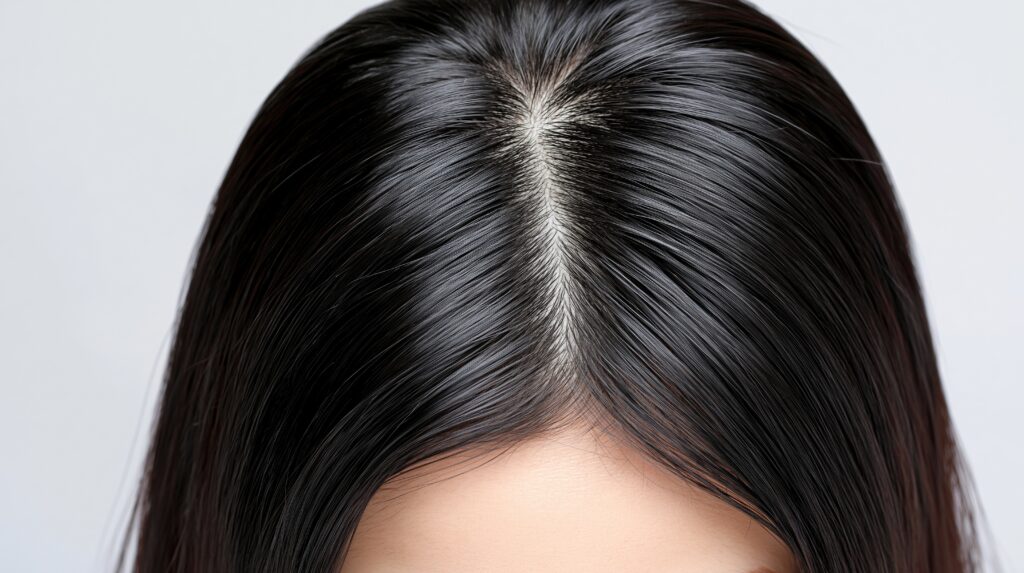
Frizz control is not just a styling problem. It is a formulation problem.
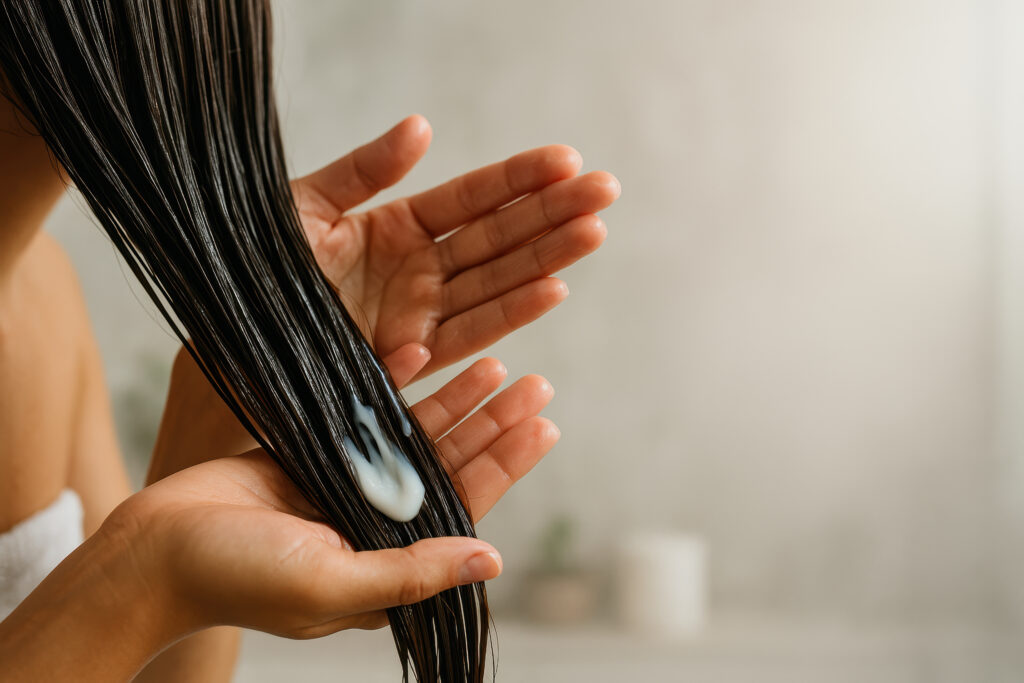
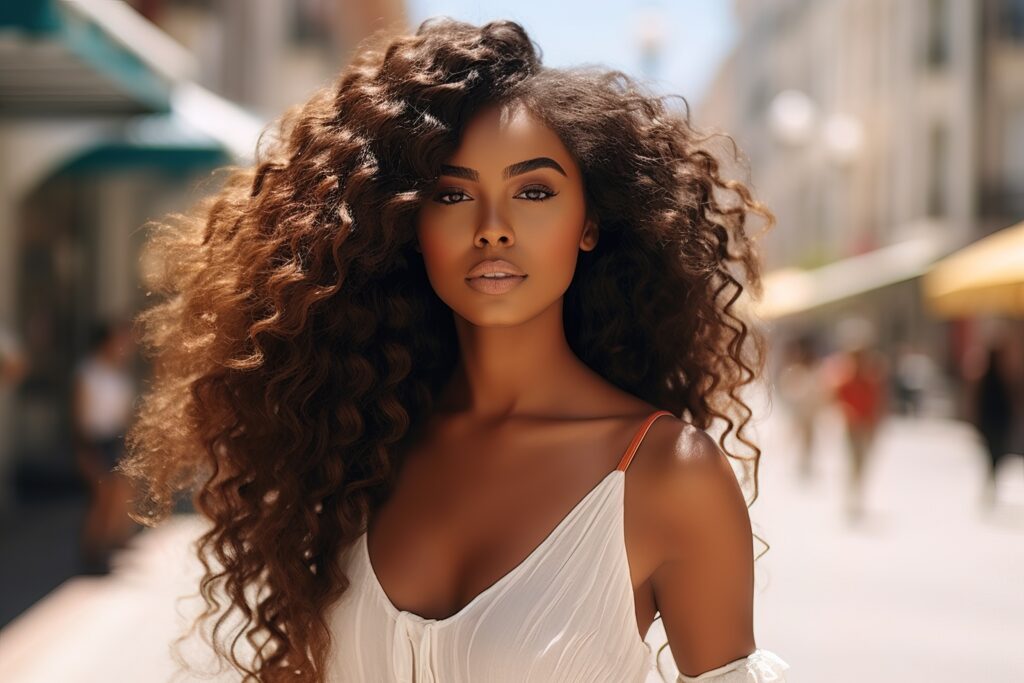
When hair looks frizzy, the issue is often a mix of fiber condition, surface roughness, humidity response, friction, and styling disruption. A product may need to smooth the hair surface, improve slip, reduce flyaways, support shine, and help the style hold its shape — without making the hair feel stiff, sticky, greasy, or coated.
That is why anti-frizz haircare fits naturally into the hybrid haircare conversation. The best formulas are no longer only about control. They are about control with care, structure with movement, and smoothness without a heavy finish.
Anti-Frizz Haircare Starts at the Fiber Surface
Frizz is visible at the surface, but it starts with how individual hair fibers interact with moisture, friction, and each other. When the fiber surface is rough or lifted, hair can appear less aligned, less reflective, and more difficult to manage.
For formulators, this means an anti-frizz product needs more than a simple coating effect. It should help reduce friction, improve combability, support cuticle smoothing, and create a more uniform finished look.
That is where conditioning systems, film formers, lightweight emollients, and sensory modifiers become important. Each ingredient group plays a different role, and the formula works best when those roles are clearly defined.
Conditioning and Sensory Balance Help Create Control
Anti-frizz formulas often need some type of structure, but that structure does not have to come from a rigid or heavy styling system. The formula needs to support smoother alignment, reduce flyaways, and help the finished style feel more controlled while still preserving movement and softness.
This is where a balanced ingredient strategy matters. Conditioning systems, sensory modifiers, hydration-focused technologies, and fiber-care actives each contribute something different. Together, they can help formulators address anti-frizz performance without relying on a coated, stiff, or overly heavy finish.
This is especially relevant in leave-in styling creams, curl creams, smoothing serums, blow-dry products, and anti-frizz treatments. These formats need to provide control, but they also need to remain touchable. The challenge is not simply to hold the hair in place. The challenge is to support smoothness, manageability, and feel at the same time.
Lightweight Sensory Performance Matters
Many anti-frizz products fail because they solve one problem and create another. They reduce frizz, but leave the hair heavy. They add shine, but feel greasy. They improve control, but reduce movement.
This is where Natura-Tec Plantsil™XLite can play an important role. As a silicone-feel alternative, Plantsil™ can help support slip, softness, shine, and a smoother sensory profile in haircare formulas. For hybrid anti-frizz products, this type of ingredient helps bridge the gap between performance and daily usability.
A smoother feel is not just a consumer preference. It affects how the product distributes, how the hair behaves during styling, and how the finished formula is perceived after use. In anti-frizz haircare, elegance matters because repeat use depends on both visible performance and touch.
Hydration Can Support a Smoother Haircare Story
Hydration is often discussed in scalp care, but it also has a role in the broader anti-frizz conversation. Dry-feeling or rough-feeling hair can be harder to manage, and consumers often associate hydration with softness, smoothness, and a healthier-looking finish.
Givaudan PrimalHyal™ Hydra+ supports this hydration-led direction. As a cationic hyaluronic acid technology designed for skin and hair applications, it can help formulators bring skincare-inspired hydration logic into haircare formats.
In an anti-frizz concept, hydration should be framed carefully. The goal is not to imply that one ingredient “fixes” frizz by itself. The stronger formulation story is that hydration-focused technologies can support softness, fiber feel, and the overall sensory experience of a smoothing or leave-in product.
Fiber Care Adds Depth to Frizz-Control Positioning
Frizz-control products can also benefit from care-focused actives, especially when the product is positioned around healthier-looking, more resilient hair. Consumers often see frizz, dullness, dryness, and damage as connected problems, even when the technical causes are different.
BGT Hair-KPro-L can help support the care side of this conversation by bringing a fiber-focused active angle to anti-frizz and smoothing formats. It fits well in leave-in treatments, smoothing serums, masks, and repair-positioned styling products where the formula is meant to support the look and feel of healthier hair.
Kalichem Kerashaft ALAB can support care-forward anti-frizz concepts by helping improve combability, shine, frizz reduction, and resistance to breakage in rinse-off, leave-on, and styling formats.
The Best Anti-Frizz Formulas Balance Control and Feel
Anti-frizz formulation is a balancing act. Too little structure, and the product may not control flyaways or humidity-related disruption. Too much structure, and the hair may feel stiff or coated. Too much emollience, and the formula may feel heavy. Too little conditioning, and the product may not deliver the softness and combability consumers expect.
This is why a hybrid approach is useful. A well-designed anti-frizz formula can combine film formation, conditioning, lightweight emollience, hydration, and fiber-care positioning in one product format.
For brand teams, this creates a stronger story around smoother, shinier, more manageable hair. For R&D teams, it creates a more practical formulation map. Each ingredient has a reason to be there, and each function supports the final benefit.
The Competitive Advantage: Smoothness Without Compromise
Modern anti-frizz haircare is not about forcing hair into place. It is about helping hair look smoother, feel better, and remain more manageable without sacrificing movement, softness, or sensory appeal.
That is the new logic of anti-frizz formulation: control the visible disorder, support the fiber surface, and keep the final feel light enough for real routines.
Hybrid haircare gives formulators a better way to approach this challenge. Instead of building a formula around one benefit, it allows anti-frizz products to smooth, condition, support shine, improve feel, and contribute to care-focused positioning in one smarter format.
Ready to build smoother, lighter anti-frizz formulas? Contact Deveraux Specialties to discuss supplier technologies for your next leave-in, curl cream, smoothing serum, blow-dry product, or treatment-style format.
Resources
Fernandes, C., et al. (2023).
On Hair Care Physicochemistry: From Structure and Degradation to Novel Biobased Conditioning Agents.
International Journal of Molecular Sciences.
Fernández-Peña, L., et al. (2020).
Physicochemical Aspects of the Performance of Hair Conditioning Formulations.
Cosmetics.
Ferrar, M., et al. (2025).
High Humidity Mechanical Properties of Film Forming Polymers for Personal Care Applications.
Advances in Polymer Technology.
Safic-Alcan. (2026).
Safic-Alcan.
Citation Note
The sources selected for this article support the technical argument behind anti-frizz hybrid haircare: the relationship between conditioning systems, reduced fiber friction, combability, softness, shine, and manageability; the role of film-forming polymers in humidity-related personal care performance; and the broader industry shift toward multifunctional haircare formats that combine care, styling, and sensory benefits. Product-specific supplier resources should be used to confirm recommended use levels, formulation guidance, regional availability, and substantiation for final claims.