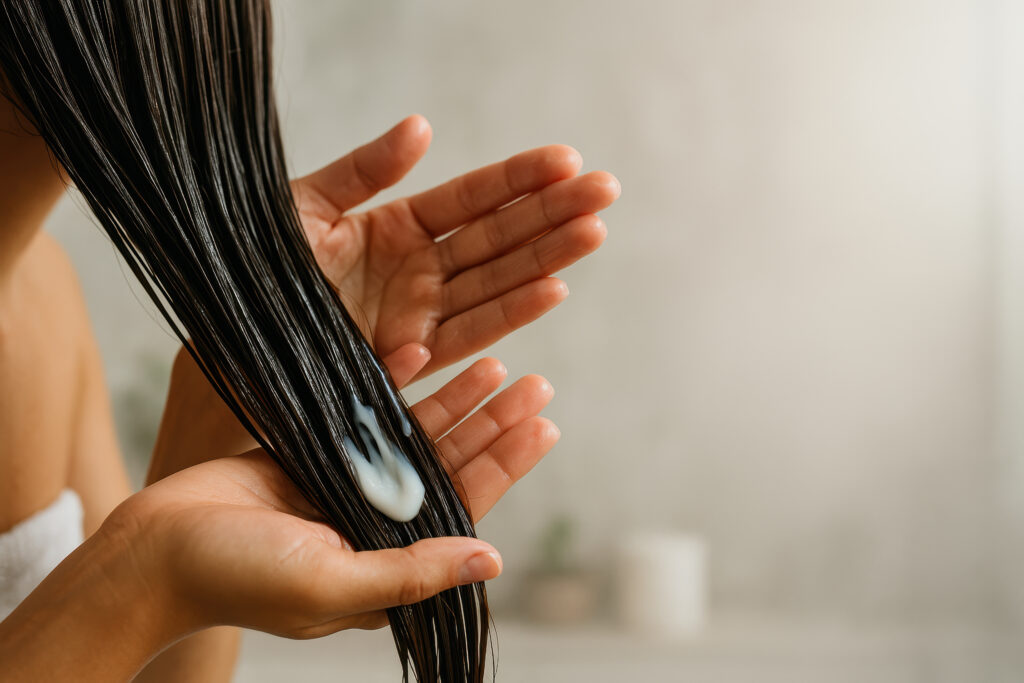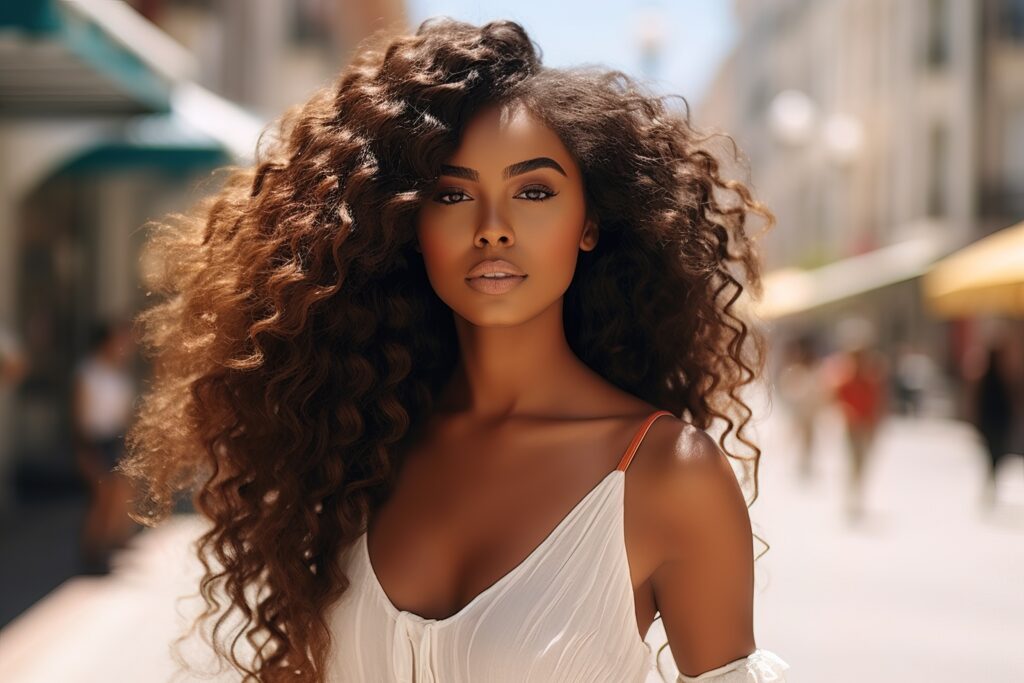
Repair-focused haircare has to do more than sound active. It has to feel good enough for regular use.
Consumers want stronger-feeling, healthier-looking hair, but they do not want formulas that leave the fiber heavy, coated, greasy, stiff, or flat. That creates a clear challenge for formulators: how do you build repair-positioned products that support fiber care while still delivering softness, shine, movement, and a clean sensory finish?
That is where hybrid haircare becomes useful. A modern repair formula is not only about damage care positioning. It also needs to support combability, smoothness, frizz control, hydration, shine, and lightweight conditioning.
Hair Fiber Care Starts with a Better Surface
Damaged-feeling hair often shows up as roughness, dullness, poor combability, frizz, and breakage-prone appearance. Even when the formula is built around a deeper care story, the consumer evaluates the result through the surface: how the hair feels, moves, reflects light, and responds to styling.
For formulators, this means repair-focused products need to address both care and finish. A strong formula may include fiber-focused actives, conditioning agents, sensory modifiers, film formers, and hydration-led ingredients. Each material should have a defined job.
The goal is not to make the formula heavier. The goal is to make it more precise.
Fiber-Focused Actives Give Repair Claims More Structure
A repair-positioned product needs more than softness alone. It needs ingredients that help support the look and feel of stronger, healthier hair.
BGT Hair-KPro-L is a strong fit for this part of the hybrid haircare series because it brings a fiber-care active angle to formulas designed around hair repair, resilience, and healthier-looking hair. In leave-ins, masks, treatments, and fortifying sprays, this type of ingredient can help support a more technical repair story.
Kalichem Kerashaft ALAB also fits naturally in repair-focused haircare because it supports benefits tied to shine, combability, frizz reduction, and resistance to breakage. That makes it useful for formulas that need to bridge care, manageability, and visible fiber quality.
These ingredients help move the formula beyond simple surface conditioning. They give R&D and brand teams a clearer way to connect ingredient function with the product’s repair-positioned message.
Lightweight Conditioning Controls the User Experience
Repair products often fail when they feel too heavy for regular use. A mask may feel rich, but a leave-in, serum, spray, or styling treatment must balance care with movement. If the product makes hair feel coated or flat, consumers may not use it often enough to see the intended benefit.
Natura-Tec Plantsil™ XLite can help support this balance. As a lightweight silicone-feel alternative, it can contribute softness, slip, shine, and a smoother sensory profile without leaning into a heavy finish.
This is especially useful in hybrid repair formats where the product needs to condition and improve feel while staying elegant enough for daily or frequent use. In repair haircare, sensory performance is not secondary. It is part of the product’s success.
Hydration Helps Support Softer, More Flexible Hair Feel
Hydration-led language is now common in skincare, and it is increasingly relevant in haircare as well. Consumers often connect hydration with softness, flexibility, comfort, and healthier-looking appearance.
Givaudan PrimalHyal™ Hydra+ supports this direction as a cationic hyaluronic acid technology designed for skin and hair applications. In repair-focused haircare, it can help formulators bring a hydration story into formats such as leave-ins, scalp-and-hair treatments, lightweight lotions, and conditioning sprays.
The strongest positioning is not that hydration alone repairs damage. The stronger story is that hydration-focused technology can support the overall feel, softness, and care-forward experience of a repair-positioned formula.
Care-Forward Smoothing Supports the Repair Story
Repair-focused products are often expected to make hair look better immediately. That means softness, shine, frizz reduction, combability, and manageability still matter.
This is where Kalichem Kerashaft ALAB and Natura-Tec Plantsil™ XLite help reinforce the repair story from two directions. Kerashaft ALAB supports benefits tied to combability, shine, frizz reduction, and breakage-resistance positioning. Plantsil™ XLite supports a lighter sensory finish with softness, slip, and shine.
Together, these technologies help formulators build repair-positioned products that feel polished without feeling heavy.
The Best Repair Formulas Balance Care and Feel
Repair-focused haircare is a balance between technical performance and sensory acceptance. Too little conditioning, and the product may not feel meaningful. Too much conditioning, and the hair may feel heavy. Too much care positioning without enough sensory refinement, and the formula may not earn repeat use.
A hybrid approach gives formulators a better map. Fiber-focused actives can support repair positioning. Lightweight emollients can improve softness and shine. Hydration-led technologies can support a more care-forward feel. Conditioning systems can help improve combability and manageability.
Each ingredient should answer a specific formulation need.
The Competitive Advantage: Repair That Feels Usable
The strongest repair-positioned products are not the heaviest products. They are the ones consumers can use consistently because they deliver care benefits without compromising feel.
For brand teams, this creates a clearer product story: stronger-feeling, healthier-looking hair with a lighter sensory finish. For R&D teams, it creates a more practical formulation strategy: build repair performance through a system of ingredients, not a single overloaded claim.
That is the next step in hybrid haircare: repair that supports the fiber, improves the finished feel, and stays light enough for real routines.
Ready to build repair-focused haircare that still feels light? Contact Deveraux Specialties to discuss supplier technologies for your next leave-in, treatment, mask, fortifying spray, or care-focused styling format.
Resources
Fernandes, C., et al. (2023).
On Hair Care Physicochemistry: From Structure and Degradation to Novel Biobased Conditioning Agents.
International Journal of Molecular Sciences.
Fernández-Peña, L., et al. (2020).
Physicochemical Aspects of the Performance of Hair Conditioning Formulations.
Cosmetics.
Draelos, Z. D. (2015).
Hair Care: An Illustrated Dermatologic Handbook.
CRC Press.
Robbins, C. R. (2012).
Chemical and Physical Behavior of Human Hair.
Springer.
Safic-Alcan. (2026).
Safic-Alcan.
Citation Note
The sources selected for this article support the technical argument behind lightweight repair-focused haircare: the relationship between conditioning systems, reduced fiber friction, combability, softness, shine, and manageability; the structural and surface factors that contribute to damaged-feeling hair; and the broader industry shift toward multifunctional haircare formats that combine care, sensory performance, and styling benefits. Product-specific supplier resources should be used to confirm recommended use levels, formulation guidance, regional availability, and substantiation for final claims.