Your Skin Has a Long Day, Too
We tend to think of recovery in terms of sore muscles, mental fatigue, or a long workday. But skin is also responding to what happens around—and within—us throughout the day.
Sunlight. Environmental exposure. Temperature changes. Cleansing. Lack of sleep. Psychological stress. Even the cumulative effects of our daily routines can influence the biological systems responsible for maintaining skin comfort, hydration, and barrier function.
That makes recovery an interesting formulation concept. Rather than focusing only on correcting a visible concern, recovery-oriented skin care asks a broader question:
What does skin need after spending all day adapting?
Stress Is More Than a Feeling
The skin and nervous system communicate through interconnected endocrine, immune, and neurological pathways. Psychological stress activates the hypothalamic-pituitary-adrenal axis and increases production of stress hormones such as cortisol.
Research has associated elevated psychological stress with changes in epidermal lipids and structural proteins, reduced stratum corneum hydration, increased transepidermal water loss, and impaired barrier recovery.
In other words, the phrase “stressed skin” has a biological foundation.
This is one reason the skin-brain connection has become increasingly relevant to cosmetic science. Skin is not simply a passive covering. It participates in neuroendocrine signaling and responds to both internal and external stress signals.

The Outside World Adds Another Layer
While psychological stress can influence skin from within, the skin is simultaneously managing stressors from the outside.
Ultraviolet radiation is one of the best-understood examples. UV exposure can increase reactive oxygen species and inflammatory signaling while contributing to biological processes associated with photoaging.
Environmental pollution, changing humidity, temperature fluctuations, and other external factors can add to the cumulative challenge.
Visible light, including blue light, has also received considerable attention. Laboratory studies demonstrate that sufficiently high levels of visible light can generate reactive oxygen species in skin cells.
However, context matters.
Controlled laboratory exposure should not automatically be interpreted to mean that ordinary daily screen use is causing dramatic skin damage. The more useful formulation takeaway is broader:
Skin encounters multiple sources of environmental and oxidative stress throughout the day.

Recovery Begins with the Barrier
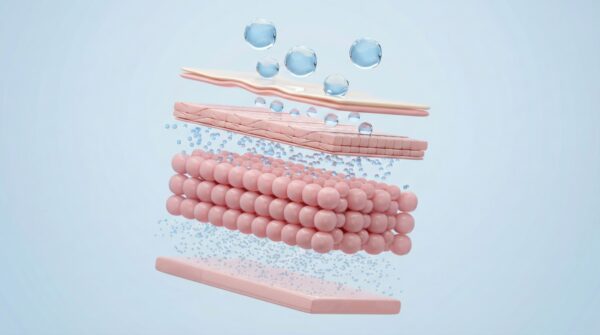
The outermost layer of skin, the stratum corneum, performs an important balancing act.
It helps reduce excessive water loss while protecting underlying tissue from the surrounding environment.
When barrier function is challenged, skin may lose water more readily and can feel less comfortable, dry, tight, or more reactive to environmental conditions.
Research examining psychological stress has even demonstrated slower barrier recovery following controlled barrier disruption.
For formulators, that creates a useful framework for recovery-focused skin care:
💧 Maintain hydration — Help support water balance and reduce the dry, tight feeling associated with moisture loss.
🛡️ Support barrier condition — Formulate with the integrity and function of the skin’s protective outer layer in mind.
🌿 Promote skin comfort — Address the visible and sensory signs associated with stressed or uncomfortable skin.
✨ Support resilience — Help skin maintain a healthy-looking, well-conditioned appearance despite repeated daily challenges.
Not every formula needs to address every pathway at once. The important step is determining which consequences of daily stress are most relevant to the intended consumer.
Recovery Is Not About Erasing the Day Overnight
The language we use around recovery matters.
Skin is constantly renewing itself, but cosmetic products should not be positioned as though they can erase an entire day’s biological stress overnight.
A more scientifically useful approach is to formulate around measurable cosmetic needs that may accompany stressed skin:
💧 Hydration — Supporting moisture levels and a more supple skin feel.
🧱 Barrier support — Helping maintain the condition of the skin’s protective outer layers.
🌱 Comfort — Reducing the dry, tight, or uncomfortable sensations consumers may associate with stressed skin.
🌸 Visible calm — Supporting a more balanced, even-looking appearance.
🔄 Balance — Helping maintain skin condition as it encounters repeated environmental and lifestyle challenges.
✨ Healthy-looking skin — Supporting the qualities consumers associate with well-rested, comfortable, resilient skin.
This distinction keeps recovery claims grounded in cosmetic science while still leaving considerable room for formulation innovation.
Think of Recovery as Part of the Routine
Consumers already understand the concept of recovery in other parts of wellness.
🏃 After exercise, we recover. Muscles are stretched, cooled down, and given time to rest.
💧 After physical activity, we rehydrate. Water and electrolytes become part of the recovery conversation.
😴 After a demanding day, we sleep. Rest allows the body to reset before the next day begins.
🧘 After periods of stress, we unwind. Evening routines help create a transition between activity and rest.
Skin care can follow a similar logic.
The opportunity is not necessarily to add another step to an already crowded routine. It is to formulate products with the understanding that skin spends the entire day responding to its environment.
The day creates the challenge. Recovery-focused formulation considers what comes next.
Building a Recovery-Focused Formula?
Our team can help you explore ingredient technologies and formulation strategies
for hydration, barrier support, skin comfort, and resilience.
Want More Formulation Insights?
Get ingredient spotlights, formulation concepts, technical education,
and new personal care ideas delivered directly to you.
Resources
Choe SJ, et al. 2018. Psychological Stress Deteriorates Skin Barrier Function by Activating 11β-Hydroxysteroid Dehydrogenase 1 and the HPA Axis. Scientific Reports.
https://www.nature.com/articles/s41598-018-24653-z
Maarouf M, et al. 2019. The Impact of Stress on Epidermal Barrier Function: An Evidence-Based Review. British Journal of Dermatology.
https://pubmed.ncbi.nlm.nih.gov/30614527/
Chen Y, Lyga J. 2014. Brain-Skin Connection: Stress, Inflammation and Skin Aging. Inflammation & Allergy Drug Targets.
https://pmc.ncbi.nlm.nih.gov/articles/PMC4082169/
Krutmann J, et al. 2017. The Skin Aging Exposome. Journal of Dermatological Science.
https://pubmed.ncbi.nlm.nih.gov/27720464/
Schütz R, et al. 2021. Blue Light and the Skin. Current Problems in Dermatology.
View Publication