The Science of Skin Comfort: What Makes Skincare Feel Good?
A moisturizer can deliver measurable hydration and still leave the skin feeling sticky, greasy, or uncomfortable. Another formulation may feel exceptionally smooth during application but provide insufficient moisture retention.
Why the difference?
Skin comfort is influenced by more than hydration alone. It reflects the interaction between the skin’s physical condition, the formulation’s properties, and how those properties are perceived during and after application.
For cosmetic formulators, understanding this relationship is essential to developing products that deliver both functional performance and a satisfying sensory experience.

🛡️ Skin Comfort Begins at the Barrier
The stratum corneum, the outermost layer of the epidermis, plays a central role in maintaining skin hydration and protecting against external irritants.
Its structure is often compared to bricks and mortar. Flattened skin cells form the bricks, while intercellular lipids help maintain cohesion and limit excessive water loss.
When this protective structure functions effectively, the skin is better able to retain moisture and maintain a smooth, flexible surface.
When barrier function is compromised, increased transepidermal water loss (TEWL) may contribute to dryness, roughness, and sensations of tightness.
The important distinction: Hydration and comfort are related, but they aren’t interchangeable. A formulation must also account for how its ingredients interact with the skin’s surface.
💧 Hydration Is Only Part of the Equation
Moisturizing formulations commonly rely on three complementary mechanisms:
💦 Humectancy: Humectants attract and retain water, helping maintain hydration within the stratum corneum.
🌿 Emolliency: Emollients soften and smooth the skin’s surface, influencing flexibility and tactile properties.
🛡️ Occlusion: Occlusive materials form a surface layer that helps reduce water evaporation.
These mechanisms work together, but their proportions influence the finished product’s sensory characteristics.
A formulation designed primarily for moisture retention may leave a more noticeable residual film. Another designed for rapid spreading and minimal residue may require careful adjustments to deliver sufficient moisturization.
The goal isn’t simply to maximize one mechanism. It’s to balance them according to the product’s intended use.
✋ Why Surface Friction Matters
Skin comfort is also connected to how the skin feels when touched.
The perception of smoothness involves friction between the skin and contacting surfaces, including fingertips, clothing, and other areas of skin.
Cosmetic formulations can change these interactions by altering surface lubrication, roughness, and the characteristics of the residual film.
Research on topical creams has shown that sensory properties can be related to measurable physical characteristics. Rheological measurements help explain aspects of application, while tactile friction measurements provide insight into afterfeel.
For formulators, several physical properties deserve attention:
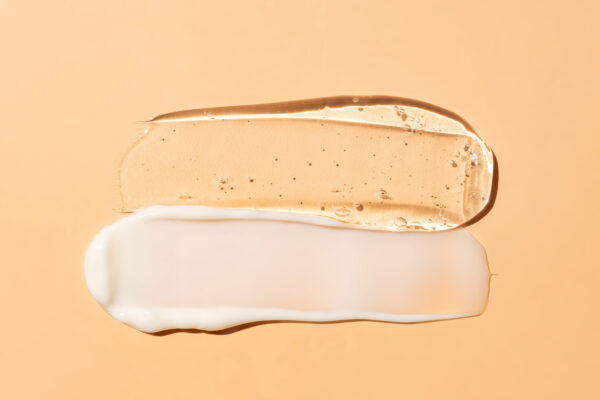
✨ Spreadability: How easily a product distributes across the skin.
🧴 Lubrication: How the formulation changes friction during application.
🤲 Residual feel: Whether the product leaves a smooth, tacky, oily, or powdery finish.
⏱️ Sensory persistence: How those sensations change after application.
A pleasant sensory experience isn’t necessarily the result of using more emollients. Their selection, concentration, and interaction with the overall formulation all matter.
⏱️ The Difference Between Immediate Feel and Lasting Comfort
The sensory experience of a skincare product changes over time.
Three stages are especially useful to evaluate:
🧴 During application: Consumers encounter spreadability, glide, and resistance.
✨ Immediately afterward: They may notice cooling, softness, tackiness, or a residual coating.
💧 Over time: Moisture retention, surface feel, and continued comfort become more relevant.
A product that feels excellent during application may leave an undesirable residue. Conversely, a formulation that feels rich initially may settle into a comfortable finish.
For formulators, evaluating multiple stages of application provides more meaningful information than assessing texture from the container alone.
This distinction helps explain why two products with similar moisturizing objectives can produce noticeably different consumer experiences.
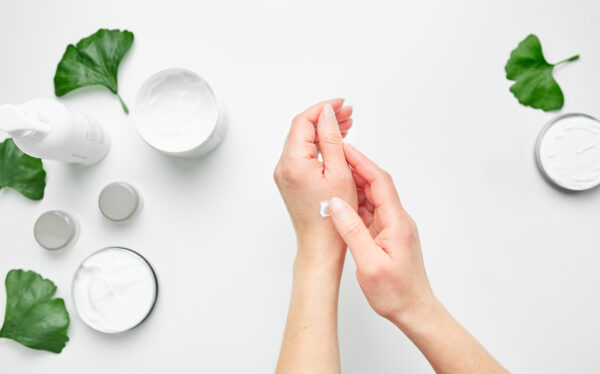
🔬 Formulating with Comfort in Mind
Skin comfort can be approached as a formulation objective that combines measurable physical properties with sensory assessment.
Several considerations are particularly useful during development:
🛡️ Barrier compatibility: Select ingredients and formulation conditions appropriate for the intended skin type and application.
💧 Hydration balance: Consider how humectant, emollient, and occlusive mechanisms work together.
✋ Surface behavior: Evaluate friction, lubrication, and the characteristics of the residual film.
👩🔬 Sensory testing: Assess the formulation during application and after it has settled on the skin.
📊 Performance testing: Use suitable measurements, such as skin hydration and TEWL, to distinguish perceived comfort from demonstrated moisturizing performance.
A combination of instrumental testing and sensory assessment offers a more complete understanding than either approach alone.
🌿 The Science Behind a Better Skincare Experience
The most effective skincare formulation isn’t necessarily the richest, lightest, or fastest-absorbing product.
It’s one whose physical properties, moisturizing mechanisms, and sensory characteristics are appropriate for its intended use.
Understanding the science of skin comfort helps formulators develop products that do more than perform a technical function. It helps them create skincare experiences that feel appropriate, consistent, and enjoyable.
Because how a product feels is part of how consumers experience its performance.
Coming Wednesday in Part Two of The Feel-Good Formula: Beyond the First Touch. 🔬
What happens after a skincare product makes its first impression? We’ll explore how spreadability, glide, and residual afterfeel influence the sensory experience, and why the way a formulation behaves on the skin matters just as much as how it feels during application.
Formulating for Skin Comfort?
Explore ingredient technologies for soothing skincare, barrier support, hydration, and formulations designed to deliver a comfortable sensory experience.
Discover More Formulation Science
Get cosmetic science insights, ingredient innovations, and formulation ideas delivered to your inbox.
Resources:
- Rawlings AV, Harding CR. Moisturization and skin barrier function. Dermatologic Therapy. 2004;17(Suppl 1):43-48.
https://pubmed.ncbi.nlm.nih.gov/14728698/ - Rawlings AV, Canestrari DA, Dobkowski B. Moisturizer technology versus clinical performance. Dermatologic Therapy. 2004;17(Suppl 1):49-56.
https://doi.org/10.1111/j.1396-0296.2004.04s1006.x - Ali A, et al. Relationship between sensorial and physical characteristics of topical creams: A comparative study on effects of excipients. International Journal of Pharmaceutics. 2022;613:121370.
https://pubmed.ncbi.nlm.nih.gov/34952146/ - Akanny E, Kohlmann C. Predicting tactile sensory attributes of personal care emulsions based on instrumental characterizations: A review. International Journal of Cosmetic Science. 2024;46(6):1035-1063.
https://doi.org/10.1111/ics.13004 - Gerken A, et al. Sensory contribution of emollient cascades in skin creams evaluated by CATA analysis. International Journal of Cosmetic Science. 2026.
https://doi.org/10.1111/ics.70123
Citation Note: These resources provide scientific background on skin barrier function, moisturization, emulsion properties, and sensory assessment. Individual formulation performance and cosmetic claims require appropriate testing and substantiation.