Beyond the First Touch: The Science of Skincare Afterfeel
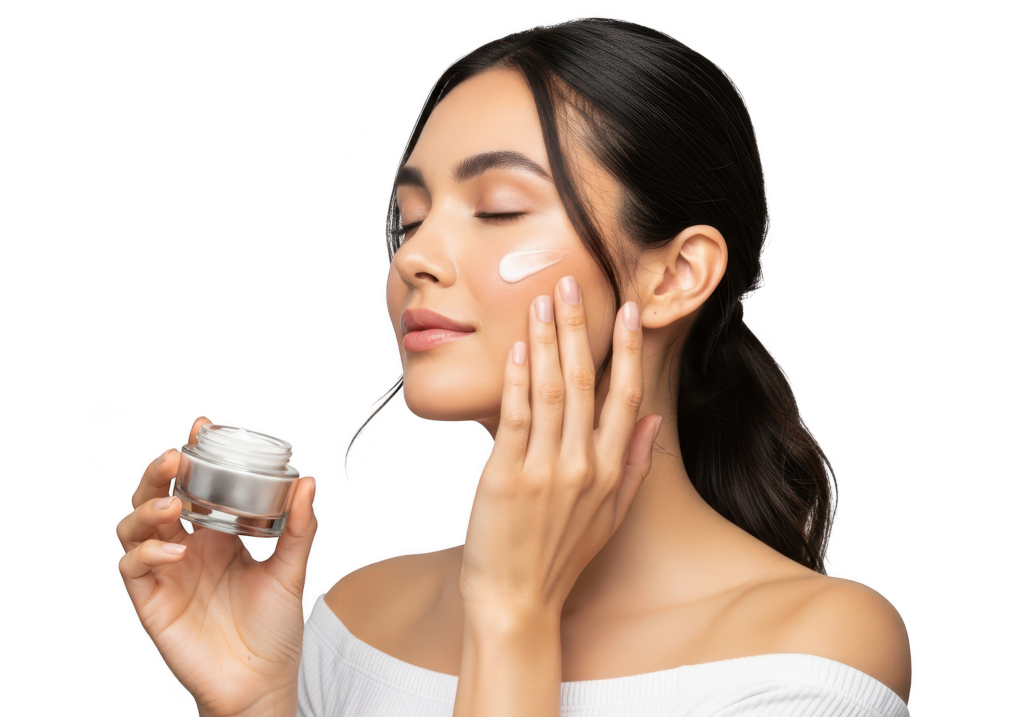
The first few seconds of applying a skincare product can tell us a great deal about its formulation. A cream may feel rich and cushioned, while a lightweight lotion glides effortlessly across the skin.
But what happens after that initial impression?
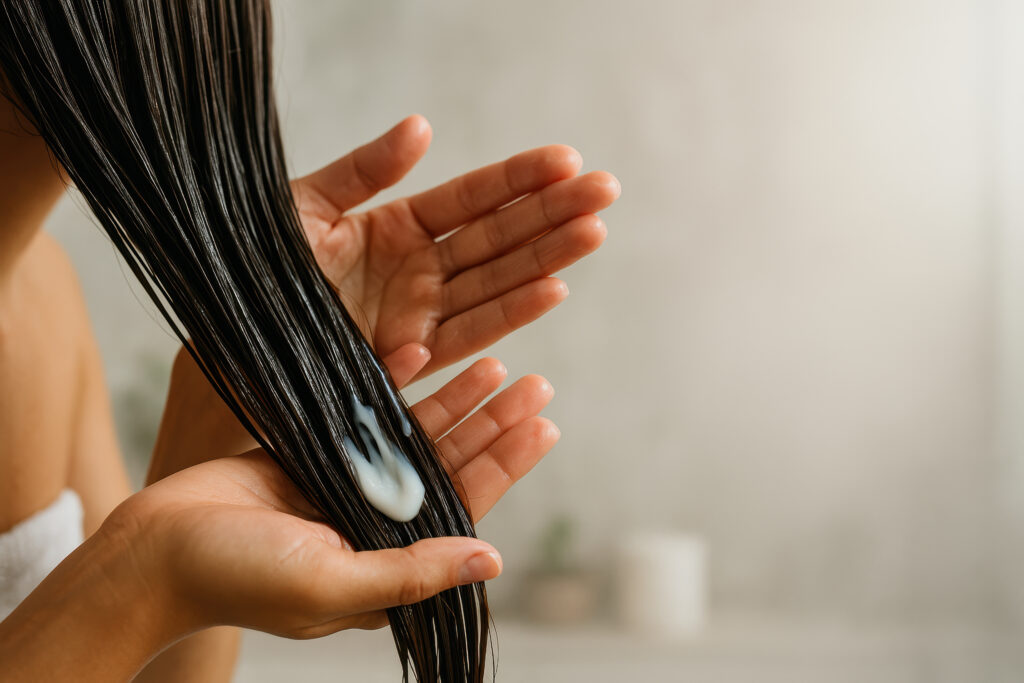
As a formulation spreads, its physical structure changes, its ingredients distribute across the skin, and a residual film may remain. These changes influence whether the product ultimately feels smooth, silky, tacky, powdery, or greasy.
For cosmetic formulators, the sensory experience doesn’t end when the product leaves the container. It evolves throughout application, and understanding that progression is an important part of designing products consumers enjoy using.
✨ First Impressions Begin with Texture
Before a product even touches the skin, its appearance and consistency establish expectations.
A thick cream may suggest richness and cushion, while a fluid serum may communicate lightweight application. However, the viscosity of a formulation at rest doesn’t necessarily predict how it will behave during application.
Many skincare products are shear-thinning, meaning their apparent viscosity decreases when force is applied.
When a consumer rubs a cream between their fingers or spreads it across the face, the mechanical action can make the formulation flow more easily.
This is why a product can maintain its shape inside a jar yet spread smoothly across the skin.
The formulation takeaway: Texture in the container and texture during application are related, but they are not identical.
🧪 Rheology: The Science of How Formulations Flow
Rheology describes how materials flow and deform when subjected to force.
In cosmetic formulation, rheological behavior influences several important characteristics:
🧴 Consistency: How thick or fluid a product appears at rest.
✋ Spreadability: How easily it moves across the skin.
💧 Flow behavior: How its viscosity changes during application.
✨ Cushion: The perception of body or resistance as the product is manipulated.
🔄 Structure recovery: How certain formulations rebuild structure after mechanical stress is reduced.
A formulation’s rheological profile depends on factors such as its dispersed-phase composition, polymer network, emulsification system, and ingredient interactions.
Two creams may have similar measured viscosities at one shear rate yet feel quite different when applied.
That difference illustrates why a single viscosity measurement cannot fully describe sensory performance.
🤲 What Creates Glide and Spreadability?
Glide refers to the ease with which a product moves across the skin during application.
Although the two concepts are related, spreadability and glide aren’t exactly the same.
Spreadability describes how readily a formulation distributes across a surface. Glide involves the tactile resistance experienced while moving that formulation across the skin.
Several properties contribute to these sensations:
🌿 Emollient characteristics: Polarity, viscosity, and chemical structure influence lubrication and spreading behavior.
🔬 Emulsion structure: Droplet properties and the surrounding continuous phase affect how the system responds to movement.
💧 Film behavior: The developing surface layer changes the way skin and fingertips interact.
🧪 Rheological properties: The formulation’s resistance to flow influences application effort.
An elegant formulation balances these characteristics so the product distributes evenly while creating the intended sensory experience.
A fast-spreading product isn’t automatically superior to a slower-spreading one. The desired behavior depends on whether the product is designed to feel lightweight, rich, cushioned, or protective.
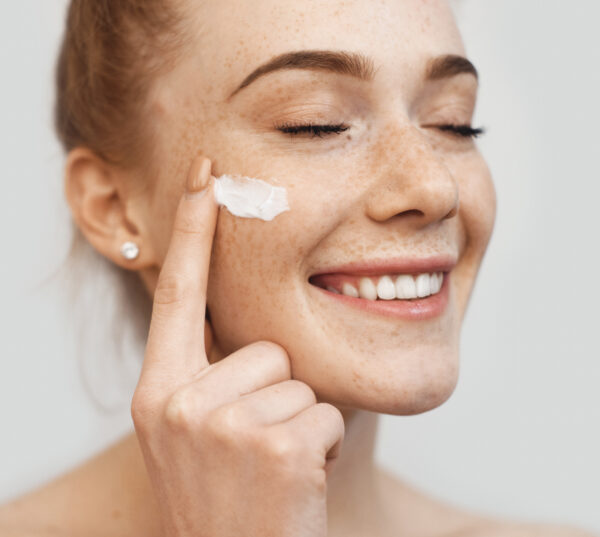
⏱️ The Sensory Experience Changes During Application
Sensory scientists commonly distinguish between different stages of product evaluation.
Each stage reveals a different aspect of formulation behavior.
🧴 1. Pick-Up
When the product is removed from its container, consumers notice firmness, thickness, and stickiness.
These sensations are strongly influenced by the formulation’s bulk mechanical properties.
✨ 2. Rub-Out
As the product is spread across the skin, its flow behavior and lubrication characteristics become more noticeable.
Spreadability, slip, perceived thickness, and wetness are particularly relevant during this stage.
🌿 3. Residual Afterfeel
Once application stops, consumers evaluate the material remaining on the skin.
Some formulations leave a silky or powdery finish. Others produce more noticeable greasiness, slipperiness, or tackiness.
This final impression can differ considerably from the product’s initial texture.
An important distinction: A rich cream can develop a surprisingly light afterfeel, while a fluid product may leave behind a persistent film.
🔬 Why Friction Matters After Application
As a cosmetic formulation spreads into a thinner layer, the mechanical properties responsible for its sensory characteristics can change.
During initial handling, bulk rheological properties play an important role.
Later, when only a thin film remains, surface interactions and friction become increasingly relevant.
The science of friction and lubrication between contacting surfaces is known as tribology.
Tribological testing can help researchers examine how cosmetic films influence sliding resistance, providing information about sensory characteristics such as slipperiness and residual feel.
A published study comparing topical creams found that rheology helped explain sensory attributes during application, while tactile friction measurements were informative for understanding afterfeel.
This does not mean instrumental tests can completely replace human sensory evaluation. Rather, they provide complementary information that helps connect measurable physical behavior with consumer perception.
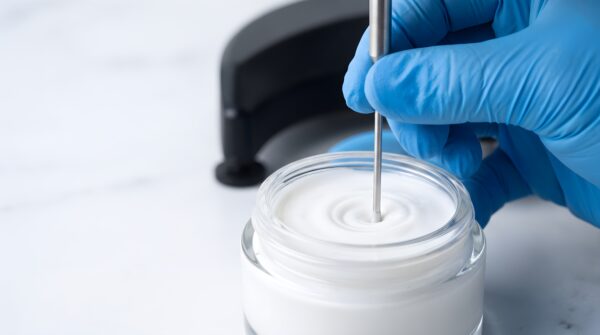
📊 Designing a Better Sensory Evaluation
Sensory testing becomes more informative when formulators evaluate the entire application experience rather than asking whether a product simply feels pleasant.
A practical development approach includes:
👀 Appearance: Evaluate visual consistency, gloss, and product structure.
✋ Pick-up: Assess firmness, cohesiveness, and initial stickiness.
💧 Application: Examine spreading effort, glide, wetness, and perceived cushion.
✨ Afterfeel: Record residual tackiness, greasiness, slipperiness, and softness.
⏱️ Time-dependent changes: Repeat sensory observations at defined intervals after application.
Instrumental measurements can help explain these observations.
For example, rheometry measures flow and deformation properties, while tribological methods investigate friction and lubrication.
Used together with structured sensory assessments, these tools help formulators identify which physical characteristics contribute to a particular experience.
🌿 Beyond the First Touch
The most successful sensory design considers the entire journey from the container to the skin.
A formulation’s initial texture creates expectations. Its flow behavior influences application. Its residual film determines how it feels afterward.
Understanding these stages gives formulators greater control over the final consumer experience.
Rather than focusing on viscosity or richness alone, developers can evaluate how ingredient selection, formulation structure, and surface behavior work together.
Because a great skincare experience isn’t defined by the first touch. It’s defined by how the formulation feels from beginning to end.
Coming Thursday in Part Three of The Feel-Good Formula: When Performance Meets Pleasure. ✨
A luxurious texture may make a product appealing, but how do formulators ensure it also delivers the intended benefits? We’ll explore how sensory elegance and measurable cosmetic performance can work together in the finished formulation.
Designing a Better Sensory Experience?
Explore ingredient technologies that help formulators control spreadability, glide, texture, and afterfeel in skincare applications.
Discover More Formulation Science
Get cosmetic science insights, ingredient innovations, and formulation ideas delivered to your inbox.
Resources:
- Ali A, Skedung L, Burleigh S, et al. Relationship between sensorial and physical characteristics of topical creams: A comparative study on effects of excipients. International Journal of Pharmaceutics. 2022;613:121370.
https://doi.org/10.1016/j.ijpharm.2021.121370 - Akanny E, Kohlmann C. Predicting tactile sensory attributes of personal care emulsions based on instrumental characterizations: A review. International Journal of Cosmetic Science. 2024;46(6):1035-1063.
https://doi.org/10.1111/ics.13004 - Cyriac F, Xin Yi T, Chow PS. Influence of wall slip, thixotropy and lubrication regime on the instrumental sensory evaluation of topical formulations. International Journal of Cosmetic Science. 2022;44(3):271-288.
https://doi.org/10.1111/ics.12773 - Prediction of Tactile Sensory Attributes of Facial Moisturizers by Rheology and Tribology. Biotribology. 2021;28:100201.
https://doi.org/10.1016/j.biotri.2021.100201
Citation Note: These publications provide scientific background on cosmetic formulation rheology, tribology, sensory evaluation, and afterfeel. Relationships between instrumental measurements and perceived sensory attributes depend on the specific formulation and testing conditions. Individual product performance claims require appropriate testing and substantiation.