Beyond the Moisturizer: Multifunctional Body Care
Skinimalism 2.0 | The Power of Multi-Tasking | Part Three
When did body lotion become so much more than body lotion?
Today’s body care products are doing things once associated primarily with facial skincare. We’re seeing body serums, exfoliating moisturizers, conditioning treatments, and lightweight formulations designed to address several concerns in one application.
And the science behind these products is becoming increasingly interesting.
After all, the skin on our arms, legs, and body has its own formulation challenges. Dryness, rough texture, environmental exposure, friction, and differences in skin thickness all influence how products should perform.
Let’s explore how multifunctional body care is moving beyond basic moisturization.
🧴 Body Care Is Becoming More Specialized
For years, body care was largely associated with cleansing and moisturizing.
Those functions remain important, but modern body formulations can offer more targeted benefits.
Consider a few examples:
✨ Smoothing body lotions: Combine moisturization with ingredients that help improve the appearance and feel of rough skin.
💧 Body serums: Deliver a lightweight, spreadable format for hydration and targeted cosmetic benefits.
🌿 Conditioning body treatments: Focus on skin softness, suppleness, and comfort.
🛡️ Protective body balms: Create a more substantial surface film to help reduce moisture loss in areas prone to dryness.
🦵 Targeted hand, foot, and elbow care: Address localized roughness and dryness using appropriately designed formulations.
These product categories highlight an important development.
Body care is no longer defined solely by where a product is applied. It’s increasingly defined by the specific needs it addresses.
🔬 Why Different Areas of the Body Need Different Formulations
Skin isn’t identical everywhere.
The thickness of the epidermis, density of sebaceous glands, and exposure to friction vary by anatomical location.
For example, the palms and soles have a particularly thick outer skin layer adapted to mechanical stress. Other areas, such as the lower legs, may be more prone to noticeable dryness.
These differences influence product design.
A lightweight lotion that works beautifully across the arms may not provide the same experience or conditioning effect on rough heels.
Similarly, a rich balm intended for elbows may feel unnecessarily heavy when applied across the entire body.
💡 The formulation lesson?
Different application areas require different balances of moisturization, surface conditioning, texture, and product persistence.
A successful multifunctional formula must match those properties to its intended application.
✨ Smoothing and Moisturizing: Two Benefits in One Formula
One of the most interesting developments in body care is the combination of hydration with surface smoothing.
Rough, dry skin often involves changes in the outermost layers of the epidermis, including an accumulation of surface cells and reduced flexibility.
Some ingredients can help address more than one aspect of this process.
Urea is a useful scientific example.
As a component of the skin’s natural moisturizing factor, urea helps attract and retain water.
At lower use concentrations, its primary role in skincare is moisturizing.
At higher concentrations, urea can also demonstrate keratolytic properties, helping soften and loosen accumulated surface cells.
This concentration-dependent behavior makes it particularly interesting in body-care research.
Other ingredients, including certain alpha-hydroxy acids, may also contribute to both hydration and exfoliation, depending on concentration, formulation pH, and use conditions.
The important point is that a smoother feel can come from different mechanisms:
💧 Hydration: Increasing water content in the outer skin layers.
✨ Surface conditioning: Helping skin feel softer and more flexible.
🔬 Exfoliation: Promoting the removal of accumulated surface cells when appropriate.
These benefits can complement one another, but they are not identical.
For formulators, understanding the distinction is essential when developing multi-benefit smoothing treatments.
🌿 From Lotions to Body Serums: Format Changes Everything
Imagine two products designed to provide hydration and conditioning.
One is a rich body cream. The other is a lightweight serum.
Even if they target similar skin benefits, consumers will experience them very differently.
That’s because the vehicle, the structure that carries the ingredients, strongly influences performance and perception.
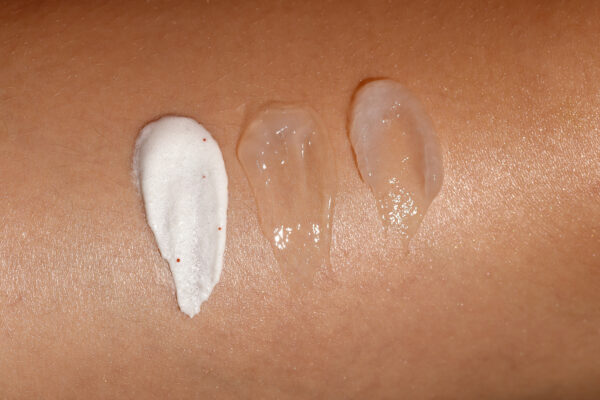
💦 Lightweight body serums
These may use aqueous or gel-based systems to deliver hydration with minimal residue and easy spreadability.
🧴 Conditioning body lotions
Emulsion-based systems can balance moisture-binding ingredients with emollients that improve softness and skin feel.
✨ Rich body balms
More substantial oil and wax phases can provide a protective, persistent film for dry areas.
🌸 Dry-touch body treatments
Carefully selected emollients and sensory modifiers can deliver conditioning benefits while minimizing an oily or sticky afterfeel.
The most appropriate format depends on the intended benefits and the consumer’s application preferences.
Multifunctionality isn’t limited to what a product does. It also involves how successfully its format delivers those benefits.
🛡️ Addressing Friction, Dryness, and Everyday Exposure
Body skin experiences challenges that may differ from those typically emphasized in facial care.
Clothing creates friction. Frequent washing can contribute to dryness. Hands are exposed to repeated cleansing, while elbows, knees, and feet encounter mechanical stress.
Multifunctional body care can address several of these concerns through complementary formulation strategies.
For example, a hand treatment might combine:
🛡️ Surface protection: A film-forming component that helps limit moisture loss.
💧 Moisture retention: Humectants that support hydration.
✨ Skin conditioning: Emollients that improve softness and reduce the perception of roughness.
🌿 Comfortable application: A finish that does not leave excessive greasiness during daily activities.
These functions are particularly valuable in products used repeatedly throughout the day.
However, a product that feels protective is not automatically proven to prevent irritation or repair damaged skin. Such benefits require appropriate evidence.
🧪 What Should We Measure in a Multi-Benefit Body Product?
A body lotion described as hydrating, smoothing, and conditioning is making several distinct performance promises.
Each benefit requires an appropriate assessment.
Formulators can evaluate these claims using a combination of instrumental and sensory methods:
💧 Skin Hydration: Corneometry can help quantify changes in moisture within the outer skin layers.
✨ Surface Smoothness: Skin imaging, roughness measurements, and standardized visual grading can assess surface changes.
🛡️ Moisture Retention: Transepidermal water loss measurements can provide information about the skin’s water-loss characteristics.
🌿 Conditioning and Comfort: Consumer assessments can examine perceived softness, suppleness, and afterfeel.
🧴 Product Experience: Spreadability, absorption perception, tackiness, and residue can be evaluated through sensory testing.
Testing should also reflect the product’s actual use conditions.
For example, a fast-absorbing body serum may be evaluated differently from a rich overnight foot treatment.
This is where multifunctional body-care development becomes especially interesting: formulators can connect the intended benefits with the right product format and relevant performance measurements.
🌱 The Next Chapter in Body Care
Body care is becoming a category where sophisticated formulation science meets practical, everyday needs.
Lightweight serums can deliver targeted conditioning. Smoothing lotions can combine moisture retention with improved surface appearance. Protective balms can address dryness in areas exposed to frequent friction or washing.
These formats offer opportunities to develop products that go beyond a single cosmetic function.
But their success depends on matching the formulation to the skin’s needs, the intended application area, and the desired consumer experience.
The future of multifunctional body care isn’t simply about adding more claims to a body lotion. It’s about developing products that deliver the right combination of benefits where they’re needed most.
And that’s an opportunity worth exploring.
The Power of Multi-Tasking | Series Conclusion
From interconnected skin benefits to hybrid beauty and targeted body care, multifunctionality is transforming how cosmetic products are developed. The common thread is understanding how different technologies can contribute to a cohesive, effective finished formulation.
Developing a Multi-Benefit Body Care Formula?
Explore ingredient technologies for smoothing body treatments, lightweight serums, protective balms, and next-generation conditioning lotions.
Discover More Formulation Science
Get cosmetic science insights, ingredient innovations, and formulation ideas delivered to your inbox.
Resources:
- Urea in Dermatology: A Review of its Emollient, Moisturizing, Keratolytic, Skin Barrier Enhancing and Antimicrobial Properties. (2021). Dermatology and Therapy.
https://pmc.ncbi.nlm.nih.gov/articles/PMC8611129/ - Jawed, I., et al. (2025). Effect of Topical Treatment With Urea in Ichthyosis, Atopic Dermatitis, Psoriasis, and Other Skin Conditions: A Systematic Review. Annals of Medicine and Surgery, 87(1), 276–284.
https://pmc.ncbi.nlm.nih.gov/articles/PMC11918770/ - Skin 101: Understanding the Fundamentals of Skin Barrier Physiology—Why Is This Important for Clinicians? (2025). Journal of Clinical and Aesthetic Dermatology.
https://pmc.ncbi.nlm.nih.gov/articles/PMC11896616/ - Recommendations for Managing Cutaneous Disorders Associated With Advancing Age. (2016). Peer-reviewed review discussing skin hydration, emollient therapy, and care for age-associated skin concerns.
https://pmc.ncbi.nlm.nih.gov/articles/PMC4758790/
Citation Note: This article draws on peer-reviewed research examining skin moisturization, dry skin, keratolytic ingredients, barrier physiology, and body-care considerations. The information is provided for educational purposes. Ingredient effects may vary by concentration, formulation, application site, and use conditions. Specific finished-product claims require appropriate supporting evidence and testing.