The Rise of Hybrid Beauty: Where Skincare Meets Makeup
Skinimalism 2.0 | The Power of Multi-Tasking | Part Two
Is it skincare? Is it makeup? Increasingly, the answer is both.
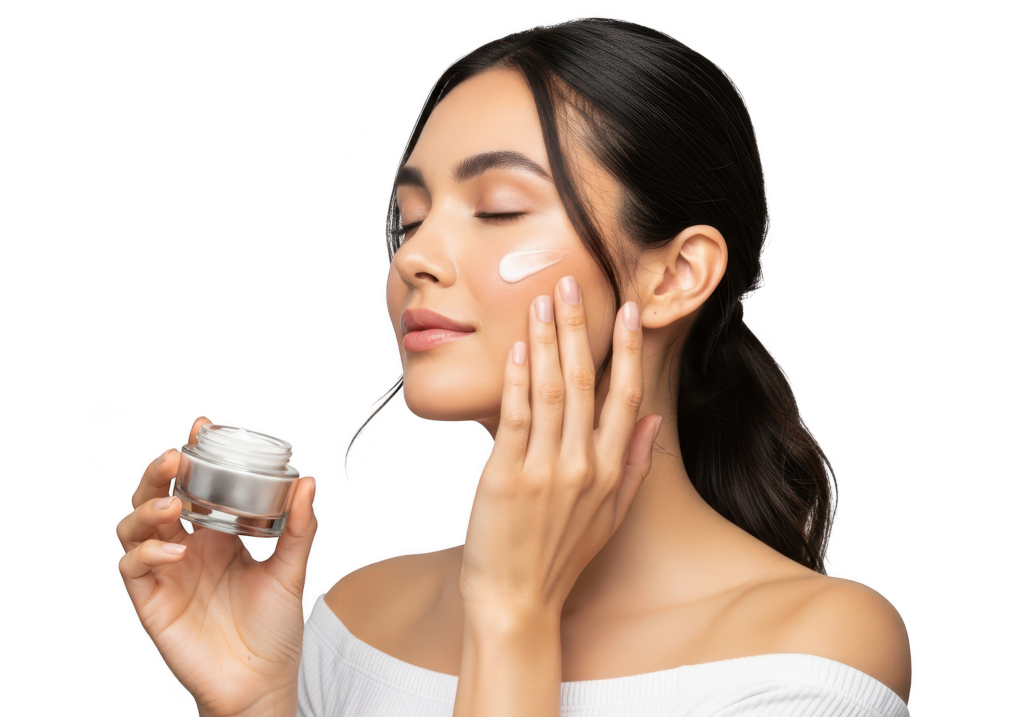
From hydrating skin tints to foundations with skin-conditioning benefits, hybrid beauty products are bringing together two traditionally separate categories.
But creating a product that delivers both immediate cosmetic results and meaningful skincare benefits requires more than mixing a moisturizer with foundation.
It involves understanding how pigments, optical effects, skin-conditioning ingredients, and formulation structure work together.
Let’s explore the science behind hybrid beauty.
🎨 What Makes a Beauty Product a Hybrid?
Traditional makeup primarily focuses on changing the immediate appearance of the skin. Skincare products are designed to moisturize, condition, protect, or otherwise improve its condition.
Hybrid beauty brings these functions together.
Consider some increasingly familiar product concepts:
💧 Hydrating skin tints: Combine sheer complexion coverage with ingredients that help maintain skin moisture.
✨ Soft-focus foundations: Use optical effects to reduce the visibility of pores, fine lines, and uneven texture.
🛡️ Tinted sunscreens: Combine complexion-enhancing pigments with tested UV protection.
🌿 Conditioning makeup: Incorporates emollients and other ingredients that improve softness, comfort, or skin feel.
The interesting part is that these benefits work through different mechanisms.
Some happen almost immediately through the interaction of light with the skin’s surface. Others depend on how the formulation influences skin hydration and conditioning.
Understanding that difference is fundamental to developing successful hybrid products.
✨ The Science of Soft Focus: How Makeup Changes What We See
Have you ever applied a complexion product and noticed that fine lines or pores suddenly look less visible?
That effect doesn’t necessarily mean the skin’s structure has changed.
Often, it’s an optical phenomenon.
When light reaches the skin, some is absorbed, some is reflected, and some is scattered.
The way that light behaves influences how we perceive texture, unevenness, and imperfections.
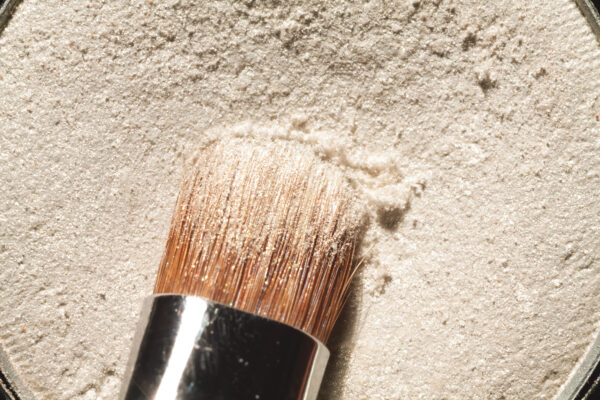
Cosmetic powders and other optical modifiers can change these interactions.
🔬 Three important optical effects include:
Light scattering: Redistributes reflected light, helping make surface irregularities appear less noticeable.
Diffusion: Softens the visual contrast between highlights and shadows on the skin.
Pigment coverage: Uses colored particles to modify the appearance of uneven skin tone.
These effects explain why a foundation can make skin appear smoother immediately, even though it hasn’t physically reduced pore size or changed wrinkle depth.
For formulators, this distinction matters.
A product that temporarily blurs imperfections is performing a cosmetic optical function. A claim involving changes to the underlying skin requires different supporting evidence.
💧 Skincare Benefits Beneath the Color
A beautiful finish is only one part of the hybrid beauty experience.
The formulation can also contain ingredients that moisturize or condition the skin during wear.
For example, humectants can help maintain moisture within the outer skin layers, while emollients influence softness, spreadability, and comfort.
Film-forming materials may contribute to the product’s wear characteristics and surface feel, depending on their properties.
These ingredients can serve several purposes within a complexion formula.
A well-designed skin tint might provide:
💦 Hydration: Helping maintain moisture in the outer skin layers.
✨ Skin Conditioning: Supporting softness and a smooth application experience.
🎨 Complexion Enhancement: Providing sheer coverage or optical blurring.
🧴 Comfortable Wear: Maintaining a pleasant finish throughout normal use.
The challenge is ensuring that these properties work together rather than interfere with one another.
A moisturizing ingredient that creates excessive tackiness may affect the finish. A high pigment load can change texture and spreadability.
Hybrid beauty requires balancing both sides of the equation.
🔬 Pigments Do More Than Add Color
Pigments are essential to complexion cosmetics, but their role can extend beyond creating a particular shade.
One especially interesting example involves iron oxides.
These pigments are commonly used to create foundation and skin-tint shades. Depending on their concentration and the complete formulation, they can also help attenuate visible light reaching the skin.
Why is that important?
Research has shown that visible light can contribute to pigmentation responses, particularly in people with darker skin phototypes and those prone to hyperpigmentation.
Studies of appropriately formulated tinted sunscreens have demonstrated greater protection against certain visible-light-induced pigmentation effects than comparable products without the same pigment protection.
That doesn’t mean every foundation or tinted moisturizer provides meaningful photoprotection.
The level of protection depends on the pigment system, concentration, uniformity of application, and finished product.
And visible-light attenuation should not be confused with tested ultraviolet SPF protection.
Still, this is a compelling illustration of hybrid beauty science.
A cosmetic pigment can contribute to immediate complexion coverage while also having a second, measurable optical function.
🌿 Why Texture Matters in Hybrid Makeup
Think about the difference between a traditional full-coverage foundation and a lightweight serum tint.
Both may contain pigments, but the application experience can be completely different.
That difference is largely shaped by the formulation surrounding the pigments.
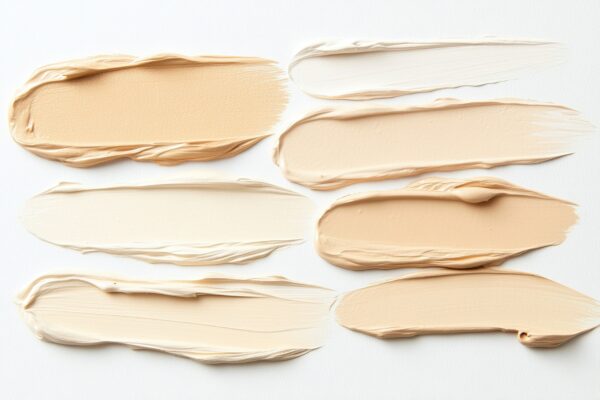
Emollients influence how easily the product spreads. Rheology modifiers affect flow and consistency. Powders influence the finish, while film formers can affect adhesion and wear.
A hybrid product needs to balance these contributions.
🧴 Spreadability
The formula should distribute pigments evenly without excessive dragging, streaking, or patchiness.
✨ Finish
Consumers may expect a dewy, satin, or soft-matte appearance. The balance of pigments, powders, and emollients helps determine the result.
💧 Comfort
A complexion product intended for extended wear should feel comfortable rather than excessively greasy, dry, or tight.
🎨 Color Uniformity
Pigments must remain adequately dispersed so the product maintains consistent appearance and performance.
A product can offer excellent skincare ingredients yet still disappoint if it separates, pills, transfers excessively, or applies unevenly.
The cosmetic experience remains an essential part of the finished formulation.
🧪 Testing Both Sides of the Hybrid Equation
Hybrid products introduce an interesting evaluation challenge: they often promise more than one type of performance.
A foundation with hydration benefits might need evidence supporting both its cosmetic finish and its effects on skin moisture.
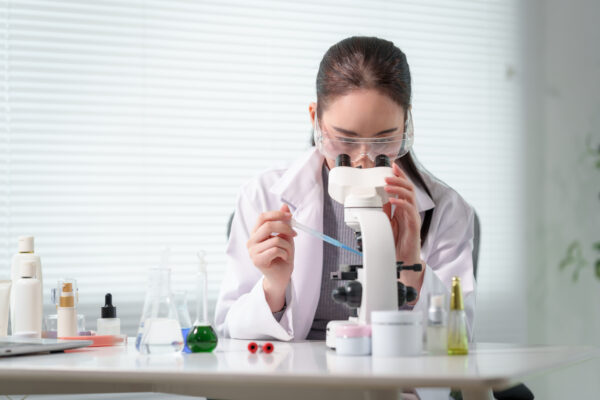
Formulators can evaluate these benefits separately.
💧 Hydration Testing: Instrumental methods such as corneometry can evaluate changes in skin moisture.
✨ Optical and Appearance Assessments: Imaging and standardized visual evaluations can help assess coverage, blurring, and complexion appearance.
🎨 Color and Wear Testing: Controlled assessments can examine color consistency, transfer, and wear characteristics.
🧴 Sensory Evaluation: Consumer or trained-panel assessments can examine spreadability, comfort, finish, and afterfeel.
🛡️ Photoprotection Testing: Products making UV protection claims require the appropriate standardized testing and regulatory compliance.
These assessments answer different questions.
A product that provides beautiful coverage isn’t automatically a good moisturizer. Similarly, a hydrating formulation doesn’t necessarily offer effective pigment coverage or extended wear.
The strongest hybrid beauty concepts demonstrate both their immediate cosmetic effects and their intended skincare benefits.
🌱 The Future of Hybrid Beauty
Hybrid beauty represents more than a combination of makeup and skincare ingredients.
It’s an opportunity to rethink what a finished cosmetic product can accomplish.
A skin tint might combine optical blurring with moisturization. A conditioning foundation might provide pigment coverage while maintaining comfortable skin feel. A tinted sunscreen can pair cosmetic color with appropriately tested photoprotection.
Each concept relies on understanding several distinct but complementary technologies.
The result is an exciting area of formulation development in which appearance, skin condition, and product performance intersect.
The future of hybrid beauty isn’t about whether a product is makeup or skincare. It’s about understanding how it can successfully be both.
Coming Next — Part Three: Beyond the Moisturizer: Multifunctional Body Care
We’ll explore how body-care products are expanding beyond basic moisturization to deliver targeted benefits through new formats and formulation technologies.
Developing the Next Generation of Hybrid Beauty?
Explore ingredient technologies for skincare-infused makeup, complexion products, soft-focus finishes, and comfortable wear.
Stay Curious About Cosmetic Science
Discover formulation insights, ingredient technologies, and the innovations shaping modern personal care.
Resources:
- Visible Light-Induced Pigmentation: Improved In Vivo Methodology for Measuring Efficacy of 30 Products in 9 Randomised Controlled Trials and Correlation With In Vitro Assessment. (2025). Skin Research and Technology.
https://pmc.ncbi.nlm.nih.gov/articles/PMC12417931/ - Visible Light Protection Strategies for Diverse Populations. (2026). Peer-reviewed review of pigment-based visible-light protection and cosmetic formulation considerations.
https://pmc.ncbi.nlm.nih.gov/articles/PMC12936234/ - Melasma: The Need for Tailored Photoprotection to Improve Clinical Outcomes. (2022). Photodermatology, Photoimmunology & Photomedicine.
https://pmc.ncbi.nlm.nih.gov/articles/PMC9790748/ - Sunscreens and Photoaging: A Review of Current Literature. (2021). Peer-reviewed review of photoprotection, visible light, and tinted sunscreen technologies.
https://pmc.ncbi.nlm.nih.gov/articles/PMC8361399/
Citation Note: This article draws on peer-reviewed literature concerning visible-light-induced pigmentation, tinted photoprotection, and cosmetic formulation principles. Discussions of pigment coverage, optical effects, hydration, and sensory performance are educational. Specific finished-product claims, including hydration, wear, and photoprotection, require appropriate supporting tests. Cosmetic pigments alone should not be assumed to provide a tested SPF.