One Product, Multiple Benefits: The Science of Multifunctional Skincare
Skinimalism 2.0 | Part 1: The Power of Multi-Tasking
What if the secret to a moisturizer that hydrates, softens, and supports the skin barrier isn’t three separate technologies, but three interconnected processes?
Skin is a complex biological system. Water retention, barrier function, and surface appearance are closely related, meaning that supporting one process can sometimes influence another.
This relationship creates an interesting opportunity for cosmetic formulators: developing products that deliver multiple benefits through complementary mechanisms.
Let’s explore the science that makes multifunctional skincare possible.
💧 Hydration: More Than a Moisturized Feeling
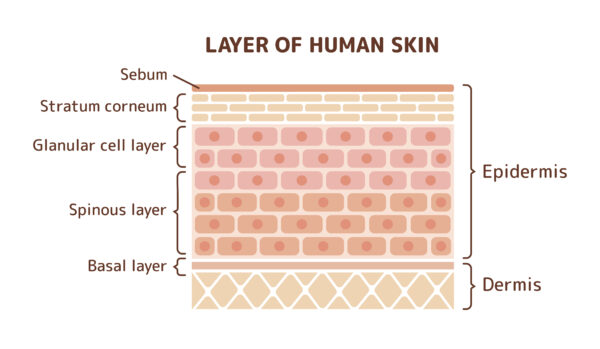
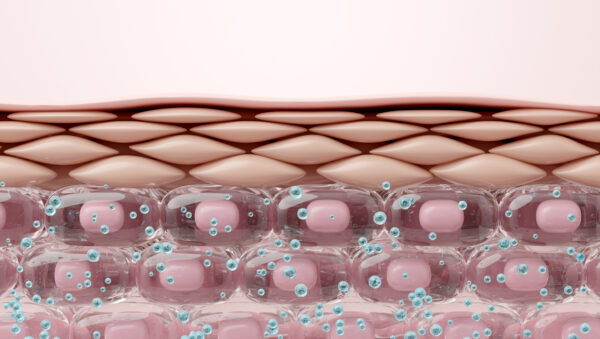
When we describe skin as hydrated, we’re referring primarily to the water content of its outermost layer, the stratum corneum.
This thin, protective structure consists of flattened cells called corneocytes, surrounded by a carefully organized mixture of lipids.
Together, they help regulate water movement and protect the skin from the external environment.
One important component of this system is the skin’s natural moisturizing factor (NMF), a collection of water-attracting molecules that helps the stratum corneum retain moisture.
Humectants can support hydration by attracting and binding water within the outer layers of skin.
But adding moisture is only part of the picture.
For that hydration to be maintained, the skin must also limit excessive water loss.
And that brings us to the next benefit.
🛡️ Barrier Support: Helping Skin Hold On to Hydration
The skin barrier isn’t simply a protective covering. It’s an active component of moisture regulation.
Between the cells of the stratum corneum is an organized lipid matrix containing ceramides, cholesterol, and free fatty acids.
These lipids help slow the movement of water from the skin into the surrounding environment.
That process is measured through transepidermal water loss (TEWL).
When barrier function is compromised, water may escape more easily, contributing to dryness, roughness, and discomfort.
Cosmetic ingredients can support the barrier through several mechanisms:
🧬 Lipid replenishment: Helping maintain the lipid environment associated with healthy barrier function.
💧 Moisture retention: Supporting the water-binding capacity of the stratum corneum.
🛡️ Protective film formation: Creating a surface layer that helps reduce moisture evaporation.
These approaches are distinct, but their effects can complement one another.
For example, a formula that combines moisture-binding ingredients with appropriate barrier-supporting components may improve hydration while helping limit water loss.
One product. Two closely connected benefits.
✨ Surface Smoothness: The Visible Side of Hydration
Hydration doesn’t just influence how skin feels. It can also affect how the surface looks.
The stratum corneum’s water content influences its flexibility and mechanical properties.
When skin becomes dry, the surface may appear rough, flaky, or less supple.
As hydration improves, the outer layers can become more flexible, helping the skin appear smoother and feel softer.
Emollients contribute another mechanism by lubricating and conditioning the skin’s surface.
Film-forming ingredients may also create a flexible layer that affects smoothness, moisture retention, or surface feel, depending on their properties.
The interesting part is that these effects can occur together.
A well-formulated moisturizer may:
💦 Increase moisture within the outer skin layers.
🛡️ Help reduce excessive moisture loss.
✨ Improve surface softness and smoothness.
🌿 Leave skin feeling more comfortable and conditioned.
These aren’t necessarily four independent actions. Some are connected outcomes of the same underlying processes.
That’s one of the most useful scientific principles behind multifunctional skincare.
🔬 When One Ingredient Influences Several Pathways
Multifunctionality can also occur at the ingredient level.
Certain cosmetic ingredients are investigated for their ability to influence more than one biological pathway.
Consider the relationship between three important components of epidermal biology.
🧬 Filaggrin and natural moisturizing factors
Filaggrin is a structural protein involved in the organization of the outer skin layers. Its breakdown products also contribute to the skin’s natural moisturizing factor, connecting structural integrity with hydration.
💧 Aquaporin-3 and water movement
Aquaporin-3 is a membrane protein that facilitates the movement of water and glycerol in the epidermis.
Because these substances contribute to skin hydration and physiological function, aquaporin-3 is an interesting target in research on moisture balance.
🛡️ Barrier lipids and water retention
The lipid organization of the stratum corneum influences how effectively skin retains water.
Supporting the lipid barrier therefore complements mechanisms involved in water availability and retention.
These processes work through different biological pathways, but all contribute to maintaining the skin’s moisture environment.
Ingredients designed to influence several such pathways offer formulators an opportunity to investigate multiple benefits from a single technology.
However, activity demonstrated for an ingredient does not automatically establish the performance of every finished product containing it.
🌿 The Connection Between Comfort and Appearance
Skin comfort and appearance are often treated as separate cosmetic objectives.
In reality, they may share underlying influences.
Insufficient hydration and increased moisture loss can contribute to skin tightness, roughness, and an uncomfortable sensation.
Improving hydration and surface conditioning may therefore provide both sensory and visible benefits.
This doesn’t mean every moisturizing ingredient automatically soothes sensitive skin or restores an impaired barrier.
Rather, it demonstrates why understanding the underlying mechanism matters.
For formulators, the opportunity is to identify combinations of benefits that have a genuine biological or physical relationship.
A hydration-focused product may also improve the appearance of dryness-related roughness. A barrier-supporting formula may help maintain moisture and contribute to a more comfortable skin feel.
These connections provide a scientific basis for developing multi-benefit cosmetic products.
🧪 Turning Connected Mechanisms Into Measurable Benefits
How do we know whether a multifunctional product delivers what it promises?
Different benefits require different evaluation methods. Formulators can assess performance through several approaches:
💧 Increased Hydration — Corneometry: Measures the hydration level of the outermost skin layers, helping determine whether a product improves skin moisture.
🛡️ Reduced Moisture Loss — TEWL Measurement: Evaluates how much water evaporates through the skin, providing insight into its moisture-retention performance.
✨ Improved Surface Smoothness — Skin Imaging or Surface Topography: Examines changes in skin surface texture and appearance to help assess smoothing benefits.
🌿 Softer, More Comfortable Feel — Sensory or Consumer Assessments: Evaluates how the skin feels after product application, including perceived softness, comfort, and conditioning.
These methods examine different aspects of performance.
For instance, higher hydration readings don’t necessarily prove that the barrier’s biological structure has improved. Likewise, a smoother skin surface doesn’t automatically demonstrate lasting hydration.
Testing helps establish which benefits a finished formulation actually delivers.
The most compelling multifunctional products are those whose individual benefits can be demonstrated, even when those benefits are connected through shared mechanisms.

🌱 The Future of Multi-Benefit Skincare
Multifunctional skincare offers an opportunity to connect what we know about skin biology with the way cosmetic products are designed.
Hydration, moisture retention, surface conditioning, and barrier performance are related, but each represents a distinct aspect of skin function.
By understanding how these processes interact, formulators can develop products that address several skin needs through complementary mechanisms.
That’s where the science of multifunctionality becomes particularly interesting.
One product may deliver multiple benefits because skin itself operates through interconnected systems.
And understanding those connections is what makes the difference between a product with multiple claims and one with a scientifically supported multi-benefit story.
Coming Next — Part 2: The Rise of Hybrid Beauty: Where Skincare Meets Makeup
We’ll explore how complexion products can combine cosmetic coverage with skincare benefits, bringing multifunctionality into the world of color cosmetics.
Exploring Multifunctional Skincare?
Discover ingredient technologies designed to support hydration, skin barrier function, and multiple cosmetic benefits.
Keep Exploring Cosmetic Science
Get ingredient insights, formulation science, and new personal care ideas delivered to your inbox.
Resources:
- Del Rosso, J. Q., & Kircik, L. (2025). Skin 101: Understanding the Fundamentals of Skin Barrier Physiology—Why Is This Important for Clinicians? Journal of Clinical and Aesthetic Dermatology, 18(2), 7–15.
https://pmc.ncbi.nlm.nih.gov/articles/PMC11896616/ - Purnamawati, S., Indrastuti, N., Danarti, R., & Saefudin, T. (2017). The Role of Moisturizers in Addressing Various Kinds of Dermatitis: A Review. Clinical Medicine & Research, 15(3–4), 75–87.
https://pmc.ncbi.nlm.nih.gov/articles/PMC5849435/ - Kundu, D., Jayaraman, A., & Sen, C. K. (2026). Clinical Measurement of Transepidermal Water Loss. Advances in Wound Care, 15(2), 73–90. First published online June 5, 2025.
https://pmc.ncbi.nlm.nih.gov/articles/PMC12359141/ - Boo, Y. C. (2021). Mechanistic Basis and Clinical Evidence for the Applications of Nicotinamide (Niacinamide) to Control Skin Aging and Pigmentation. Antioxidants, 10(8), 1315.
https://pmc.ncbi.nlm.nih.gov/articles/PMC8389214/
Citation Note: This article is based on peer-reviewed scientific literature examining skin barrier physiology, moisture retention, transepidermal water loss, and biological mechanisms associated with skin hydration and conditioning. The information is provided for educational purposes and does not establish the performance of any specific cosmetic ingredient or finished formulation. Individual product benefits and claims should be supported by appropriate testing.