Re-Set and Re-Balance — Part 1: The Detox Conversation
The word detox has become familiar language in beauty. It suggests clearing away what has accumulated and starting fresh.
When it comes to the scalp, however, the science is much more practical.
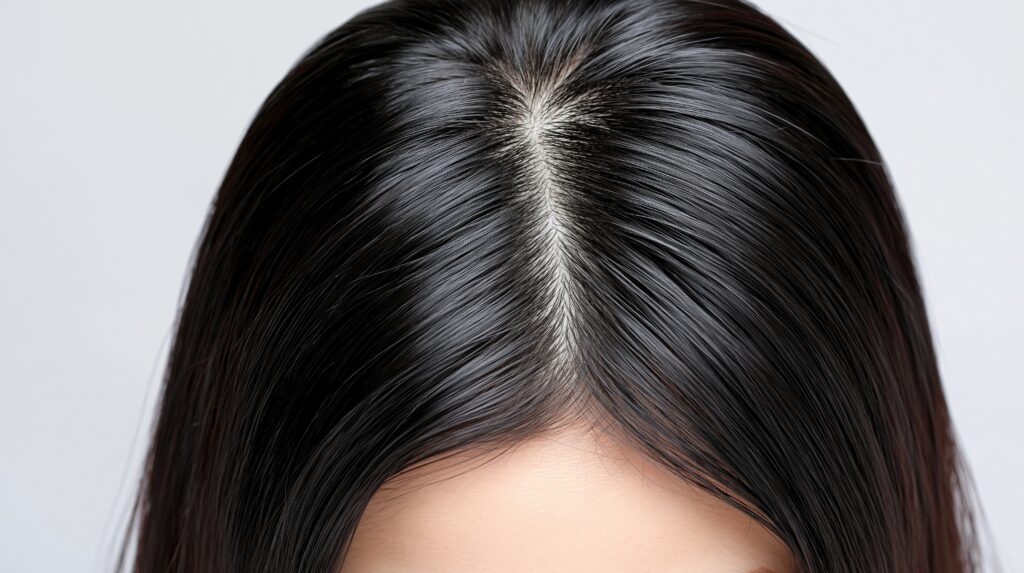
The scalp doesn’t need to be “purified” of mysterious toxins. What it does need is an effective way to manage very real materials that collect on its surface: sebum, sweat, shed skin cells, styling-product residue and environmental debris.
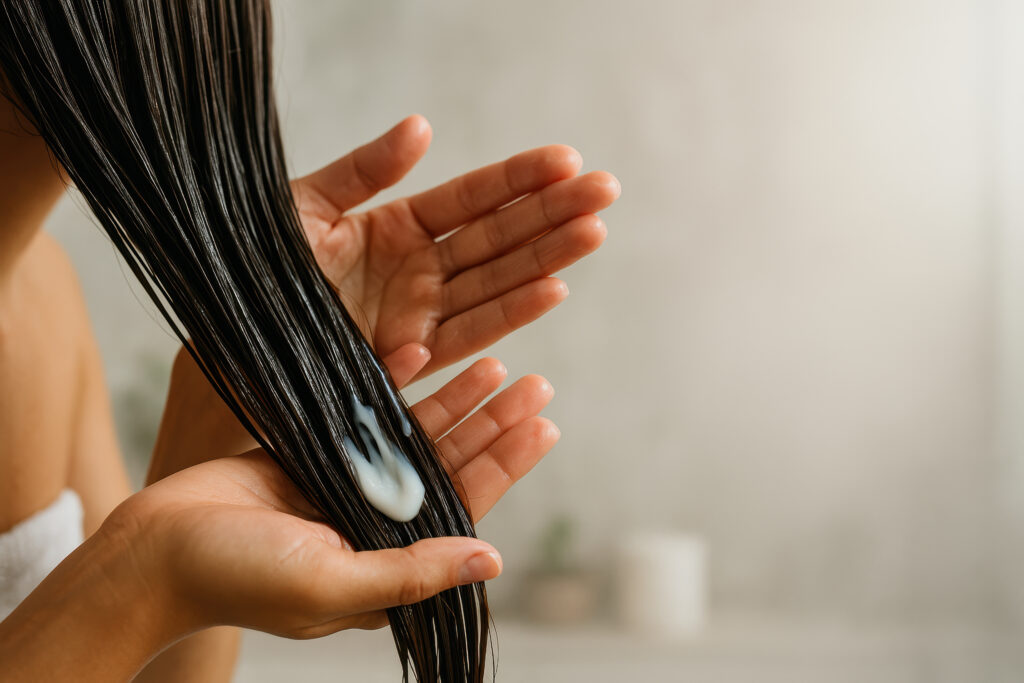
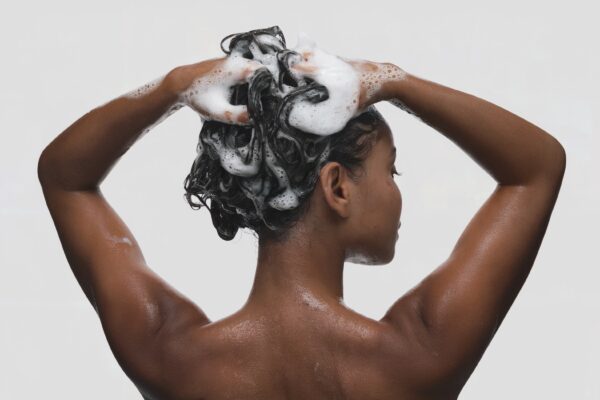
Shampoos are designed to remove sebum, sweat, environmental dirt and residues left behind by previously applied hair-care products.
So perhaps the better scalp-care conversation isn’t really about detoxification.
It’s about resetting without overcorrecting.
🧴 What Actually Builds Up on the Scalp?
The scalp is an active environment.
It produces natural oil, sheds skin cells and is routinely exposed to hair products, sweat and the surrounding environment.
Over time, that can mean an accumulation of:
🫧 Sebum
💧 Sweat
🧴 Styling products, oils and conditioning residues
🍂 Naturally shed skin cells
🌬️ Environmental dirt and airborne debris
Hair-cleansing literature specifically identifies sebum, styling products, skin scales and environmental dirt among the materials shampoos are designed to remove.
That doesn’t mean every trace of oil or residue is automatically a problem.
The important idea is accumulation.
A scalp reset is less about stripping the surface completely clean and more about preventing layers of oil, sweat and cosmetic residue from becoming part of the everyday baseline.

🫧 Cleansing Is a Balancing Act
If buildup is the problem, it might seem logical that stronger cleansing is always the answer.
It isn’t.
One of the basic challenges of shampoo formulation is removing enough dirt, oil and residue to leave the hair and scalp feeling clean without removing so much that the hair becomes dry, rough or difficult to manage.
Surfactants do much of the work.
Their structure allows them to interact with oily materials such as sebum and help suspend those materials in water so they can be rinsed away.
But different surfactant systems can provide very different levels of cleansing and mildness.
That’s why a scalp reset shouldn’t mean:
Remove everything.
A better goal is:
Remove what has accumulated while maintaining scalp and hair comfort.
⚖️ Sebum Isn’t the Enemy
Oil often gets cast as the villain in scalp care.
But sebum is a normal part of the scalp environment.
The formulation goal isn’t necessarily to leave the scalp completely oil-free. Instead, it’s to remove excess or accumulated oil while preserving a comfortable scalp and manageable hair.
That gives formulators a much more useful target:
Oil management rather than oil elimination.
That distinction matters.
A product designed to reduce the feel of excess oil doesn’t need to leave the scalp feeling stripped in order to be effective.
The more useful question becomes:
How much cleansing does the scalp actually need?
🔄 Reset Doesn’t Have to Mean Harsh
Consumers now encounter plenty of words that suggest a fresh start:
Clarifying. Purifying. Detoxifying. Deep cleansing. Resetting.
Those concepts can all have a place in scalp care, but they don’t necessarily require the same kind of product.
A formulation should begin with a simpler question:
What are we actually trying to remove?
Depending on the product, that might be:
🧴 Styling-product residue
🫧 Excess sebum
💧 Sweat
🌬️ Environmental dirt
🍂 Surface flakes and debris
🔁 A combination of several types of accumulation
From there, formulators can consider:
🫧 Cleansing strength
🌿 Mildness and scalp comfort
💧 How the scalp feels afterward
💆 Hair softness and manageability
🔁 How frequently the product will be used
A weekly clarifying treatment and a frequently used shampoo don’t have to solve the same problem in exactly the same way.
So reset should describe the job the product performs—not automatically how aggressive the cleansing needs to be.
🧱 Protecting the Scalp While You Clean
The scalp still has to function as skin after cleansing.
That matters because overly aggressive cleansing can remove more than accumulated residue. It can also leave the scalp feeling dry, tight or uncomfortable.
A good scalp-reset strategy therefore has to do two things at once:
Remove what doesn’t need to remain.
And:
Respect what does.
For formulators, that means thinking about more than cleansing power alone.
Mildness, scalp comfort, hair feel and frequency of use all belong in the same conversation.

✨ Rethinking the Detox Conversation
“Scalp detox” may be convenient consumer language.
But formulators can translate it into something much more specific.
Instead of asking:
How aggressively can we clean the scalp?
Ask:
What has accumulated?
What needs to be removed?
How much cleansing is actually necessary?
How should the scalp and hair feel afterward?
Those questions turn detox from a vague beauty claim into a practical formulation strategy.
Because sometimes a fresh start isn’t about stripping everything away.
It’s about giving the scalp an effective, comfortable reset.
And in Part 2, we’ll look at another piece of that reset conversation: exfoliation for the scalp.
Ready to Re-Set Your Approach to Scalp Care?
Explore formulation strategies that balance effective cleansing with scalp comfort and healthy-looking hair.
Want More Scalp-Care Insights?
Subscribe for practical formulation ideas, ingredient education and new personal-care content delivered straight to your inbox.
D’Souza, P., & Rathi, S. K. (2015). Shampoo and Conditioners: What a Dermatologist Should Know? Indian Journal of Dermatology, 60(3), 248–254.
https://pmc.ncbi.nlm.nih.gov/articles/PMC4458934/
Gavazzoni Dias, M. F. R. (2015). Hair Cosmetics: An Overview. International Journal of Trichology, 7(1), 2–15.
https://pmc.ncbi.nlm.nih.gov/articles/PMC4387693/
Gavazzoni Dias, M. F. R. et al. (2014). The Shampoo pH Can Affect the Hair: Myth or Reality? International Journal of Trichology, 6(3), 95–99.
https://pmc.ncbi.nlm.nih.gov/articles/PMC4158629/
Draelos, Z. D. (2010). Essentials of Hair Care Often Neglected: Hair Cleansing. International Journal of Trichology, 2(1), 24–29.
https://pmc.ncbi.nlm.nih.gov/articles/PMC3002407/
Turner, G. A. et al. (2012). Stratum Corneum Dysfunction in Dandruff. International Journal of Cosmetic Science, 34(4), 298–306.
https://pmc.ncbi.nlm.nih.gov/articles/PMC3494381/
Citation Note: This article is intended for educational and formulation-industry discussion. Publicly accessible peer-reviewed literature was used to support discussion of scalp cleansing, sebum, cosmetic residue, surfactants and scalp-barrier considerations.