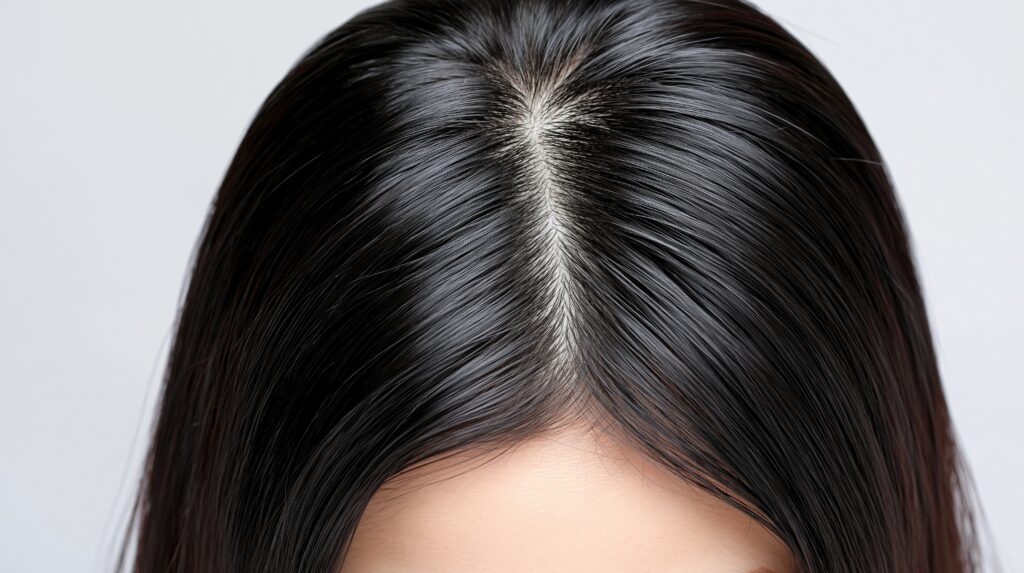
Exfoliation for the Scalp: Finding the Right Balance
Scalp care has borrowed plenty of ideas from skin care.
Cleansers became scalp cleansers. Serums became scalp serums. And exfoliation—the familiar step used to help clear away dead surface cells—has increasingly moved north to the scalp.
But there is an important distinction.
The scalp is skin, but it isn’t simply facial skin covered with hair.
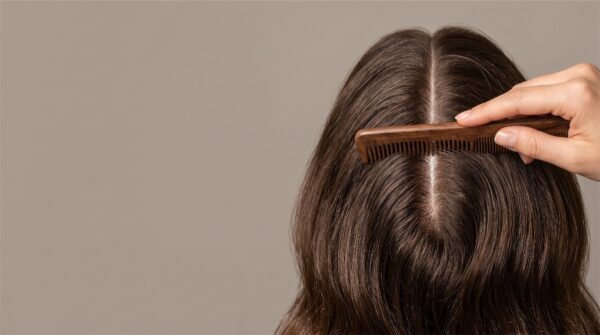
Hair follicles, natural oils, styling products and the practical difficulty of reaching the skin beneath the hair all change how exfoliation needs to be approached.
So the question isn’t simply whether the scalp can be exfoliated.
It can.
The more useful question is:
What are we trying to remove, and how gently can we accomplish it?
🍂 Why Exfoliate the Scalp?
The outer surface of the skin is constantly renewing itself. Cells move upward, mature and are eventually shed.
Normally, much of this happens without us noticing.
But the scalp also has to contend with:
🍂 Visible flakes and accumulated corneocytes
🫧 Sebum
🧴 Styling-product residue
💧 Sweat
🌬️ Environmental debris
When these materials accumulate together, the scalp can begin to feel coated, oily or uncomfortable.
That’s where exfoliation can become part of the reset strategy.
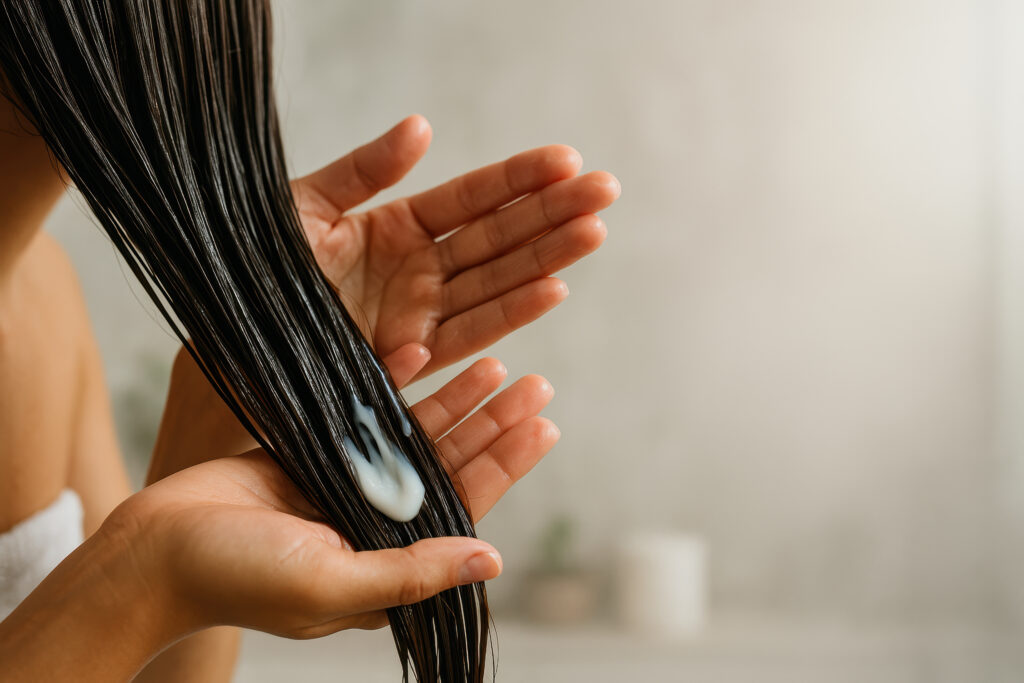
Rather than functioning as a substitute for cleansing, exfoliation can provide an additional way to loosen or remove material sitting at the scalp surface.
🧪 Chemical Exfoliation: Loosening the Bonds
Chemical exfoliation doesn’t mean using something harsh.
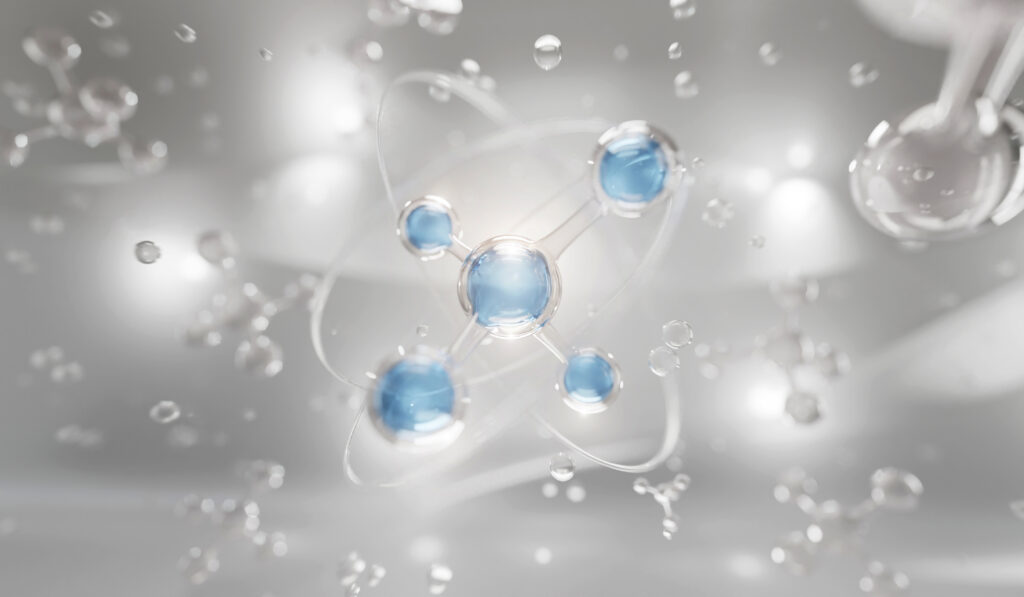
It simply means using ingredients that help loosen the connections among surface cells so they can shed more readily.
One familiar example is salicylic acid.
Salicylic acid has keratolytic properties, meaning it can help loosen and remove scale. It has long been used in scalp products designed to address visible scaling and buildup. Clinical research involving scalp formulations containing salicylic acid has demonstrated reductions in scaling when incorporated into appropriate treatment systems.
For formulators, chemical exfoliation offers an important advantage:
It can reach areas of the scalp that are difficult to physically scrub because hair is in the way.
But concentration, vehicle, contact time and frequency all matter.
More exfoliation isn’t automatically better exfoliation.
🫧 Physical Exfoliation: The Mechanical Approach
Physical exfoliation works differently.
Instead of chemically loosening surface cells, particles or other mechanical action help lift material from the scalp.
That can include formulas designed with:
🌿 Biodegradable exfoliating particles
🧂 Fine salt or sugar-based systems
💆 Scalp brushes or massage tools
🫧 Cleansing systems that combine massage with rinse-off removal
The tactile experience can make physical scalp exfoliation appealing to consumers because they can feel the treatment working.
But friction deserves attention.
The goal is to loosen accumulated material—not aggressively scrub the scalp.
That becomes particularly important when the scalp is already dry, sensitive, itchy or visibly irritated.
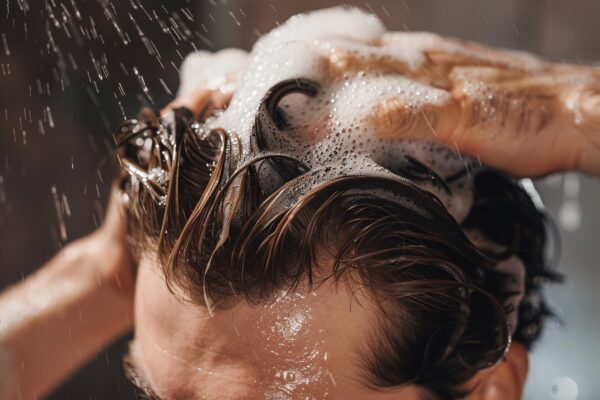
⚖️ Exfoliation Has a Sweet Spot
This is where scalp exfoliation becomes a balancing act.
If exfoliation can help remove accumulated surface material, it can be tempting to think that doing it more often will create an even cleaner scalp.
But the scalp still has a skin barrier.
Repeated irritation or excessive removal of surface material can work against the comfortable, balanced scalp environment we’re trying to create.
The useful formulation goal isn’t:
How much can we exfoliate?
It’s:
How much exfoliation does this scalp-care routine actually need?
That depends on several things:
🧴 How much styling-product buildup is expected
🫧 Sebum level
🍂 Whether visible scaling is present
🌿 Scalp sensitivity
🔁 How frequently the product will be used
🚿 Whether the product is rinse-off or leave-on
A treatment intended for occasional use has very different requirements from something designed to be used during every wash.
🧴 Exfoliation and Cleansing Aren’t the Same Job
This distinction is important.
A cleanser primarily helps remove oil, dirt, sweat and cosmetic residue.
An exfoliant primarily helps address material associated with the skin’s outer surface, including accumulated corneocytes and scale.
Those functions can overlap.
But they don’t have to be identical.
That’s why scalp-reset routines may use exfoliation as:
✨ A pre-shampoo treatment
🫧 Part of a specialized cleansing formula
💧 A rinse-off scalp treatment
🔁 An occasional clarifying step
The formulation should reflect the intended use.
A consumer shouldn’t need to solve every scalp concern with one increasingly aggressive shampoo.
Sometimes dividing the jobs produces a more thoughtful routine.
🌿 Don’t Forget What Happens Afterward
Removing excess material is only half of the equation.
The scalp still needs to feel comfortable after the treatment is rinsed away.
That makes supporting functions especially useful in exfoliating scalp formulas:
💧 Hydration
🌿 Soothing
🧱 Barrier support
⚖️ Sebum balance
💆 Hair conditioning
Recent scalp studies involving exfoliating ingredients such as salicylic acid have often paired them with other functions rather than treating exfoliation as the entire strategy. That reflects an important formulation principle: managing scale or buildup works best as part of a broader approach to scalp condition and comfort.
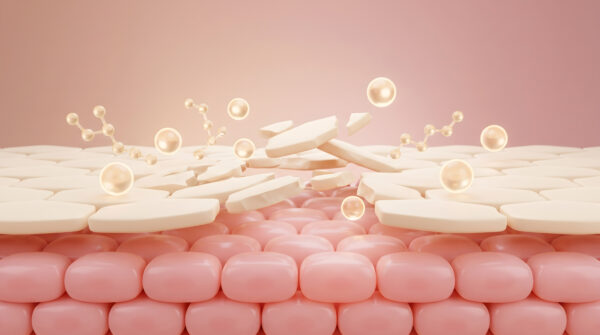
🔄 Where Exfoliation Fits Into the Reset
Monday’s detox conversation started with a simple idea:
A scalp reset doesn’t mean stripping everything away.
Exfoliation follows the same principle.
The goal is not to create the cleanest scalp possible.
It’s to help remove what has accumulated beyond what routine cleansing comfortably manages, while keeping the scalp environment in mind.
That makes the best exfoliation strategy highly dependent on the product.
Ask:
What are we trying to remove?
Does it require chemical, physical or combined exfoliation?
How frequently will consumers use it?
What does the scalp need after exfoliation?
Those questions turn exfoliation from another skin-care trend into a much more intentional scalp-care tool.
And in Part 3, we’ll move beyond what builds up on the scalp and look at another challenge entirely: environmental stress and scalp defense.
Ready to Explore Scalp Exfoliation?
Discover formulation approaches that help address buildup and visible flakes while keeping scalp comfort and balance in focus.
Keep Exploring Scalp-Care Science
Join our newsletter for formulation insights, ingredient education and the latest ideas shaping personal care.
Chen, X. et al. (2025). A Study on Dermatologists’ Self-Assessment of the Efficacy of a 1% Selenium Disulfide–0.9% Salicylic Acid-Based Shampoo for Scalp Seborrheic Dermatitis. Archives of Dermatological Research.
https://pmc.ncbi.nlm.nih.gov/articles/PMC11976785/
A Cohort Clinical Study on the Efficacy of Topical Salicylic Acid/Piroctone Olamine Dandruff Pre-Gel and Cleanser in Improving Symptoms of Moderate to Severe Seborrheic Dermatitis of the Scalp. (2025). Journal of Cosmetic Dermatology.
https://pmc.ncbi.nlm.nih.gov/articles/PMC11705510/
Draelos, Z. D. (2010). Essentials of Hair Care Often Neglected: Hair Cleansing. International Journal of Trichology, 2(1), 24–29.
https://pmc.ncbi.nlm.nih.gov/articles/PMC3002407/
Turner, G. A. et al. (2012). Stratum Corneum Dysfunction in Dandruff. International Journal of Cosmetic Science, 34(4), 298–306.
https://pmc.ncbi.nlm.nih.gov/articles/PMC3494381/
Citation Note: This article is intended for educational and formulation-industry discussion. Publicly accessible peer-reviewed literature was used to support discussion of scalp scaling, exfoliation, salicylic acid, cleansing and scalp-barrier considerations.