Re-Set and Re-Balance — Part 3: Environmental Stress Defense
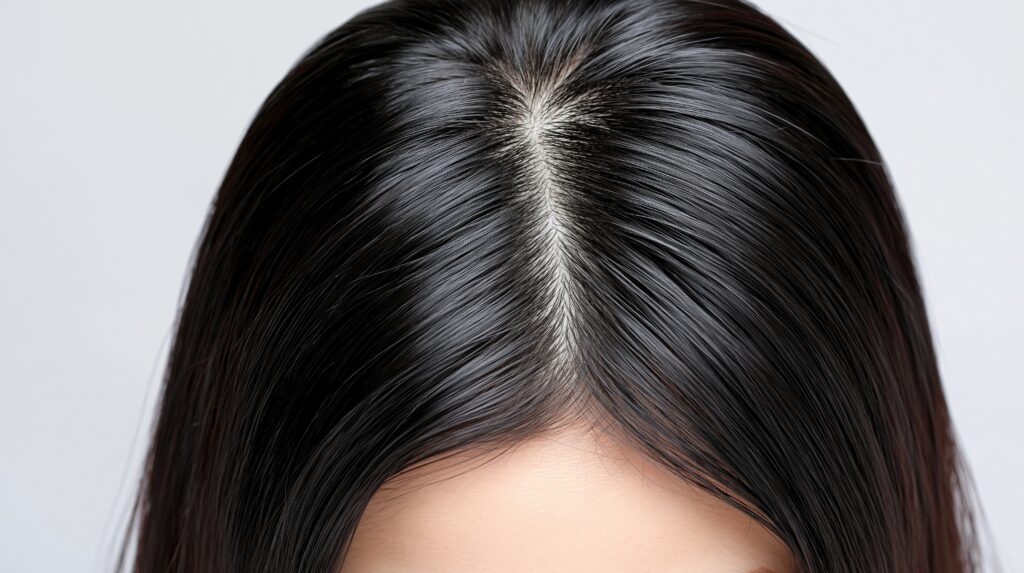
Once the scalp has been cleansed, exfoliated and brought back toward balance, the story isn’t finished.
The scalp and hair immediately return to the environment.
That means exposure to sunlight, airborne particles, temperature changes, humidity and pollution begins again.
Research on the hair exposome increasingly points to environmental factors as contributors to cumulative hair weathering, while reviews of environmental dermatology also describe how pollutants and ultraviolet radiation can contribute to oxidative stress in skin and hair follicles.
So Part 3 of the reset story asks a different question:
How do we help defend the scalp and hair after we’ve cleaned them?
🌬️ The Environment Doesn’t Stay Outside
Airborne pollution is more than a visual nuisance.
Particles and pollutant-associated compounds can settle on the scalp and hair, where they become part of the daily exposure picture.
That matters because the scalp is both:
🧱 Skin with a barrier function
🌱 The environment surrounding the hair follicle
💇 The surface from which the hair fiber emerges
Environmental defense therefore isn’t just a hair-shaft story.
It’s also a scalp-care story.

☀️ UV Exposure Adds Another Layer
Ultraviolet radiation affects both skin and hair.
Repeated exposure can contribute to visible changes in the hair fiber, including:
☀️ Protein oxidation
💧 Lipid changes
🎨 Color fading
💇 Cuticle wear
🪮 Reduced manageability
The point isn’t that every scalp-care product needs to become a sunscreen.
It’s that daily environmental exposure is cumulative.
A reset strategy becomes more complete when it also considers how the scalp and hair will handle what comes next.
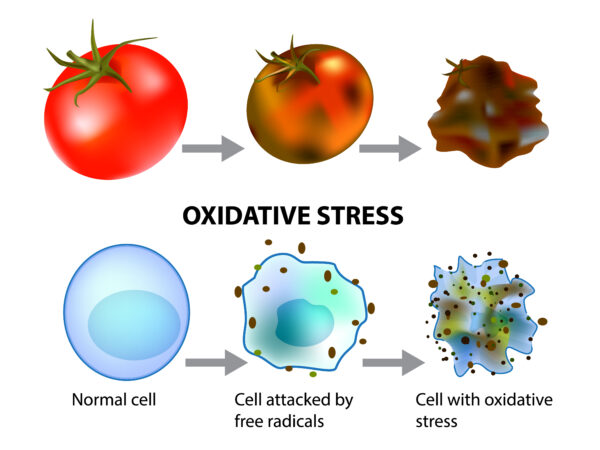
⚡ Environmental Stress Often Means Oxidative Stress
Many environmental exposures share a common thread:
Oxidative Stress.
Pollution, UV radiation and other external factors can increase oxidative pressure on skin and hair.
This is where antioxidant and protective formulation strategies become especially interesting.
Rather than only asking:
How do we remove pollution?
Formulators can also ask:
How do we help reduce the impact of environmental exposure in the first place?
That opens the door to scalp and hair formulas designed around:
🛡️ Antioxidant support
🌿 Barrier support
💧 Moisture retention
🧴 Protective conditioning
✨ Hair-fiber integrity
🧱 Barrier Support Still Matters
Environmental defense isn’t only about antioxidants.
A healthy skin barrier helps the scalp manage moisture and outside exposure more effectively.
That makes barrier-supportive formulation especially relevant after a week focused on cleansing and exfoliation.
Think of it as a sequence:
Reset → Rebalance → Defend
Once excess oil, residue and surface buildup have been addressed, the formulation strategy can shift toward helping maintain the scalp in a comfortable condition as it encounters the environment again.
That may include:
💧 Moisture support
🧱 Lipid or barrier-support ingredients
🌿 Soothing components
🛡️ Antioxidants
💆 Conditioning ingredients that protect the emerging hair fiber
💇 The Hair Fiber Needs Defense Too
Environmental exposure doesn’t stop at the scalp.
Hair fibers themselves accumulate wear over time.
That means environmental-defense formulas may reasonably consider both sides of the equation:
Protect the scalp environment.
And:
Help preserve the condition of the hair fiber.
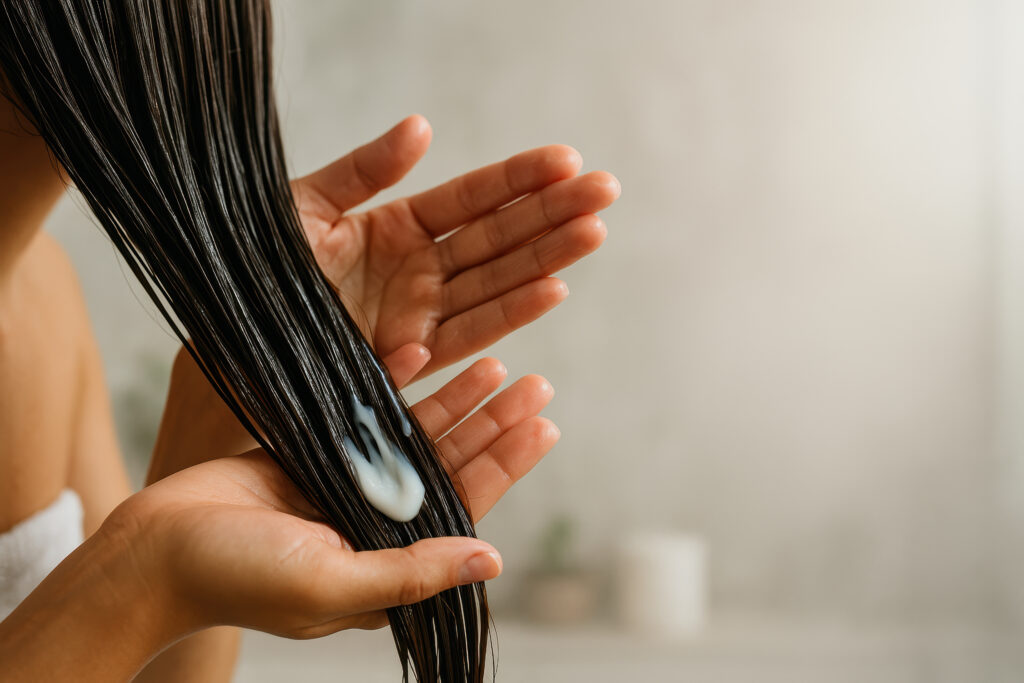
This is especially relevant in leave-on treatments, scalp serums, masks, conditioners and protective hair-care products designed for repeated exposure to sun, heat or urban environments.

🔄 Completing the Reset
Part 1 asked what a scalp detox really means.
Part 2 looked at where exfoliation fits.
Now Part 3 adds the final piece:
What happens after the reset?
A modern scalp-care strategy doesn’t have to stop at removing oil, flakes and buildup.
It can also consider how the scalp and hair will respond to the environment afterward.
Ask:
What exposures will this product encounter in real life?
Does the formula need antioxidant support?
Does the scalp need barrier support after cleansing or exfoliation?
Can the same formula help protect the hair fiber too?
That’s where environmental defense becomes part of the re-balance story.
Not as another layer of complication.
As the step that helps the reset last.
Ready to Build Environmental Defense Into Scalp Care?
Explore formulation strategies that support scalp comfort, antioxidant defense and healthy-looking hair in the face of everyday environmental exposure.
Keep Exploring Scalp-Care Science
Join our newsletter for formulation insights, ingredient education and the latest ideas shaping modern personal care.
Samra, T., Lin, R. R., & Maderal, A. D. (2024). The Effects of Environmental Pollutants and Exposures on Hair Follicle Pathophysiology.
Read the study
The Exposome Impact on Hair Health: Etiology, Pathogenesis and Clinical Features — Part I. (2025).
Read the study
Air Pollution and Skin Diseases. (2025).
Read the study
Human Pollution Exposure Correlates With Accelerated Ultrastructural Degradation of Hair Fibers. (2019).
Read the study
Citation Note: This article is intended for educational and formulation-industry discussion. Publicly accessible peer-reviewed literature was used to support discussion of environmental exposure, pollution, ultraviolet radiation, oxidative stress and hair/scalp condition.