Skin Communication: The Signals Behind Healthy Skin
We often describe skin by what we can see: hydration, smoothness, firmness, redness or radiance.
But those visible characteristics begin with something much smaller.
Skin cells are constantly exchanging information.
Rather than functioning as isolated units, keratinocytes, fibroblasts, immune cells, sensory neurons and other cell populations participate in interconnected signaling networks. These networks help skin recognize changes, coordinate responses and maintain balance.
In other words, healthy-looking skin depends partly on how effectively its many biological players communicate.
🧬 Skin Is a Network, Not a Collection of Individual Cells
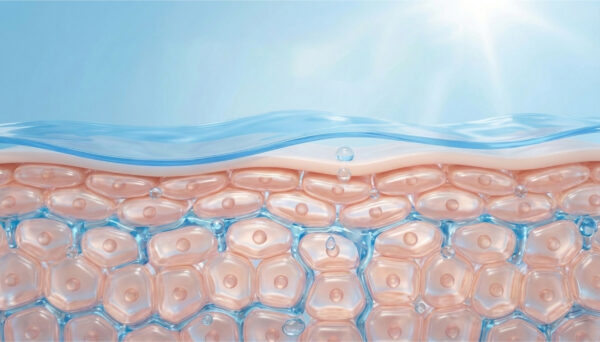
The epidermis and dermis contain very different cell populations, but their functions are closely connected.
Keratinocytes dominate the epidermis, where they contribute to barrier formation and act as important sensors of the surrounding environment. Fibroblasts reside primarily in the dermis, where they participate in extracellular matrix maintenance and tissue structure.
Yet neither works independently.
Research has demonstrated extensive communication between keratinocytes and fibroblasts. Signals produced by one cell population can influence the behavior, proliferation, differentiation and mediator production of another.
That communication helps coordinate what happens across different layers of the skin.
📡 How Do Skin Cells Communicate?
Cells communicate using chemical messengers.
Depending on the biological system involved, those signals can include:
🧪 Cytokines — signaling proteins involved in coordinating immune and inflammatory responses.
🧬 Growth factors — molecules that can influence cellular growth, differentiation, migration and tissue maintenance.
💧 Lipids and other mediators — molecules capable of influencing cellular responses and signaling pathways.
🧠 Neurotransmitters and neuromediators — part of the communication between skin and the nervous system.
📡 Extracellular signals — environmental or biological cues detected by cellular receptors and translated into an internal response.
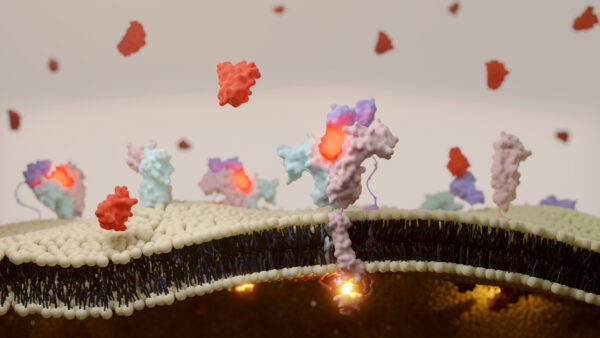
A signal does not simply need to reach a cell. The cell also needs to recognize it.
Specific receptors function like biological receivers. When the appropriate signal interacts with its receptor, a sequence of intracellular events can follow.
That sequence is known as a signaling pathway.
🔄 One Signal Can Become a Biological Conversation
Skin signaling rarely follows a simple one-way path.
One cell may release a messenger that changes the activity of another cell. That second cell may then produce additional mediators that influence neighboring cells or signal back to the original cell.
This creates biological feedback loops.
Keratinocyte-fibroblast communication is one well-studied example. Keratinocytes can release mediators that alter fibroblast activity, while fibroblast-derived factors can influence keratinocyte proliferation and differentiation.
The result is not simply communication between two individual cells.
It is coordinated behavior across tissue.
⚖️ Communication Helps Maintain Homeostasis
One of the most important jobs of these signaling networks is maintaining homeostasis — the dynamic balance that allows skin to function despite continual change.
Skin encounters changing humidity, temperature, microorganisms, UV exposure, friction, cleansing, cosmetic products and numerous other environmental inputs.
Its biology must continuously interpret those signals and respond appropriately.
Normal cellular communication contributes to processes associated with:
🛡️ Barrier maintenance
🔄 Cellular differentiation
✨ Tissue renewal
🧫 Immune surveillance
🔥 Inflammatory responses
🧬 Extracellular matrix regulation
🧠 Sensory responses
The important point for formulators is that these functions are interconnected.
A biological pathway affecting one visible skin characteristic may also interact with systems influencing several others.
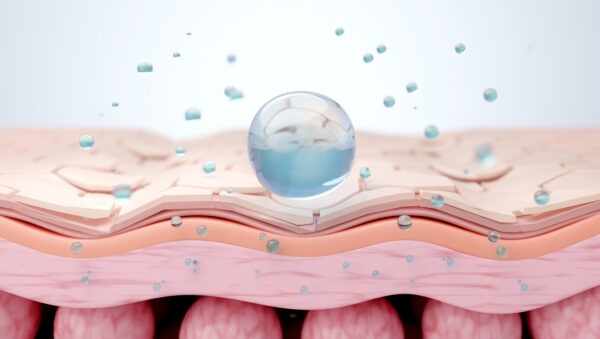
🧠 Skin Communication Extends Beyond the Skin Cell
Some signaling networks also involve sensory neurons and neurobiological pathways.
This helps explain why modern cosmetic science increasingly examines connections between skin sensation, stress responses and cellular biology.
The skin is capable of detecting environmental and biological information and translating it into cellular responses.
That makes skin communication an especially interesting area for cosmetic research. Instead of looking only at a visible endpoint, researchers can also investigate the pathways that help produce it.

🧪 What This Means for Cosmetic Formulation
Understanding signaling biology changes the formulation question.
Instead of asking only:
“What visible benefit do we want?”
formulators can also ask:
“What biological system is associated with that benefit?”
That distinction matters.
Two ingredients may both be positioned for similar visible outcomes while interacting with skin through completely different biological mechanisms.
Understanding those mechanisms can help formulators:
🧬 Select actives with complementary approaches.
🎯 Avoid unnecessarily duplicating the same biological strategy.
🧪 Build more coherent ingredient stories.
📊 Connect ingredient selection to measurable biological endpoints.
💡 Translate complex skin science into clearer consumer benefits.
🔬 From Ingredient Stacking to Biological Strategy
Inside skin biology, visible results begin with processes we cannot see.
Skin contains interconnected signaling networks that influence how cells detect change, exchange information and coordinate responses.
For formulators, understanding those pathways provides another way to think about ingredient selection and formula design.
Instead of simply asking how many actives can fit into a formula, the more useful question may be:
What biological conversation are those actives entering?
Build Around the Biology
Understanding the pathway is only the beginning. Explore ingredient and formulation strategies designed around specific skin functions.
Request Formulation Support
Keep Exploring Inside Skin Biology
Follow the series for practical cosmetic science, ingredient insights and formulation ideas.
Subscribe to the Newsletter
Brembilla, N.C. & Chizzolini, C. (2020). Interplay Between Keratinocytes and Fibroblasts: A Systematic Review Providing a New Angle for Understanding Skin Fibrotic Disorders. Frontiers in Immunology, 11, 648.
https://pmc.ncbi.nlm.nih.gov/articles/PMC7232541/
Cavagnero, K.J. et al. (2024). The Central Roles of Keratinocytes in Coordinating Skin Immunity. Journal of Investigative Dermatology.
https://pmc.ncbi.nlm.nih.gov/articles/PMC11920965/
Citation Note: This article is intended for educational discussion of cosmetic skin biology. References describe established cellular signaling and skin physiology and should not be interpreted as therapeutic or pharmaceutical claims for cosmetic products.