Cellular Energy: What Keeps Skin Functioning?
Skin may appear relatively still from the outside.
Biologically, it is anything but.
Cells are continually maintaining membranes, synthesizing proteins, responding to signals, managing oxidative balance, differentiating and supporting tissue renewal.
All of that activity requires energy.
At the center of cellular energy metabolism are the mitochondria—dynamic organelles responsible for producing much of the adenosine triphosphate, or ATP, that cells use to perform biological work. Mitochondria also participate in signaling, redox regulation, calcium balance and other processes important to cellular homeostasis.
Understanding cellular energy therefore adds another layer to the formulation conversation.
⚡ ATP: The Cell’s Usable Energy
Cells do not simply store large reserves of usable energy.
Instead, they continually produce and consume ATP.
ATP acts as an energy-transfer molecule. When cellular processes require energy, ATP can provide it through biochemical reactions that support essential functions.
In skin, energy is needed for processes associated with:
🔄 Cellular turnover and differentiation
🧬 Protein and lipid synthesis
📡 Cell signaling
🛡️ Barrier maintenance
⚖️ Cellular homeostasis
✨ Tissue organization and renewal
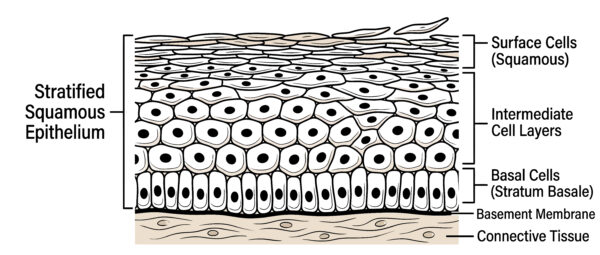
The continuously regenerating epidermis makes this especially relevant. Proliferating cells have metabolic demands that must be met as new cells are produced, differentiate and move toward the surface.

🔋 Mitochondria Are More Than Cellular Batteries
Calling mitochondria the “powerhouse of the cell” is useful, but incomplete.
Mitochondria generate ATP primarily through oxidative phosphorylation, a process involving a series of protein complexes within the inner mitochondrial membrane.
But mitochondria also participate in:
🧬 Cellular signaling
⚖️ Redox balance
🔄 Cell-cycle regulation
💧 Calcium homeostasis
🧪 Metabolic regulation
🔬 Programmed cell death
Their activity therefore connects cellular energy production with many other aspects of skin biology.

🔬 Different Skin Cells Have Different Energy Needs
Not every cell in skin behaves the same way.
Keratinocytes, fibroblasts, melanocytes, immune cells and other cell populations perform different biological jobs—and their mitochondrial activity and metabolic requirements can differ accordingly.
For example, proliferating cells need energy to support growth and division, while differentiated cells may redirect metabolic resources toward their specialized functions.
Even within the same tissue, cellular metabolism is dynamic rather than fixed.
That flexibility allows skin cells to adjust to changing biological demands.
⚖️ Energy and Homeostasis Are Closely Connected
Yesterday, we looked at cell communication and the signaling networks that help coordinate skin function.
Those signals are only part of the story.
Cells also need the metabolic capacity to respond.
Mitochondria are deeply involved in maintaining cellular homeostasis, helping cells adapt to fluctuations in energy demand and environmental conditions. Modern research increasingly describes mitochondria as dynamic systems capable of changing their structure, activity and turnover in response to cellular needs.
That makes energy metabolism part of a much larger network connecting:
📡 Cellular communication
⚡ Energy production
🛡️ Barrier function
🧬 Cellular renewal
⚖️ Biological balance
These systems do not operate independently.
🌡️ What Happens When Energy Systems Are Challenged?
Mitochondrial function can be influenced by both intrinsic biology and environmental exposure.
Research on skin aging has linked changes in mitochondrial function with factors such as chronological aging, UV exposure and oxidative stress. When mitochondrial performance changes, ATP production, cellular redox balance and other processes can also be affected.
This does not mean every visible skin concern can be traced to mitochondrial energy.
Skin biology is much more complicated than that.
Instead, mitochondrial function represents one important component within a network of processes that collectively influence how skin maintains itself over time.

🧪 What Cellular Energy Means for Formulators
For formulators, the concept of cellular energy creates another way to evaluate active ingredients.
Rather than looking only at an ingredient’s final visible benefit, consider the biological story behind it.
Questions might include:
⚡ Does the ingredient have data related to cellular energy or ATP?
🔬 Was mitochondrial function evaluated?
🧬 Is the ingredient associated with cellular vitality, renewal or metabolic activity?
📊 What biological endpoints were actually measured?
🎯 Do those endpoints support the cosmetic benefit being communicated?
This distinction is important because terms such as energizing, revitalizing and cellular vitality can describe very different mechanisms.
Understanding the underlying data helps turn those broad concepts into a more scientifically coherent formulation strategy.
🔋 Energy Is Part of the Bigger Biological Picture
Skin biology is interconnected.
Cellular signals require cells capable of receiving and responding to information. Those responses, in turn, depend on functioning metabolic systems and access to usable cellular energy.
Mitochondria sit at the intersection of many of these processes.
For formulators, the opportunity is not simply to create products described as “energizing.”
It is to understand what cellular energy actually means, how it is measured and where it fits within the larger biology of healthy skin.
Formulate Beyond the Surface
Connect cellular biology with active selection and build formulation strategies around meaningful biological data.
Request Formulation Support
Go Deeper Into Skin Biology
Follow the Inside Skin Biology series for cosmetic science, ingredient insights and formulation ideas.
Subscribe to the Newsletter
Martic, I. et al. (2023). Mitochondrial Dynamics and Metabolism Across Skin Cells: Implications for Skin Homeostasis and Aging. Frontiers in Physiology, 14, 1284410.
https://pmc.ncbi.nlm.nih.gov/articles/PMC10693346/
Stout, R. & Birch-Machin, M. (2019). Mitochondria’s Role in Skin Ageing. Biology, 8(2), 29.
https://pmc.ncbi.nlm.nih.gov/articles/PMC6627661/
Sreedhar, A. et al. (2020). Mitochondria in Skin Health, Aging, and Disease. Cell Death & Disease, 11, 444.
https://pmc.ncbi.nlm.nih.gov/articles/PMC7283348/
Citation Note: This article is intended for educational discussion of cosmetic skin biology. References describe established cellular metabolism, mitochondrial function and skin physiology and should not be interpreted as therapeutic or pharmaceutical claims for cosmetic products.