Overnight Skin Repair: Formulating for Skin’s Nighttime Biology
Skin does not operate on exactly the same setting 24 hours a day.
Like many tissues in the body, skin follows circadian rhythms—approximately 24-hour biological cycles that influence functions such as barrier activity, hydration, cellular turnover and repair processes.
For formulators, that makes nighttime skincare more interesting than simply creating a heavier version of a daytime moisturizer.
The better question is: What does nighttime allow a formula to do differently?
🌙 Skin Has Its Own Timing System
Skin contains its own peripheral biological clocks that help regulate activity within cells including keratinocytes and fibroblasts.
This does not mean skin suddenly switches from “protection mode” during the day to “repair mode” at night. Skin biology is more complex than that. Instead, several functions fluctuate over the course of a 24-hour period.
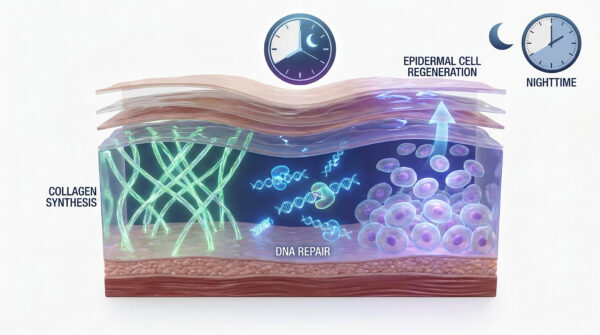
At night, formulators may be working with conditions that include:
🌙 Changing barrier dynamics. Transepidermal water loss can vary throughout the day and may increase during evening and nighttime hours.
💧 A greater need for sustained moisturization. Overnight products remain on the skin for several hours, making prolonged hydration and water retention important formulation considerations.
🧬 Changes in cellular activity. Processes associated with cell renewal, DNA repair and skin maintenance are influenced by circadian signaling.
🛌 Reduced exposure to daytime stressors. During sleep, skin is generally no longer dealing with the same combination of ultraviolet exposure, makeup, repeated cleansing, outdoor pollutants and environmental changes encountered during the day.
Together, these conditions create a useful formulation window.
💧 Think Beyond Simply Adding More Moisture
If nighttime water loss increases, adding more water to a formula is not necessarily enough.
An effective overnight moisturizer can approach hydration from several directions.
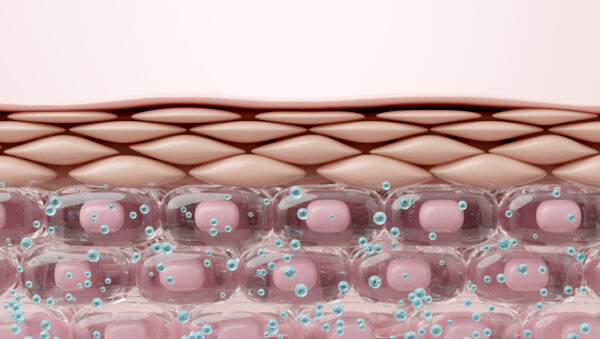
💦 Humectants help attract and retain water within the stratum corneum.
🧴 Emollients help improve softness, flexibility and surface feel.
🛡️ Occlusive ingredients can help reduce water loss by forming a more water-resistant layer on the skin.
🧱 Barrier-supportive formulation strategies help create conditions that support normal stratum corneum function.
The balance between these approaches matters.
A nighttime product can provide greater substantivity and longer-lasting moisturization without automatically becoming heavy, greasy or uncomfortable.
The goal is not simply to make the formula thicker.
The goal is to create a texture that remains comfortable and functional throughout several hours of wear.
🔄 Nighttime Creates an Opportunity for Renewal
Certain active categories have become closely associated with evening skincare, and vitamin A derivatives are among the most familiar examples.
Retinol and retinaldehyde are widely studied cosmetic ingredients used in formulations targeting visible signs associated with photoaging and skin renewal.
But incorporating a renewal-focused active is only part of the formulation challenge.
Formulators also need to consider:
☀️ Light stability
🧪 Oxidative stability
📦 Packaging compatibility
😌 Skin tolerance
⚖️ Concentration and delivery
A successful nighttime renewal formula is not necessarily the one containing the highest possible active level.
The delivery system, vehicle, supporting moisturization and overall sensory profile can all affect how practical a product is for repeated use.
🧪 Delivery Changes the Formulation
An active ingredient does not operate independently of the vehicle surrounding it.
Encapsulation and other delivery technologies may help formulators address challenges such as ingredient stability, dispersion and controlled release.
This becomes especially relevant with ingredients that are difficult to stabilize or that require careful consideration of how they interact with the skin.
Nighttime provides an interesting environment for these systems because a product may remain on the skin for six, seven or eight hours with relatively little interruption.
There is no makeup being applied over it. There may be less frequent touching or wiping of the skin. And the product is generally not being exposed to the same environmental conditions encountered during the day.
That gives formulators an opportunity to think beyond immediate sensory payoff and consider how the formula behaves across the entire wear period.
🧴 Texture Can Be Designed Around Time
Nighttime formulas also give formulators greater freedom to explore textures that may not make sense during the day.
That might include:
🌙 Richer creams that provide more cushion and lasting comfort.
💧 Overnight hydration gels designed for prolonged skin contact.
🫧 Balm-to-cream systems that create a protective, conditioning layer without excessive heaviness.
🛡️ More substantive emulsions developed around barrier support.
✨ Lightweight leave-on treatments designed to be layered beneath an overnight moisturizer.
The key consideration is not simply richness.
It is appropriate persistence.
A nighttime formula should remain comfortable for the amount of time it is expected to stay on the skin while continuing to provide the hydration, protection or active support required by the product concept.
⏰ Formulating Around the Clock
Bio-hacking personal care becomes more meaningful when it moves beyond trend language and begins considering biology itself.
Nighttime skincare offers a good example.
Instead of only asking which ingredients belong in a night cream or overnight serum, formulators can ask:
⏰ When will the product be applied?
🧬 What skin processes are changing during that period?
💧 How will hydration and barrier needs evolve over several hours?
🧪 Does the active require additional stability or delivery support?
🛌 What texture will remain comfortable throughout overnight wear?
That shift changes the formulation conversation.
Rather than designing only around a product category, the formula can be designed around biology, behavior and time.
Sometimes the next formulation variable is not another ingredient.
It is the clock.
Building an Overnight Recovery Formula?
Explore ingredient and formulation strategies for sustained hydration, barrier support, active delivery, and renewal-focused nighttime concepts.
Want More Formulation Insights?
Get ingredient ideas, technical trends, and formulation strategies delivered directly to your inbox.
Resources
Lyons AB, et al. 2019. Circadian Rhythm and the Skin: A Review of the Literature. Journal of Clinical and Aesthetic Dermatology.
Matsui MS, et al. 2016. Biological Rhythms in the Skin. International Journal of Molecular Sciences.
Duan J, et al. 2021. The Circadian Clock and Diseases of the Skin. FEBS Letters.
Mambwe B, et al. 2024. Cosmetic Retinoid Use in Photoaged Skin: A Review of the Compounds, Their Use and Mechanisms of Action. International Journal of Cosmetic Science.
Draelos ZD. 2018. The Science Behind Skin Care: Moisturizers. Journal of Cosmetic Dermatology.
Citation Note: Scientific references support the educational discussion of skin circadian rhythms, nighttime barrier dynamics, transepidermal water loss, moisturization, cellular repair processes, and topical retinoid science. They are not intended to substantiate performance claims for individual cosmetic ingredients or finished formulations.