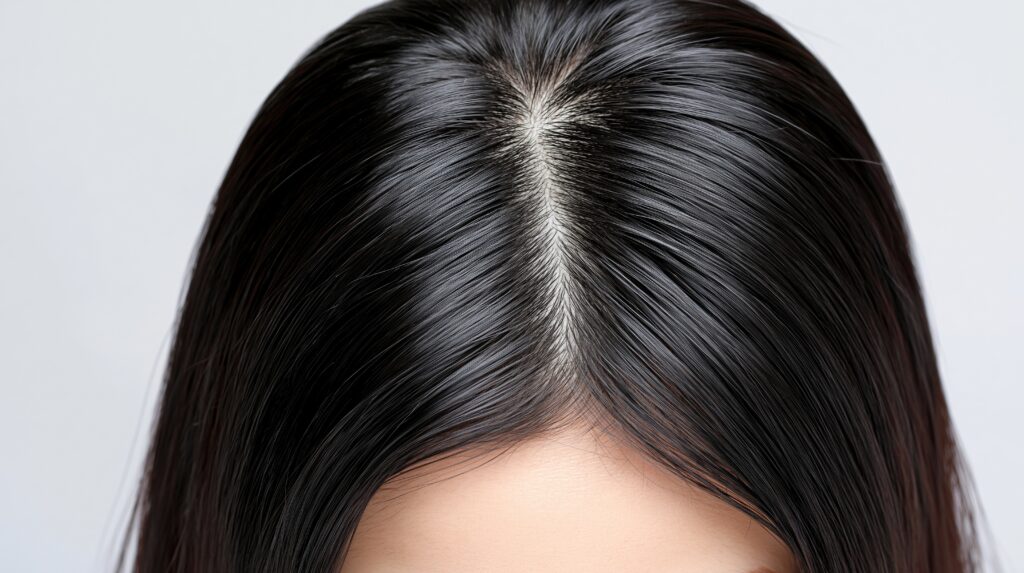
Growth Starts Here — Part 2: Hair Longevity
Growing hair is only part of the story.
Once a strand emerges from the scalp, it becomes a keratinized fiber that has to survive months—or even years—of washing, brushing, styling, coloring, heat, sunlight, humidity, and everyday friction.
That means hair longevity is not just about how long hair continues to grow. It is also about how well the fiber holds up along the way.
For formulators, this creates a second important question in the Growth Starts Here series:
How do we help hair stay intact long enough to reach its full visible potential?
🧬 Hair Is Built to Last—but Not Forever
A mature hair fiber is largely made of keratin and consists of several structural layers.
The cuticle forms the outer protective surface. Beneath it sits the cortex, which provides much of the fiber’s strength, elasticity, and structure. When the cuticle is intact, it helps protect the cortex and contributes to smoother texture, lower friction, and better shine.
But unlike living tissue, the visible hair shaft cannot biologically repair itself once it is damaged.
That makes protection and conditioning especially important.
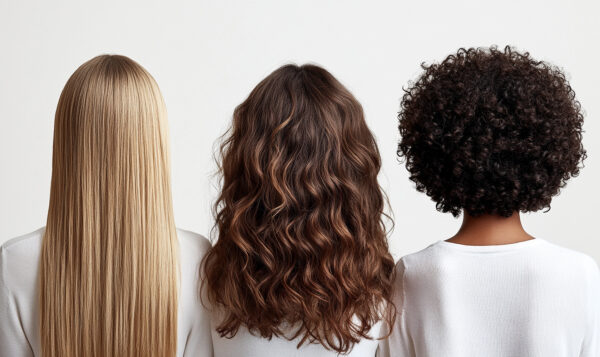
🌦️ Hair Weathering Happens Gradually
Hair damage is rarely the result of a single event.
Instead, the fiber undergoes a process often called weathering—the gradual physical and chemical deterioration of the hair shaft over time. This can result from UV exposure, heat styling, brushing, combing, washing, chemical treatments, and environmental conditions.
The longer the hair, the longer it has been exposed.
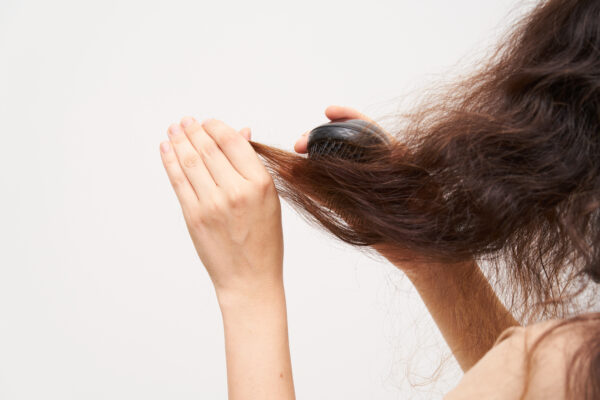
That is why the ends of long hair are often more weathered than the roots. Near the scalp, the cuticle may still be relatively intact. Further down the strand, repeated exposure can lead to lifted or missing cuticle cells, greater roughness, and eventually more vulnerability to breakage.
For formulators, this makes length retention an important part of the hair-longevity conversation.
✂️ Growth and Length Retention Are Not the Same Thing
Consumers often think of longer hair as purely a growth issue.
But visible length depends on two things:
🌱 How much hair grows
and
✂️ How much of that hair survives without breaking
A strand can continue growing normally at the follicle while repeated damage causes the distal fiber to snap, split, or fray.
That means a formula designed to support stronger, more manageable hair can play an important role in maintaining the length consumers have already grown.
🛡️ The Cuticle Is the Fiber’s First Line of Defense
The cuticle is made of overlapping cells that help shield the inner cortex.
Its outer surface also contains a lipid layer rich in 18-methyleicosanoic acid, or 18-MEA, which helps reduce friction and gives healthy hair a more hydrophobic surface. When this protective layer is disrupted, friction can increase and the fiber can become rougher, more porous, and more vulnerable to further damage.
Repeated bleaching, coloring, straightening, and other chemical treatments can accelerate this deterioration. Recent studies examining repeatedly dyed or bleached hair have documented progressive changes in cuticle structure and fiber integrity.
This is where formulation strategies focused on surface protection, lubrication, conditioning, and moisture management become especially relevant.
🔥 Heat and Chemical Treatments Add Up
Modern hair routines ask a lot from the fiber.
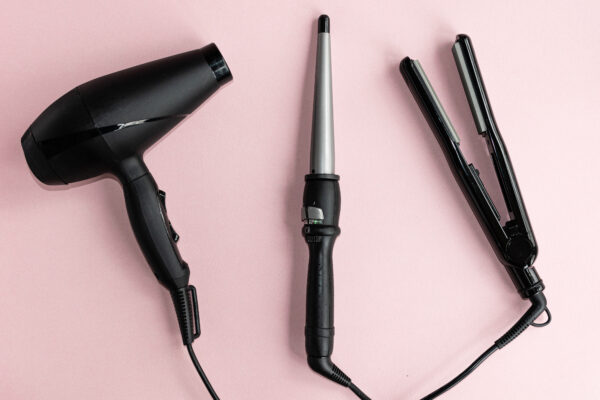
Blow dryers, flat irons, curling tools, bleach, permanent color, relaxers, and straightening treatments can all alter the structure of the hair.
High heat can affect both the cuticle and cortex, while repeated chemical treatments can increase porosity, weaken structural components, and make hair more prone to breakage.
The key word here is cumulative.
Hair may tolerate one exposure reasonably well, but damage can become more noticeable as those exposures repeat over time.
🪮 Friction Matters More Than It Looks
Breakage is not only about chemistry.
Every time hair is brushed, combed, towel-dried, tied back, or rubbed against another surface, mechanical forces are introduced.
Research into cyclic combing shows that friction plays an important role in fiber fragmentation, especially when hair is already compromised. Conditioning treatments that reduce friction can therefore help improve combing performance and reduce early breakage events.
For formulators, that makes slip and manageability more than sensory benefits.
They can also be part of a broader fiber-protection strategy.
💧 Moisture Balance Supports Flexibility
Hair behaves differently depending on its moisture content.
When the fiber becomes excessively dry or structurally damaged, it may feel rougher, stiffer, and more fragile. An intact cuticle helps regulate water interactions with the cortex, while damage can disrupt that balance.
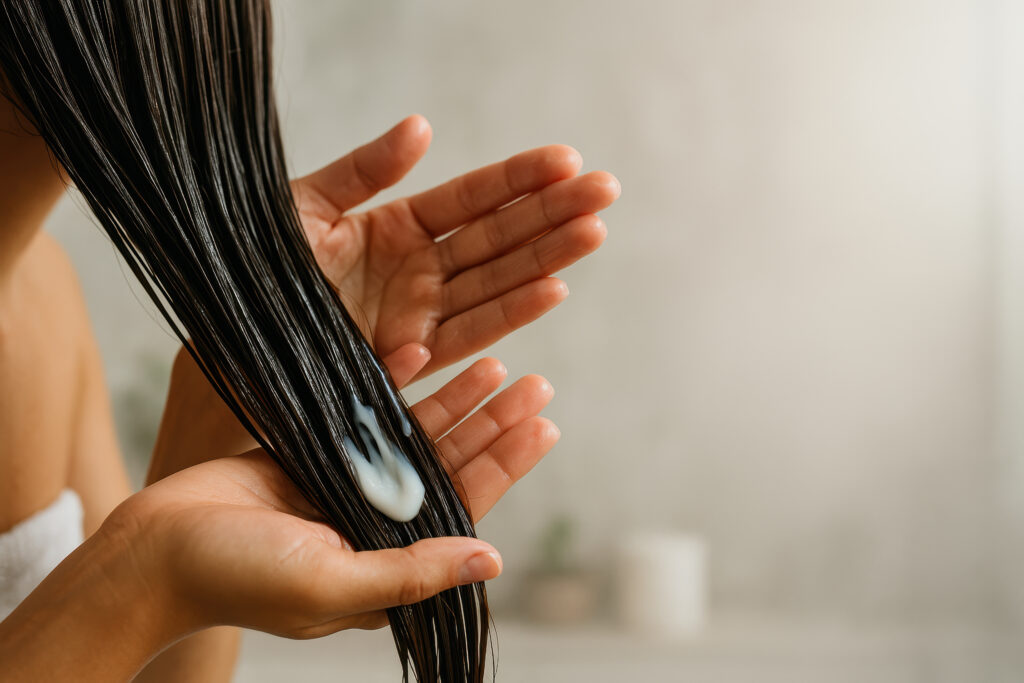
Well-designed conditioners, masks, serums, oils, and leave-in products can help improve surface smoothness and manageability while reducing the mechanical stress created during grooming.
The goal is not to “heal” damaged hair in the biological sense.
It is to help preserve the integrity and performance of the fiber that remains.
✨ What Hair Longevity Looks Like in Formulation
A hair-longevity strategy can focus on several practical goals:
🛡️ Protect the cuticle to reduce progressive surface damage.
🪮 Reduce friction to improve detangling and limit mechanical stress.
💧 Support moisture balance to help maintain flexibility and softness.
🔥 Address heat and chemical stress with protective and conditioning technologies.
💪 Reinforce fiber resilience so hair is better able to withstand everyday handling.
✨ Improve length retention by helping minimize unnecessary breakage.
This is where the idea of longevity becomes especially useful.
It shifts the conversation away from simply making hair appear smoother today and toward helping the fiber remain stronger and more functional over time.
🌿 Hair Longevity Is About Preservation
Healthy-looking hair is not created only at the follicle.
Once the fiber emerges, maintaining it becomes a different formulation challenge.
The longer the strand survives, the more exposure it accumulates—and the more important protection, conditioning, lubrication, and resilience become.
So while Part 1 focused on where hair begins, Part 2 asks what happens next:
How do we help that hair stay healthy-looking for as long as possible?
That is the foundation of hair longevity.
Build More Resilient Haircare
Explore formulation strategies designed to support stronger, smoother, more manageable hair over time.
Contact Us
Keep Up With Formulation Insights
Get new formulation topics, ingredient insights and technical content delivered to your inbox.
Subscribe to Our Newsletter
Fernandes M.M. et al. “On Hair Care Physicochemistry: From Structure and Degradation to Novel Biobased Conditioning Agents.” Polymers, 2023.
https://pmc.ncbi.nlm.nih.gov/articles/PMC9921463/
Lee J.B. et al. “Quantifying the Effects of Repeated Dyeing: Morphological, Mechanical, and Chemical Changes in Human Hair Fibers.” 2024.
https://pmc.ncbi.nlm.nih.gov/articles/PMC11417257/
Wortmann F.J. et al. “Cyclic Combing of Untreated and Bleached Human Hair: Analysis of the Time-Dependent Breakage of Hair Through Recording the Formation of Fibre Fragments.” International Journal of Cosmetic Science, 2026.
https://pmc.ncbi.nlm.nih.gov/articles/PMC13068040/
Gavazzoni Dias M.F.R. “Hair Cosmetics: An Overview.” International Journal of Trichology, 2015.
https://pmc.ncbi.nlm.nih.gov/articles/PMC4387693/
Citation Note: These references support the educational discussion of hair-fiber structure, cuticle integrity, weathering, friction, chemical and thermal damage, and breakage. This article discusses cosmetic haircare formulation concepts and should not be interpreted as therapeutic or medical claims.