Growth Starts Here — Part 1: Hair Growth Support
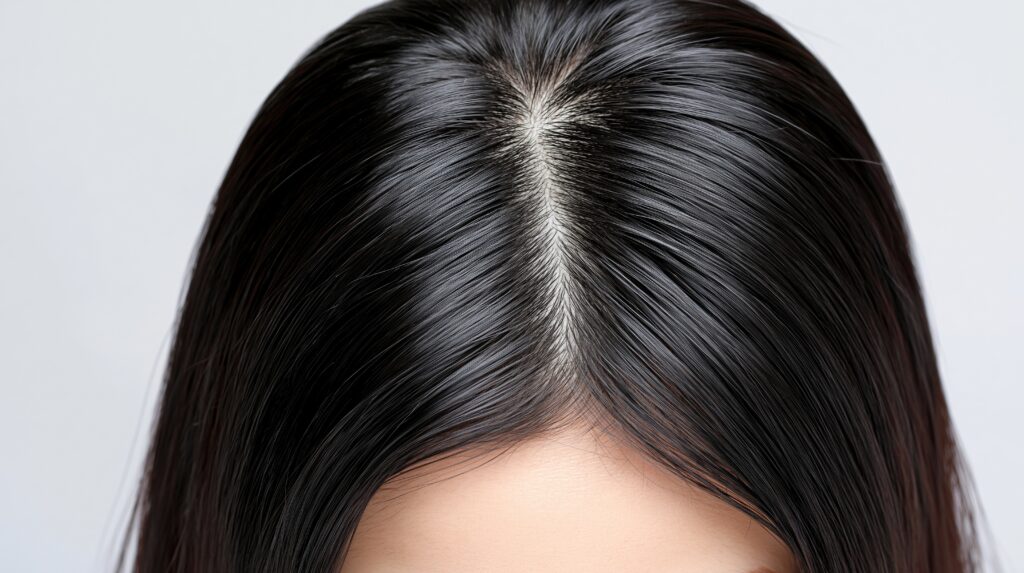
Healthy-looking hair begins well before a strand becomes visible above the scalp.
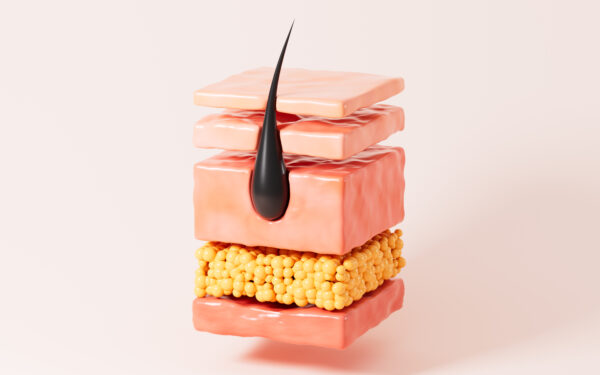
Each hair grows from a follicle, a small but biologically active structure within the skin. Inside that follicle, cells communicate, divide, reorganize, and respond to signals from the surrounding tissue. Hair growth is therefore not simply about the strand itself. It is closely tied to the environment in which that strand is produced.
For formulators, this creates an important shift in perspective: supporting healthy-looking hair can begin with supporting the scalp and follicle environment.
🌱 Hair Growth Is a Cycle, Not a Constant
Hair follicles naturally move through repeating phases of activity.
🌿 Anagen is the active growth phase, when the follicle is producing the hair fiber.
🔄 Catagen is a shorter transition period when active growth slows and the lower portion of the follicle begins to remodel.
💤 Telogen is a resting phase before the follicle eventually begins another cycle.
Unlike a field of grass growing at the same pace, human scalp follicles operate independently. Some are actively growing while others are transitioning or resting at any given time.
This is one reason hair growth is better understood as an ongoing biological process rather than a simple on/off function.
🧬 The Follicle Has Its Own Support Network
At the base of the follicle sits a small but important structure known as the dermal papilla.
The dermal papilla communicates with surrounding cells and helps regulate aspects of follicle development, cycling, and hair-fiber formation. Interactions between dermal and epithelial cells are an essential part of normal follicle biology.
For cosmetic formulators, the biology leads to a practical takeaway:
Healthy-looking hair depends on more than the condition of the visible strand.
That is why modern haircare increasingly considers both the fiber consumers can see and the skin environment underneath it.
💧 Supporting the Environment Where Hair Begins
The scalp presents an unusual formulation challenge. It is skin, but it is also densely populated with follicles and sebaceous glands and routinely exposed to cleansing, styling products, environmental conditions, heat, and mechanical manipulation.
A well-designed hair-growth-support formulation may therefore need to accomplish several things at once:
💧 Support moisture balance without creating a greasy or heavy root feel.
🌿 Promote scalp comfort when dryness or everyday stress leaves the skin feeling less comfortable.
🛡️ Help defend against environmental stressors that can affect the condition of the scalp and hair.
🎯 Reach the intended area effectively instead of simply coating the hair fiber.
✨ Maintain an elegant sensory profile so the product fits easily into a regular haircare routine.
The objective is not to suggest that a cosmetic can control every factor involved in hair growth. Instead, formulators can focus on creating an environment that helps support healthy-looking hair from the beginning.
🛡️ Hair Follicles Are Dynamic Structures
Hair follicles are not passive openings in the skin. They undergo significant remodeling as they move through the growth cycle.
Stem cells, dermal papilla cells, and other surrounding cell populations communicate throughout that process. Research into follicle biology continues to show just how coordinated these interactions are.
That complexity matters when developing cosmetic products.
Rather than looking for one ingredient or one mechanism to do everything, formulators can take a broader approach by supporting several aspects of the hair and scalp environment at the same time.
✨ What Does “Hair Growth Support” Mean in Cosmetics?
Hair-growth language requires some care.
Cosmetic formulation is generally better suited to supporting the appearance and condition of healthy hair and scalp than making therapeutic claims about treating hair loss.
From a formulation perspective, that can mean focusing on:
🌱 The scalp environment — helping maintain comfortable, well-conditioned skin around the follicles.
💧 Hydration — supporting moisture without excessive residue.
🛡️ Resilience — helping hair and scalp manage routine environmental and styling stresses.
💪 Fiber quality — supporting the strength and condition of the hair as it grows.
🧴 Usability — designing treatments that are pleasant enough for regular application.
That last point matters more than it may seem. A highly sophisticated scalp treatment has limited practical value if the consumer dislikes the way it feels at the roots.
🎯 Formulation Format Matters
Hair-growth-support concepts are no longer limited to shampoos.
Formulators now have a wide range of formats available:
💦 Lightweight scalp serums
🌿 Leave-on tonics
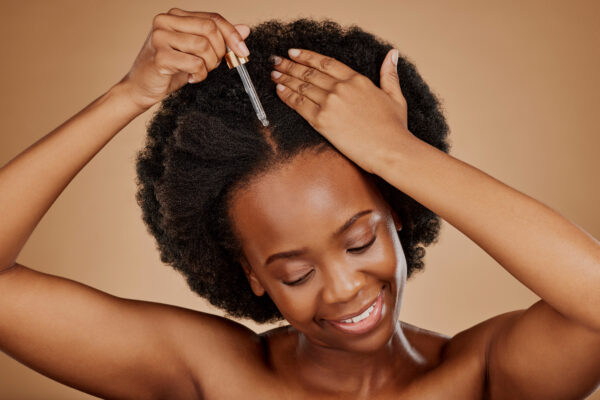
💧 Direct-to-scalp drops
🌫️ Fine treatment mists
🧴 Lightweight emulsions
🫧 Targeted rinse-off treatments
The format should make it easy for the product to reach the scalp while minimizing unwanted buildup on the hair.
This creates an interesting formulation balance: deliver enough product to the target area without making freshly washed hair feel like it needs to be washed again.
🌿 Growth Starts at the Foundation
The hair fiber may be what consumers see, but the process that creates it begins below the surface.
Understanding the hair-growth cycle, follicle environment, and needs of the scalp gives formulators a more complete framework for creating modern haircare products.
The goal does not have to be a more complicated formula.
It is simply a more thoughtful one—designed around where healthy-looking hair actually begins.
Explore Scalp & Hair Formulation Support
Looking to develop a targeted scalp or hair treatment? Our team can help you explore formulation strategies and ingredient solutions.
Contact Us
Keep Up With Formulation Insights
Get new formulation topics, ingredient insights and technical content delivered to your inbox.
Subscribe to Our Newsletter
Oh J.W. et al. “A Guide to Studying Human Hair Follicle Cycling In Vivo.” Journal of Investigative Dermatology, 2016.
https://pmc.ncbi.nlm.nih.gov/articles/PMC4785090/
Yang C.C. and Cotsarelis G. “Review of Hair Follicle Dermal Cells.” Journal of Dermatological Science, 2010.
https://pmc.ncbi.nlm.nih.gov/articles/PMC2818774/
Morgan B.A. “The Dermal Papilla: An Instructive Niche for Epithelial Stem and Progenitor Cells in Development and Regeneration of the Hair Follicle.” Cold Spring Harbor Perspectives in Medicine, 2014.
https://pmc.ncbi.nlm.nih.gov/articles/PMC4066645/
Wall D. et al. “Advances in Hair Growth.” Facial Plastic Surgery & Aesthetic Medicine, 2022.
https://pmc.ncbi.nlm.nih.gov/articles/PMC8808739/
Citation Note: These references support the educational discussion of human hair-follicle cycling, dermal papilla function, follicle biology, and the biological foundation of healthy hair growth. They should not be interpreted as therapeutic or pharmaceutical claims for cosmetic products.