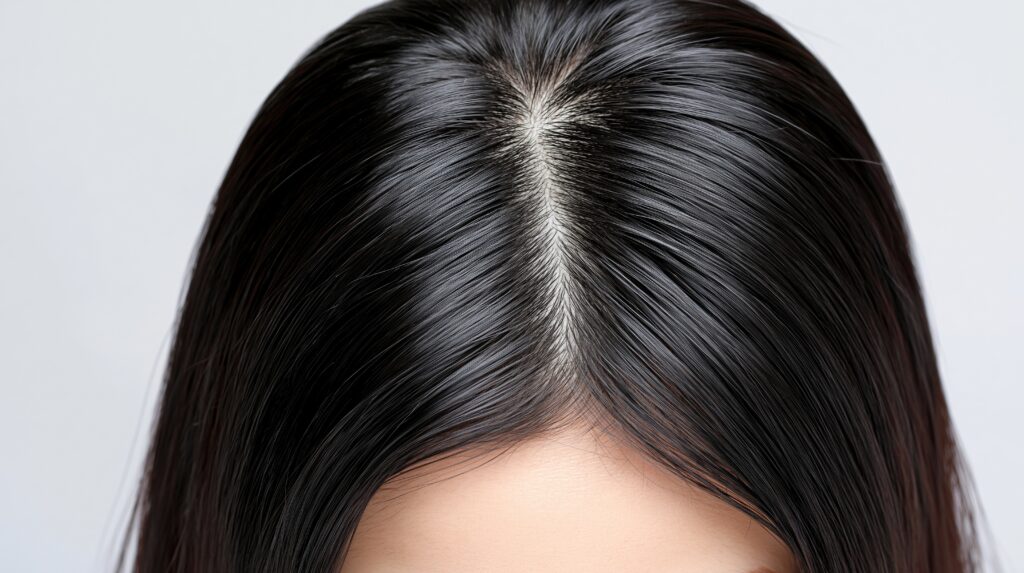
Healthy Hair Starts at the Scalp
When we look at hair, we usually judge what happens after it leaves the scalp.
Is it shiny? Strong? Smooth? Full-looking? Easy to manage?
But every visible strand begins somewhere we cannot see: inside a follicle embedded in the scalp.
That makes the scalp more than a surface beneath the hair. It is the biological environment surrounding the growing portion of the fiber.
Research describes hair quality as the result of both pre-emergent factors occurring around the scalp and follicle and post-emergent factors affecting the exposed hair fiber. In other words, what happens before the hair appears above the skin is part of the bigger haircare picture.
🌱 Hair Begins Below the Surface
The visible hair shaft is largely keratinized tissue, but its growing portion originates inside the follicle.
That follicle sits within the scalp, surrounded by sebaceous activity, microorganisms, skin structures and the local biological environment.
This distinction is important for formulators.
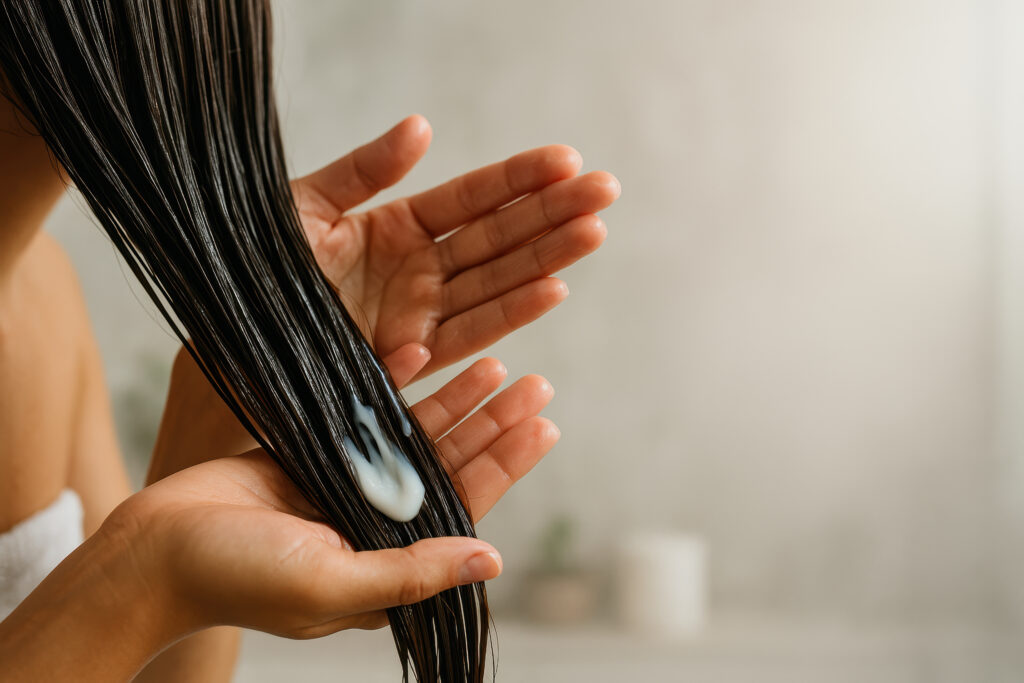
Once a hair fiber has emerged, cosmetic products can help improve properties such as:
✨ Smoothness
💪 Resistance to breakage
💧 Conditioning
🪮 Manageability
🌟 Shine and appearance
But scalp-focused products address a different target: the environment surrounding the follicle before and as the fiber emerges.
That is why scalp care and fiber care should complement each other rather than compete for the same job.
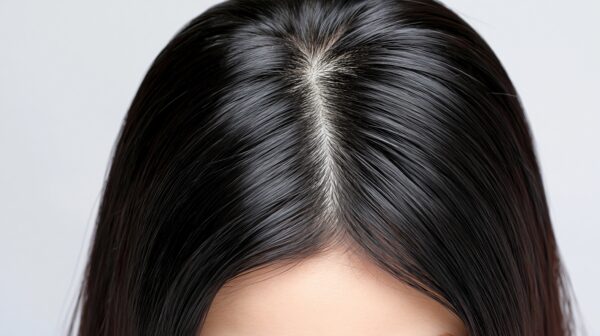
🧬 The Follicle Has Its Own Environment
The scalp contains a high density of terminal hair follicles and sebaceous glands, creating a distinctive environment compared with many other areas of skin.
Sebum, microorganisms, barrier condition and environmental exposure all contribute to that setting.
That does not mean a cosmetic formula can simply “make hair grow.” Hair growth is biologically complex, and therapeutic claims require a very different level of evidence and regulatory consideration.
But it does mean formulators can think thoughtfully about the condition of the scalp surrounding the follicle.
That opens legitimate cosmetic formulation territory around:
🌿 Scalp conditioning
💧 Hydration and comfort
⚖️ Sebum management
🛡️ Barrier support
✨ Maintaining a clean, well-cared-for scalp environment
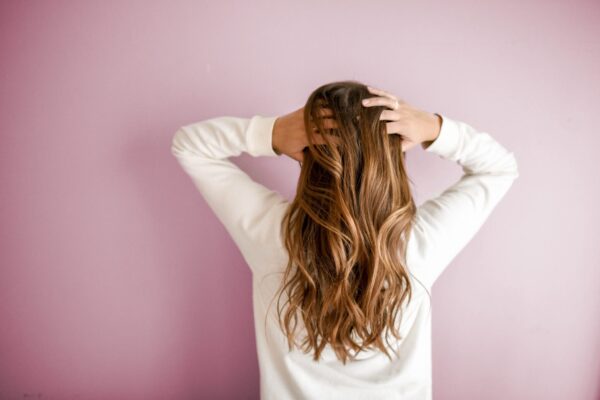
⚖️ Balance Matters Around the Roots
Sebum is a normal part of scalp physiology.
But excessive accumulation of sebum, styling residue and other material can alter how the scalp feels and looks.
Research examining shampoo frequency has found that greater accumulation of scalp sebum can be associated with increased oxidized lipids, flaking and other signs of poorer scalp condition, although the findings were population-specific and should not be generalized to every hair type or washing routine.
For formulators, the takeaway isn’t “wash more.”
It’s balance.
A scalp product should be designed around its intended user, frequency of use and product format rather than treating oil removal as the only measure of performance.
🛡️ Oxidative Stress Is Part of the Scalp Conversation
The scalp is also exposed to environmental and biological sources of oxidative stress.
Scientific reviews have discussed factors such as UV exposure, pollution, inflammation and oxidized scalp lipids as contributors to oxidative stress affecting the scalp and the environment surrounding the pre-emergent hair fiber.
For cosmetic formulators, this creates another way to think about scalp care.
Rather than focusing only on cleaning or conditioning, scalp formulations can also be developed around maintaining a comfortable, balanced and well-conditioned environment that supports healthy-looking hair.
The important distinction is that cosmetic scalp care supports the environment—it does not replace medical treatment for hair-loss disorders or other scalp conditions.

🧴 Scalp Care and Hair Care Have Different Jobs
A strong scalp-care strategy does not eliminate the need for traditional haircare.
The exposed fiber still encounters its own challenges:
🔥 Heat styling
☀️ UV exposure
🎨 Chemical treatments
💨 Environmental exposure
🪮 Mechanical stress from brushing and styling
Once the fiber emerges, conditioners, masks, styling products and protective treatments become important tools for maintaining its cosmetic properties.
So the most complete formulation approach recognizes two connected but distinct targets:
The scalp and follicular environment before emergence.
The hair fiber after emergence.
That is a more useful way to think about healthy-looking hair than asking one shampoo or treatment to solve everything.
🌿 Build From the Foundation Up
Scalp care does not replace haircare.
It expands it.
By considering the barrier, sebum environment, follicular surroundings and overall scalp condition alongside the needs of the hair fiber, formulators can take a more complete approach to modern haircare.
Throughout this Scalp-Care Revolution series, one idea has remained constant:
Your scalp is skin too.
From barrier support and targeted scalp care to the growing skinification of haircare, the opportunity is to formulate with both the scalp and the hair fiber in mind.
Because healthy-looking hair does not begin only after the strand reaches the surface.
It begins with the environment beneath it.
Build Haircare From the Scalp Up
Looking for ingredients and formulation strategies for modern scalp-care concepts?
Request Formulation Support
Keep Exploring Formulation Science
Get educational formulation content, ingredient insights and new ideas delivered to your inbox.
Subscribe to the Newsletter
Trüeb RM. (2019). A Comment on the Science of Hair Aging. International Journal of Trichology.
https://pmc.ncbi.nlm.nih.gov/articles/PMC6369639/Trüeb RM. (2019). Scalp Condition Impacts Hair Growth and Retention via Oxidative Stress. International Journal of Trichology.
https://pmc.ncbi.nlm.nih.gov/articles/PMC6369642/Punyani S, Tosti A, Hordinsky M, Yeomans D, Schwartz J. (2021). The Impact of Shampoo Wash Frequency on Scalp and Hair Conditions. Skin Appendage Disorders.
https://pmc.ncbi.nlm.nih.gov/articles/PMC8138261/
Citation Note: These references support the educational discussion of scalp biology, the follicular environment, sebum accumulation, oxidative stress and the relationship between scalp condition and hair quality. Cosmetic scalp care should not be interpreted as treatment for hair loss or scalp disease.