Foundation First: Your Scalp Is Skin Too
Haircare has traditionally focused on what we can see: softness, shine, smoothness, manageability and strength.
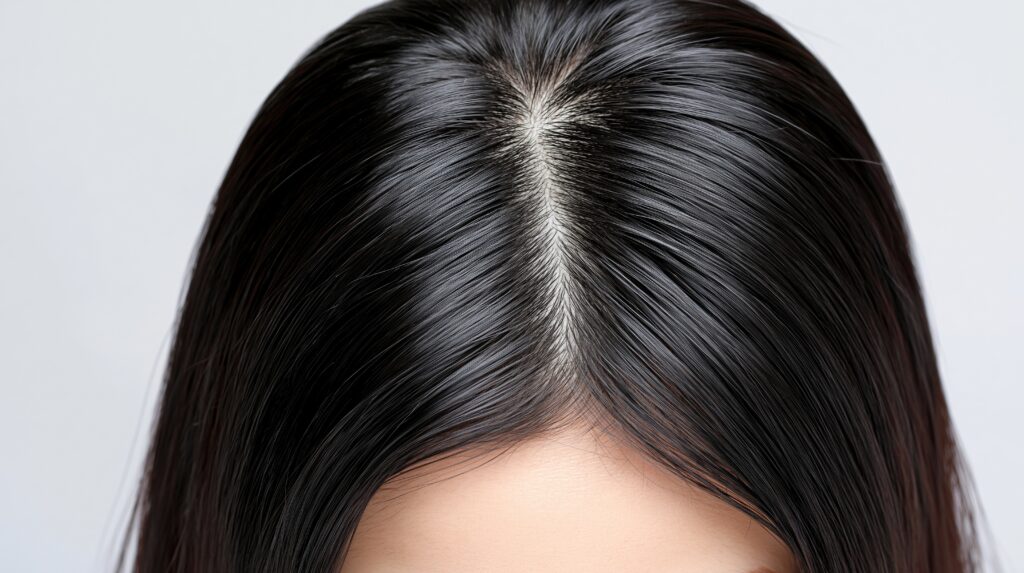
But underneath every strand is something just as important—the scalp.
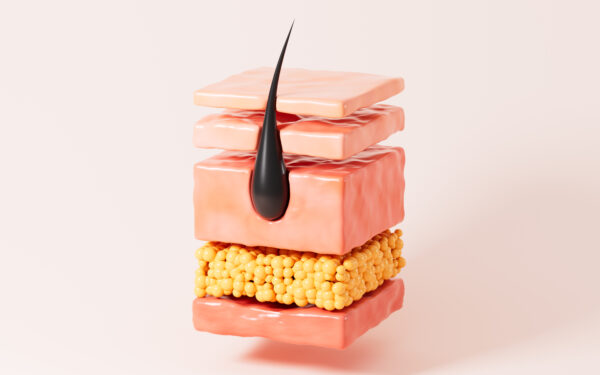
The scalp is skin. It has an epidermal barrier, produces sebum, hosts a community of microorganisms and contains thousands of hair follicles. What makes it different is the environment surrounding all of those systems. Hair coverage, abundant sebaceous glands, sweat and follicular structures create conditions that are quite different from the skin on the face or body.
That distinction is helping drive a broader shift in haircare: formulating for the scalp itself, not simply the hair growing from it.
🛡️ Your Scalp Has a Barrier Too
When we talk about skincare, barrier function is almost impossible to ignore.
The outermost layer of skin—the stratum corneum—helps limit water loss while providing protection from the surrounding environment. The scalp relies on this same fundamental barrier system. Research into scalp conditions has shown that changes in stratum corneum structure and lipids can be associated with greater transepidermal water loss and reduced barrier quality.
That means scalp formulation isn’t only about removing oil or cleansing away buildup.
It also raises familiar skincare questions:
🧴 Is the cleansing system appropriate for repeated use?
💧 Does the formulation help maintain comfortable hydration?
🛡️ How does the product interact with the scalp barrier?
⚖️ Are we balancing cleansing performance with scalp comfort?
These are essentially skincare questions—just applied to a very different piece of skin.
🌿 A Unique Skin Environment
The scalp has an unusually rich network of hair follicles and sebaceous glands.
Sebum contributes to the scalp’s surface environment, while hair density can influence humidity, occlusion and how products spread or remain on the skin. Together, these characteristics create a lipid-rich environment that supports a distinctive microbial ecosystem.
So while the scalp follows many of the same biological principles as other skin, it should not simply be treated like facial skin with hair on top of it.
For formulators, that difference matters.
A leave-on scalp serum, rinse-off cleanser and facial moisturizer may all address skin, but they encounter very different application conditions, sensory expectations and formulation challenges.
🦠 The Scalp Microbiome Matters
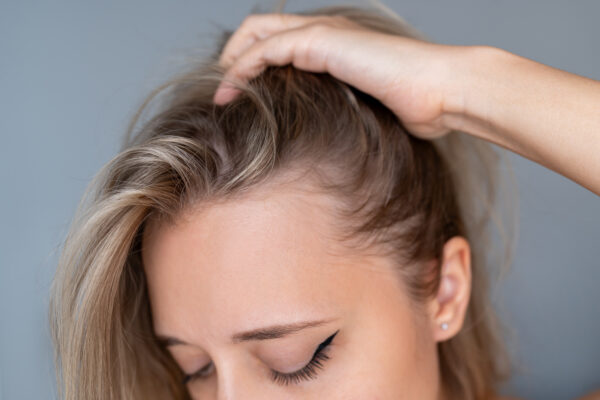
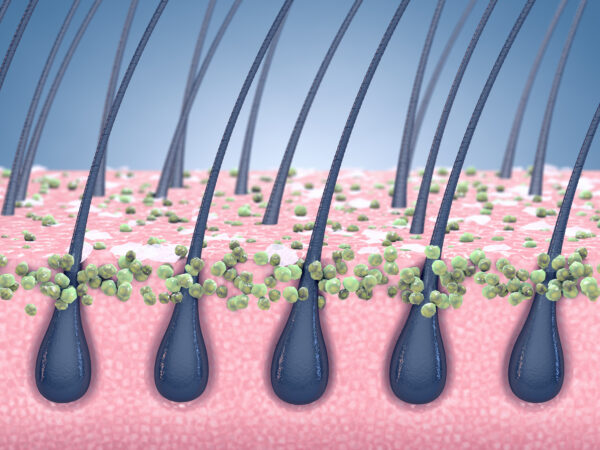
Like other areas of skin, the scalp supports bacteria, fungi and other microorganisms.
The composition of that community is influenced by factors such as sebum, moisture, pH and the follicular environment. Research continues to explore how interactions among the microbiome, barrier and scalp environment contribute to overall scalp condition.
The key formulation lesson isn’t that every scalp product needs to become a “microbiome product.”
It’s that the scalp is an ecosystem.
Cleansing, sebum management, exfoliation, hydration and conditioning all interact with that environment. Thinking about those elements together can lead to a much more sophisticated formulation strategy than simply asking whether a shampoo cleans effectively.
🧪 The Skinification of Hair Care
This is where the idea often called the skinification of haircare becomes useful.
It isn’t simply about putting familiar skincare language onto a shampoo bottle.
It represents a larger change in formulation thinking: applying concepts such as barrier support, hydration, exfoliation, microbiome awareness and targeted leave-on care to the scalp.
And that shift is creating room for formats beyond conventional shampoo and conditioner:
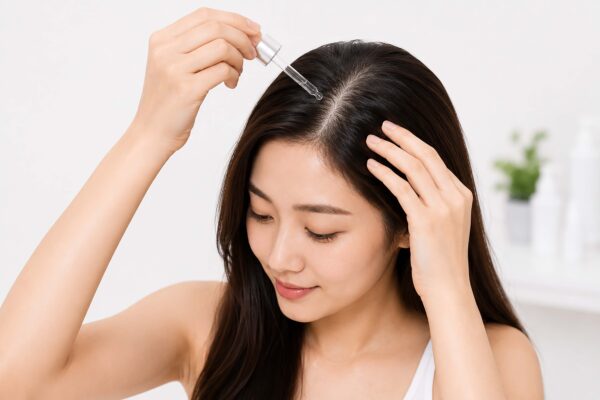
🧪 Scalp serums and concentrates
💦 Hydrating scalp treatments
🫧 Targeted cleansers and pre-shampoo treatments
🌿 Scalp masks and exfoliating treatments
🎯 Leave-on products designed for specific scalp concerns
The scalp is increasingly becoming its own formulation category.
🌱 Healthy-Looking Hair Starts With the Scalp
Hair fiber and scalp are not interchangeable targets.
A conditioner can improve the feel of damaged lengths without addressing scalp comfort. A scalp treatment can support the environment surrounding the follicle without functioning like a traditional hair conditioner.
That distinction is important because modern haircare is becoming more precise.
Rather than expecting every product to treat the scalp and hair identically, formulators can ask a better question:
What does this particular area actually need?
For the scalp, that may mean thoughtful cleansing, hydration, barrier awareness, sebum balance, comfortable sensory properties and formats that can reach the skin beneath the hair.
The scalp may have spent decades in the shadow of the hair fiber.
But biologically, it was skin all along.
Start With the Scalp
Building a scalp-focused formulation? Our team can help you explore ingredients and formulation strategies for modern scalp care.
Request Formulation Support
Keep Exploring Formulation Science
Get educational formulation content, ingredient insights and new ideas delivered to your inbox.
Subscribe to the Newsletter
Schwartz JR, Messenger AG, Tosti A, et al. (2013). A Comprehensive Pathophysiology of Dandruff and Seborrheic Dermatitis – Towards a More Precise Definition of Scalp Health. Acta Dermato-Venereologica.
https://pmc.ncbi.nlm.nih.gov/articles/PMC3494381/Saxena R, Mittal P, Clavaud C, et al. (2018). Comparison of Healthy and Dandruff Scalp Microbiome Reveals the Role of Commensals in Scalp Health. Frontiers in Cellular and Infection Microbiology.
https://pmc.ncbi.nlm.nih.gov/articles/PMC6180232/Lee HJ, Kim M. (2022). Skin Barrier Function and the Microbiome. International Journal of Molecular Sciences.
https://pmc.ncbi.nlm.nih.gov/articles/PMC9654002/
Citation Note: These references support the educational discussion of scalp barrier function, the scalp microbiome, sebum-rich scalp biology, and the relationship between scalp condition and modern scalp-care formulation. They should not be interpreted as therapeutic or pharmaceutical claims for cosmetic products.