🔬 The Future of Scalp Care: Where Science Meets Personal Wellness
For years, the goal of haircare was relatively straightforward: cleanse the hair, condition it, and make it look its best.
Today, that conversation is changing.
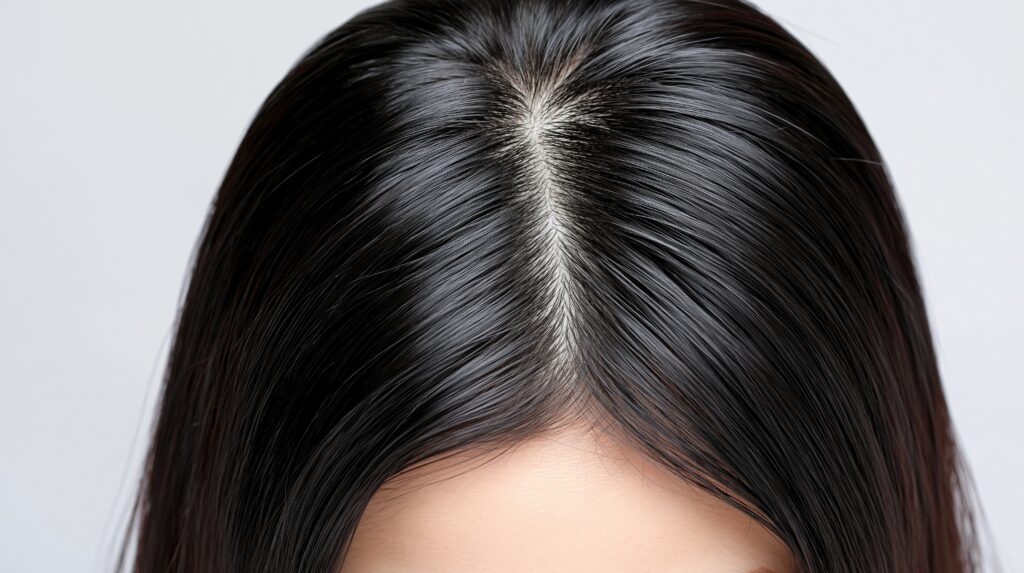
Consumers are looking beyond the visible hair fiber and paying more attention to the skin beneath it. Questions about scalp comfort, hydration, oiliness, and overall condition are becoming part of everyday haircare discussions.
And science is giving formulators new ways to respond.
From microbiome research to targeted ingredient delivery, scalp care is developing into a more sophisticated category—one that brings together skin biology, formulation technology, and personal wellness.
The future of scalp care isn’t necessarily about adding more steps. It’s about making each step more relevant to the individual.
🦠 The Scalp Microbiome: A New Area of Understanding
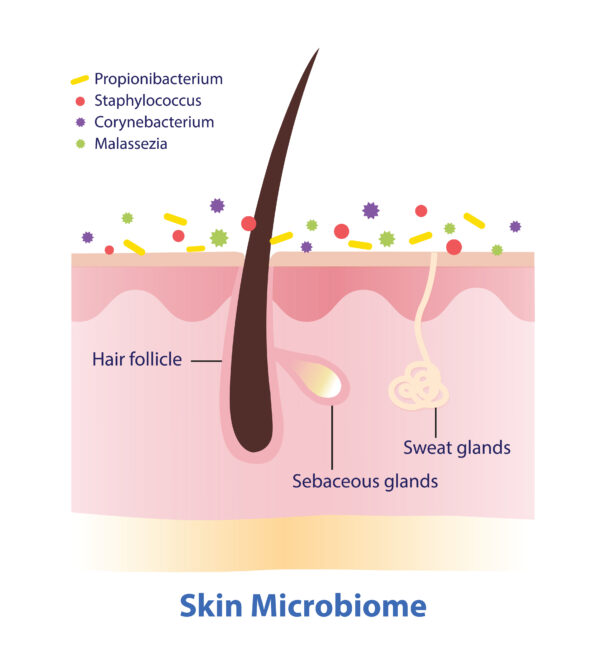
Our scalp is home to a community of microorganisms, including bacteria and fungi, collectively known as the scalp microbiome.
These microorganisms exist naturally on the skin and interact with the environment around them.
The scalp provides a particularly interesting habitat because of its hair follicles, sebaceous glands, moisture levels, and surface chemistry.
Research has shown that microbial communities on the scalp differ from those found on other areas of the body.
Scientists are also investigating how variations in these communities relate to scalp conditions and the skin’s protective functions.
💡 The important distinction: Not every change in the microbiome indicates a problem, and a more diverse microbial population isn’t automatically better for every individual.
For formulators, this research introduces a more thoughtful approach to scalp care.
Instead of assuming that effective cleansing requires removing as many microorganisms as possible, product development can consider how formulation choices interact with the scalp’s natural environment.
Potential considerations include:
🌿 Gentle cleansing: Removing unwanted oil and residue while maintaining appropriate product mildness.
🛡️ Barrier-conscious care: Supporting the skin’s normal moisture balance and protective function.
🧬 Microbiome-aware formulation: Evaluating how products interact with the scalp’s microbial communities.
💧 Scalp comfort: Designing products appropriate for different skin conditions and sensory preferences.
Microbiome science is still developing, but it is already expanding the questions formulators ask when designing scalp-care products.
🎯 Targeted Delivery: Getting Ingredients Where They’re Needed
A well-chosen cosmetic ingredient is only one part of a successful formulation.
Another important consideration is how that ingredient reaches and interacts with its intended application area.
The scalp creates a unique challenge because products must pass through the hair to reach the skin.
Depending on the formulation, ingredients may also interact with the skin surface, hair follicles, or surrounding tissues.
This has encouraged research into specialized delivery systems and carrier technologies.
Some approaches use encapsulation or microscopic delivery structures designed to protect ingredients and influence how they are distributed.
Others focus on improving formulation compatibility or controlling the release of an ingredient.
🔬 Why does delivery matter?
💧 Ingredient stability: Sensitive components may require protection from certain formulation conditions.
🎯 Targeted application: Products can be designed to reach specific areas of the scalp more effectively.
🧪 Formulation compatibility: Carrier systems may help incorporate ingredients that are otherwise difficult to formulate.
✨ Sensory performance: Delivery choices can influence texture, residue, and the overall application experience.
However, a sophisticated delivery system doesn’t automatically guarantee better results.
Its value depends on the ingredient, the finished formulation, the intended application, and supporting evidence.
For formulators, the goal is to choose technology because it solves a specific problem—not simply because it sounds advanced.
🌿 Personalization: One Scalp Doesn’t Fit All
Think about how differently people experience scalp care.
One person may struggle with oily roots shortly after washing. Another may experience dryness and tightness. Someone else may want a product that feels comfortable after frequent exercise or styling.
These differences matter because the scalp environment isn’t identical from person to person.
Sebum production, hair density, cleansing habits, environmental exposure, and individual preferences can all influence product needs.
💡 Personalized scalp care begins by recognizing that different consumers may benefit from different formulation approaches.
For example:
💧 Dry-feeling scalp: May benefit from lightweight moisturizing and conditioning treatments.
🌿 Oily roots: May call for effective cleansing and products that minimize unwanted residue.
🛡️ Sensitive-feeling scalp: May require particularly careful attention to mildness, fragrance, and ingredient selection.
✨ Frequent styling: May increase the importance of residue removal and manageable application.
💆 Wellness-focused routines: May prioritize enjoyable textures and convenient, targeted treatments.
This doesn’t necessarily mean every consumer needs a completely customized product.
A well-designed portfolio of products with clearly differentiated benefits can provide meaningful choices without making scalp care unnecessarily complicated.
🧪 The Next Generation of Scalp Formulations
As scalp care becomes increasingly sophisticated, formulators face an interesting challenge: combining new technologies with the practical requirements of everyday personal care.
An advanced ingredient may have compelling laboratory data, but the finished product still needs to meet consumer expectations.
That means considering factors such as texture, stability, preservation, application, and compatibility alongside ingredient performance.
Several product formats provide opportunities for innovation.
💧 Lightweight Scalp Serums
Targeted leave-on treatments can deliver cosmetic conditioning benefits in formats designed to minimize heaviness around the hair roots.
🫧 Gentle Scalp Cleansers
Modern cleansing systems can be developed with attention to mildness, residue removal, and compatibility with the scalp’s natural environment.
🌿 Targeted Pre-Wash Treatments
These products can offer more specialized conditioning experiences while allowing excess product to be removed during shampooing.
✨ Scalp Lotions and Essences
Fluid, easily distributed products may appeal to consumers seeking convenient scalp care without complicated application routines.
🛡️ Barrier-Focused Treatments
Formulations emphasizing hydration and skin-conditioning lipids provide another avenue for addressing dry-feeling scalp skin.
The common thread is a greater emphasis on matching the formulation to the intended need.
🔍 Better Testing, Better Formulation Decisions
Scientific innovation isn’t only about discovering new ingredients.
It’s also about improving how we evaluate products.
Research into noninvasive scalp assessment includes techniques for observing skin characteristics, examining hair and follicle structures, and measuring aspects of scalp condition.
These approaches can help researchers understand changes that might not be obvious through visual observation alone.
For cosmetic formulators, better measurement creates opportunities for more specific and meaningful product claims.
But evidence needs to match the benefit being communicated.
🧬 A change in microbial composition doesn’t automatically prove improved scalp health.
🎯 Demonstrating that an ingredient reaches a particular area doesn’t, by itself, establish a consumer benefit.
💧 And showing moisturizing activity in a laboratory model doesn’t necessarily predict the performance of every finished formulation.
The future of credible scalp care will depend on connecting promising technologies with appropriate testing and realistic claims.
🌸 Where Scalp Science Meets Self-Care
There’s something interesting about the direction scalp care is taking.
As scientific understanding becomes more detailed, the consumer experience doesn’t necessarily need to become more complicated.
In fact, the opposite may be true.
Better ingredient selection, targeted treatments, and improved formulation design may make it possible to create simpler routines that address specific needs more effectively.
For consumers, this could mean choosing a lightweight treatment for scalp comfort rather than adding several unnecessary steps.
For formulators, it means prioritizing products that deliver a clear purpose.
And for the personal-care industry, it represents an opportunity to connect scientific progress with the everyday experience of feeling comfortable and confident.
🌱 The Future Is Thoughtful, Targeted, and Personal
Throughout this series, we’ve explored how scalp care connects with stress, sensory experiences, and everyday wellness.
Now, we’re seeing how those ideas come together.
Microbiome research is expanding our understanding of the scalp’s natural environment.
Targeted delivery technologies are creating new formulation possibilities.
Personalized approaches are encouraging more attention to individual needs rather than one-size-fits-all solutions.
But perhaps the most important lesson is that innovation doesn’t have to mean complexity.
The future of scalp care is about understanding what the scalp needs, choosing technologies that serve a clear purpose, and creating products people genuinely enjoy using.
Because scalp care isn’t simply about maintaining hair.
It’s about making thoughtful care part of everyday wellness.
Coming Next: Skinimalism 2.0. We’ll explore how purposeful ingredient selection, multifunctional formulations, and simpler routines are shaping the next chapter of personal care.
Explore the Future of Scalp Care
Connect with our team to explore innovative scalp-care formulation opportunities, or subscribe for more insights into cosmetic science.
Resources:
- Paul, J. K., et al. (2025). Unlocking the secrets of the hair microbiome: From scalp health to therapeutic advances. The Microbe, 7, 100353.
https://doi.org/10.1016/j.microb.2025.100353 - Joo, S., et al. (2024). An in vivo approach for revealing physiological properties of human scalp microbiome. Journal of Cosmetic Dermatology, 23(12), 4374–4376.
https://doi.org/10.1111/jocd.16524 - Jacksch, S., et al. (2024). Effect of two shampoo formulations on the prokaryotic and eukaryotic microbiota composition of the human scalp. International Journal of Cosmetic Science, 46(1), 62–70.
https://doi.org/10.1111/ics.12895 - Du, X., et al. (2025). New Frontiers of Non-Invasive Detection in Scalp and Hair Diseases: A Review of the Application of Novel Detection Techniques. Skin Research and Technology, 31, e70163.
https://doi.org/10.1111/srt.70163
Citation Note: This article draws on peer-reviewed research concerning the scalp microbiome, the effects of cosmetic products on scalp microbial communities, and emerging technologies for evaluating scalp and hair characteristics. Discussions of targeted delivery and personalized scalp-care approaches reflect developing areas of cosmetic research and formulation design. The information is educational and does not establish clinical efficacy for any particular finished cosmetic formulation.