The Art of Doing Less: Formulating for What Really Matters
A cosmetic formula can look promising on paper. It may contain carefully selected ingredients, address a clear consumer need, and offer an appealing sensory concept.
But successful product development requires more than a well-considered ingredient list.
The formula must perform as intended, remain stable under appropriate conditions, and deliver a consistent experience when consumers use it.
As we conclude our Skinimalism 2.0 series, we’re exploring how formulators can translate good intentions into practical development decisions.
Because purposeful formulation isn’t just about what goes into a product. It’s about how well the finished product delivers.
🎯 Turn Formulation Goals Into Measurable Targets
Every development project starts with an objective. The challenge is translating that objective into properties that can be evaluated.
Consider a lightweight facial lotion. Describing it as comfortable, hydrating, and easy to apply creates a useful direction, but those words alone are not enough to guide formulation decisions.
A more detailed development brief might include:
🎯 Target viscosity: How should the product flow during dispensing and application?
💧 Hydration performance: What benefit is expected, and how will it be evaluated?
✨ Sensory characteristics: Should the finish feel light, cushioned, silky, or non-tacky?
⚖️ Physical stability: What changes in appearance, viscosity, or phase behavior are acceptable?
📦 Packaging performance: Can the product be consistently dispensed throughout its intended use?
These targets provide a framework for comparing formulation options and identifying meaningful improvements.
Without defined criteria, it becomes difficult to determine whether a change genuinely improves the product.

✨ Treat Sensory Quality as a Performance Requirement
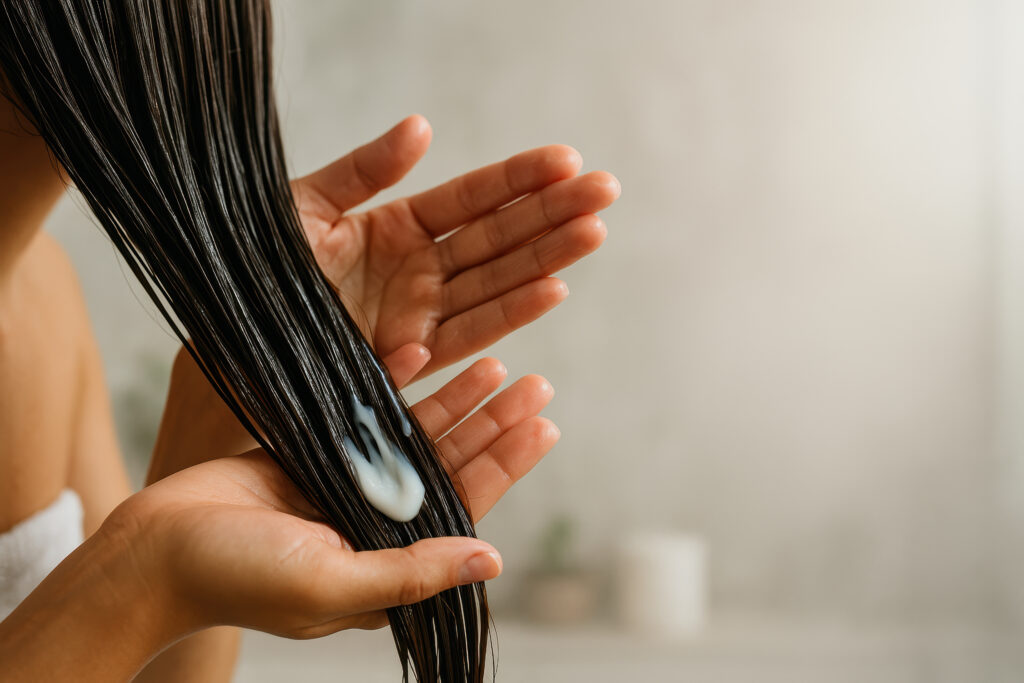
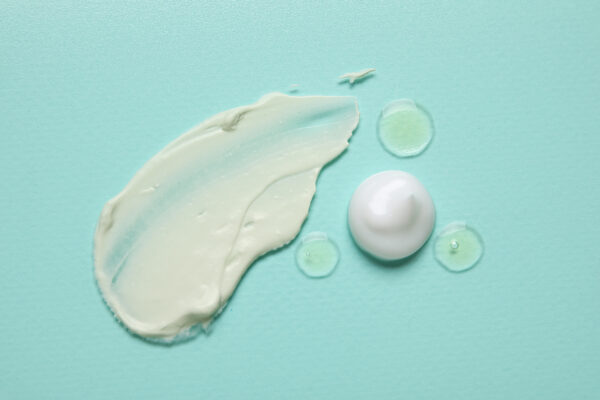
Texture is not simply a finishing touch. It influences how consumers interact with a product from the moment it leaves the package.
A moisturizer may be designed to deliver hydration, but its viscosity, spreadability, rub-out, and residual feel contribute to the overall user experience.
These characteristics are influenced by formulation structure, ingredient interactions, and processing conditions.
For example, two emulsions with similar apparent viscosity may feel different during application because they respond differently to shear and friction.
Formulators can evaluate these differences through a combination of instrumental measurements and structured sensory assessments.
Important considerations include:
✨ Pickup and dispensing: Does the product leave the package easily and consistently?
🧴 Spreadability: How readily does it distribute across the skin?
💧 After-feel: Does it leave a desirable finish after application?
🔬 Consistency: Does the sensory profile remain acceptable as the product ages?
An effective formulation balances functional performance with an experience that supports the product’s intended positioning.
Consider Processing From the Beginning
A formula that performs well in a laboratory batch may behave differently during larger-scale manufacturing.
Mixing speed, shear conditions, temperature, ingredient addition order, and cooling profiles can influence the resulting structure of a cosmetic product.
For emulsions, these variables may affect droplet formation, viscosity, and long-term physical stability.
For polymer-thickened systems, hydration and processing conditions can influence viscosity development and flow behavior.
A practical formulation strategy therefore considers manufacturing feasibility during development rather than treating scale-up as a separate problem.
Useful questions include:
⚙️ Can the formulation be produced using available equipment?
🌡️ Are its processing temperatures compatible with the selected materials?
🧪 Does ingredient addition order influence the final result?
📊 Which processing parameters require monitoring to maintain consistency?
Addressing these considerations early helps formulators identify potential manufacturing challenges before they become larger development problems.
🔬 Validate the Finished Product, Not Just the Concept
A promising prototype is an important milestone, but it does not establish that a product will remain suitable throughout its intended shelf life.
Finished-product evaluation should reflect the formulation’s composition, packaging, intended use, and anticipated storage conditions.
Depending on the product, the evaluation may include:
🔬 Stability testing: Monitoring appearance, phase behavior, viscosity, pH, and other relevant properties over time.
🦠 Microbiological evaluation: Assessing microbial quality and preservation adequacy using appropriate risk-based methods.
📦 Packaging compatibility: Evaluating interactions between the formula and its intended container.
✨ Sensory assessment: Confirming that the desired experience is maintained.
📈 Performance testing: Generating evidence relevant to intended product claims.
No single testing program is appropriate for every cosmetic product. The methods and acceptance criteria should be selected and justified according to the specific formulation and its intended market.
The goal is to establish that the finished product delivers consistently, not simply that an initial prototype appears successful.
🌿 Make Every Formulation Decision Count
Skinimalism 2.0 is often associated with streamlined beauty routines and multifunctional products.
For cosmetic formulators, it offers a broader principle: concentrate development efforts on properties that contribute meaningful value.
That means establishing clear objectives, selecting functional ingredients deliberately, evaluating sensory performance, considering manufacturing requirements, and validating the finished system.
A purposeful formula does not need to be the simplest formula possible.
It needs to be appropriately designed for its intended function.
The art of doing less is not about lowering expectations. It’s about focusing development on the decisions that matter most.
This concludes our Skinimalism 2.0 series. Thank you for exploring the science of purposeful formulation with us throughout November.
Formulating With Performance in Mind?
Explore ingredient solutions for sensory quality, formulation structure, and targeted cosmetic benefits.
Keep Exploring Cosmetic Science
Get practical formulation insights, ingredient technologies, and educational content delivered to your inbox.
Resources:
- International Organization for Standardization. (2018). ISO/TR 18811:2018, Cosmetics — Guidelines on the stability testing of cosmetic products.
https://www.iso.org/standard/63465.html - International Organization for Standardization. (2019). ISO 11930:2019, Cosmetics — Microbiology — Evaluation of the antimicrobial protection of a cosmetic product.
https://www.iso.org/standard/75058.html - Akanny, E., & Kohlmann, C. (2024). Predicting tactile sensory attributes of personal care emulsions based on instrumental characterizations: A review. International Journal of Cosmetic Science, 46(6), 1035–1063.
https://doi.org/10.1111/ics.13004 - Industrial Rheology of Cosmetic Products: From Formulation and Microstructure to Scale-Up, Process Control, Quality, Machine Learning, Digital Twins, and Consumer Performance. (2026). Processes, 14(18), 2971.
https://doi.org/10.3390/pr14182971
Citation Note: These resources provide scientific and technical context for cosmetic formulation development, rheology, sensory evaluation, stability testing, and microbiological protection. Testing methods, acceptance criteria, and performance claims must be assessed for each finished formulation and its intended use.