Peptides, Precisely: Peptides at the Root—Scalp and Hair Support
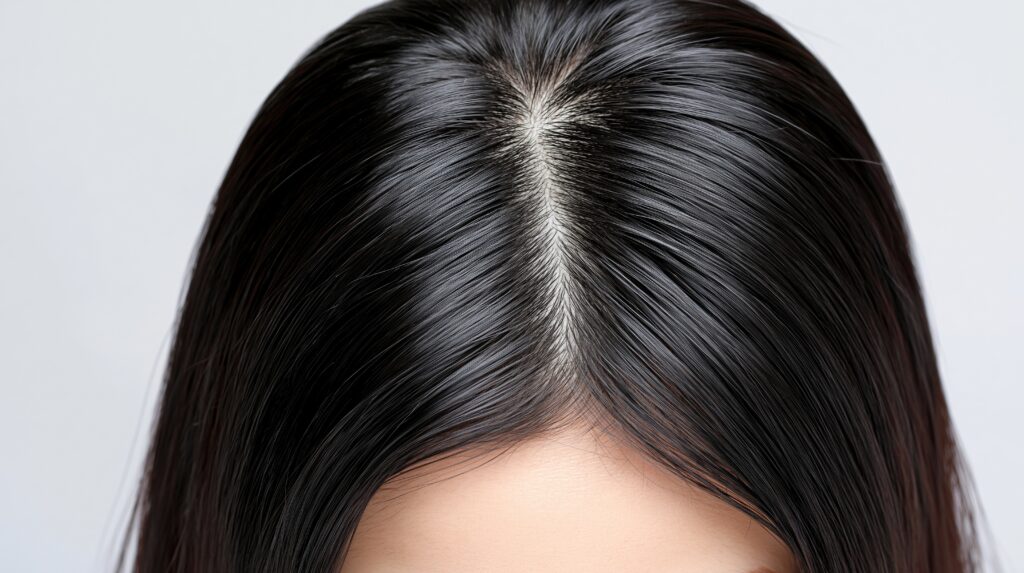
Peptide technology is no longer limited to facial skincare. It is increasingly being applied to the scalp and hair, where different peptide pathways can support follicle anchoring, hair density, scalp condition, fiber strength, sensory improvement and the appearance of greying hair.
In Parts 1 and 2 of Peptides, Precisely, we explored the range of cosmetic peptide applications and the importance of selecting a technology according to the intended skin concern.
Part 3 moves to the root of the formulation strategy: What does the scalp or hair need the peptide technology to accomplish?
A product developed to reduce the appearance of shedding requires a different approach from one designed to repair damaged hair fibers. Likewise, a scalp-density serum has different formulation needs than a rinse-off conditioner intended to improve smoothness and softness.
Scalp Care and Hair Care Are Connected
Healthy-looking hair begins with the environment surrounding the follicle.
The scalp provides the foundation from which the hair grows. Hydration, barrier condition, sebum balance, visible redness and overall scalp comfort can all influence how consumers perceive the health and performance of a hair-care routine.
At the same time, the hair fiber is exposed to mechanical stress, heat styling, coloring, chemical processing, UV exposure and repeated washing. These factors can contribute to roughness, breakage, reduced softness and a less uniform appearance.
Peptide technologies can therefore be used across two related but distinct areas:
- Scalp and follicle support
- Hair-fiber repair and sensory improvement
The formulation strategy should identify which area—or combination of areas—the finished product is intended to address.
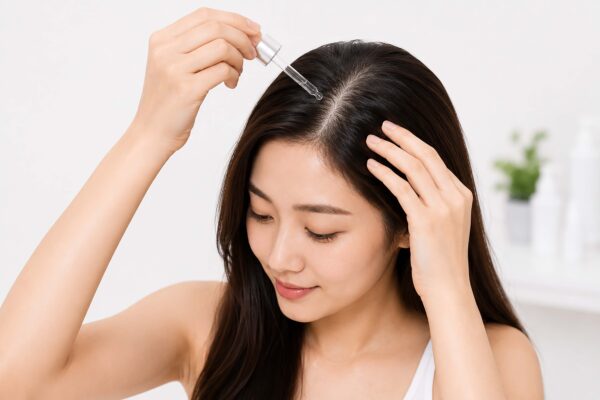
Supporting Hair Anchoring and Density
Hair density is influenced by several factors, including the hair-growth cycle, follicular condition, shedding and the structural environment surrounding the follicle.
Some cosmetic peptide systems are developed to support proteins associated with the extracellular matrix and the anchoring of the hair within the scalp. Others may be combined with complementary ingredients selected for scalp condition, microcirculation-related concepts or sebum balance.
Potential formulation objectives include:
- Reduced appearance of shedding
- Improved visible hair density
- Stronger follicle anchoring
- Thicker- or fuller-looking hair
- Support for the hair-growth cycle
- Improved scalp condition
These strategies are especially relevant for leave-on scalp serums, tonics, lotions and targeted applicator products.
Because visible density changes generally require consistent use, formulators should consider the intended treatment period, application directions and appropriate finished-product testing when developing the claim strategy.
Creating a Better Scalp Environment
A scalp-focused peptide product may need to support more than the follicle alone.
Dryness, excess sebum, moisture loss and visible redness can affect comfort and may discourage consistent product use. A complete scalp-care strategy may therefore combine peptide technologies with hydration, soothing and barrier-supportive ingredients.
Potential benefits include:
- Improved scalp hydration
- Reduced moisture loss
- Improved barrier condition
- Reduced visible redness
- Better sebum balance
- Greater scalp comfort
These benefits can support modern “skinification of hair care” concepts in which the scalp is approached with the same attention given to facial skin.
Suitable formats may include:
- Daily scalp serums
- Lightweight scalp essences
- Leave-on tonics
- Pre-shampoo treatments
- Targeted thinning-hair treatments
- Scalp masks
Sensory properties are particularly important. A scalp product should deliver the intended active system without creating excessive residue, buildup, greasiness or interference with styling.
Hair-Fiber Repair
The hair fiber is biologically different from living scalp tissue. Once the hair emerges from the follicle, formulation benefits focus primarily on protecting, conditioning and improving the existing strand.
Peptide and protein-derived technologies may interact with damaged areas of the hair fiber, helping improve its surface condition and resistance to mechanical stress.
Potential formulation goals include:
- Reduced visible damage
- Improved resistance to breakage
- Smoother-looking cuticles
- Better manageability
- Improved appearance of chemically treated hair
- Stronger-feeling hair
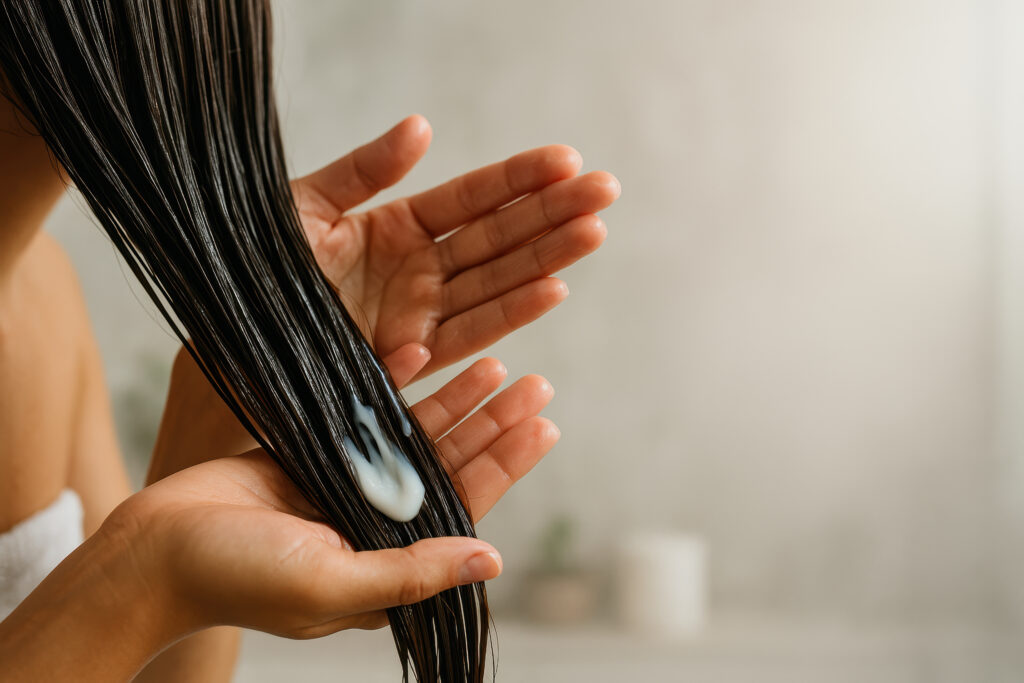
Hair-repair technologies can be incorporated into shampoos, conditioners, masks, leave-in treatments, styling products and concentrated repair serums.
The finished formulation should be evaluated on the relevant hair type and damage condition. Results on bleached or chemically processed hair may differ from results on untreated hair.
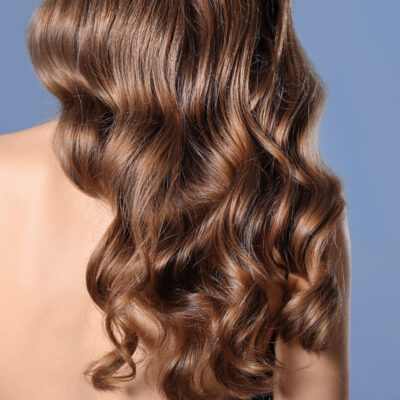
Strength, Smoothness and Softness
Hair strength and sensory performance are related but not identical objectives.
A technology may help reinforce damaged hair while also improving the way the fiber feels and behaves. For the consumer, benefits such as softness, smoothness, combability and reduced friction are often among the first noticeable signs of product performance.
A peptide-based conditioning strategy may support:
- Improved tensile strength
- Reduced breakage during grooming
- Smoother fiber surfaces
- Improved wet and dry combability
- Greater softness
- Reduced roughness
- Better manageability
These benefits are relevant for rinse-off and leave-on products, particularly formulas developed for dry, damaged, colored or frequently styled hair.
The surrounding conditioning system remains essential. Peptides should be evaluated alongside surfactants, cationic conditioners, polymers, emollients and other components that influence deposition and sensory performance.
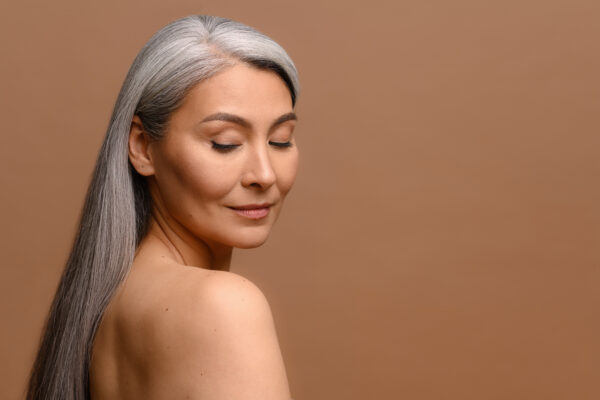
Peptide Strategies for the Appearance of Greying Hair
Hair greying is associated with changes in pigment production within the hair follicle. As melanocyte activity and melanin transfer decline, newly formed hair fibers contain less pigment.
Certain cosmetic peptide strategies are designed around pathways associated with melanogenesis and the maintenance of natural-looking hair pigmentation.
Potential formulation concepts include:
- Anti-greying scalp serums
- Pigmentation-support treatments
- Preventive hair-aging products
- Scalp and hair longevity concepts
- Leave-on products for mature hair
This is different from applying a temporary colorant to the hair shaft. The formulation story focuses on supporting the biological pathways connected with pigment formation as new hair grows.
Because hair pigmentation changes occur over the growth cycle, these products should be positioned as progressive treatments rather than immediate color solutions.
Match the Peptide Strategy to the Hair Goal
Different hair and scalp concerns require different peptide approaches.
Support follicle anchoring and density
Select a technology designed around the follicular environment, extracellular-matrix support or reduced appearance of shedding.
Improve scalp condition
Consider a peptide system that complements hydration, barrier support, soothing and sebum management.
Repair damaged hair fibers
Choose a technology intended to interact with damaged areas and improve the appearance and strength of the existing hair shaft.
Improve strength and sensory performance
Use a peptide or protein-derived system that supports smoothness, softness, combability and resistance to breakage.
Address the appearance of greying hair
Explore peptide strategies connected with melanogenesis and progressive pigmentation support.
Before selecting the technology, consider:
- Is the product intended for the scalp, hair fiber or both?
- Is the primary goal reduced shedding, density, repair, sensory improvement or pigmentation support?
- Will the product be rinsed off or left on?
- How frequently will the consumer apply it?
- What treatment period is required to demonstrate the benefit?
- Which scalp or hair type will be used for finished-product testing?
- How will the peptide interact with the surrounding formulation system?
Peptides can support multiple points within the hair-care routine, but they are not interchangeable. The strongest formulation begins with a specific scalp or hair objective and selects the peptide pathway accordingly.
Peptides, Precisely demonstrates how one ingredient category can extend across a wide range of applications—from targeted skincare and specialized beauty treatments to scalp condition, hair density, repair and pigmentation support.
Developing a peptide formula for a specific hair or scalp goal?
Contact our sales team for product recommendations, technical information, samples and formulation support.
1. Fan, C., et al. “Overview of Short Peptides for Hair Loss.” International Journal of Molecular Sciences, 2026. View the review
2. “Topical Alternatives for Hair Loss: Beyond the Conventional.” Journal of Clinical Medicine, 2025. View the review
3. “Bioengineering the Hair Follicle.” Organogenesis. View the review
4. “Natural Products and Their Derivatives as Candidate Treatments for Hair Greying: From Drug Discovery to Molecular Mechanisms.” 2026. View the review
This article discusses cosmetic peptide categories, mechanisms and formulation applications based on the cited scientific resources. Finished-product performance and claims should be evaluated for the selected peptide technology, concentration, formulation, application and intended market.