2026 Haircare Trends Are Getting More Specific—And Formulas Can’t Stay Generic
Haircare is entering a stricter era: products will be expected to explain themselves. In 2026, trend momentum is clustering around specificity—hair and scalp routines shaped by life stage, environment, chemical services, and styling habits—paired with a growing intolerance for results that only look good under ideal conditions.
That shift rewards brands that translate trend language into formulation logic. It also raises the bar: a product that feels great at application but fails after humidity, heat styling, or repeat washing won’t earn repeat purchase. The path forward is straightforward: build durable performance from known fiber mechanics—friction, water management, film formation, and stress buffering—then validate it with endpoints that match how people actually live with their hair.
Hair Fiber Reality Check: Damage Is Chemistry + Physics, Not a Single “Problem”
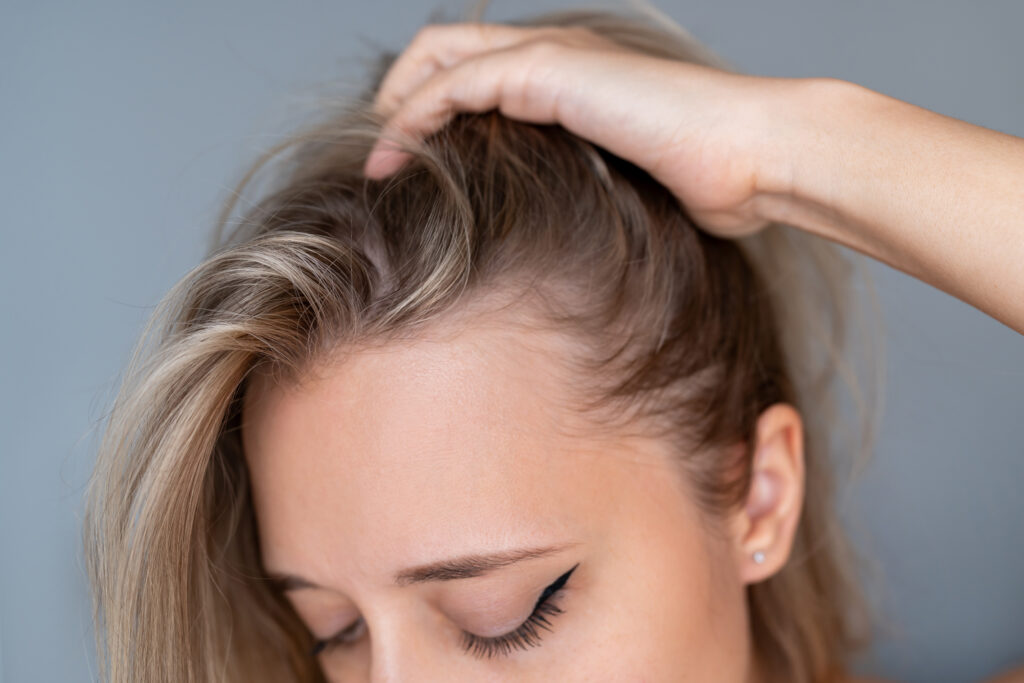
If 2026 haircare is about prevention and preservation, it helps to name what we’re preserving. Hair is a composite fiber. The cuticle is the outer, layered protective structure; the cortex provides most of the mechanical strength. When cuticles lift, chip, or lose surface lipids, friction rises. Then combing forces rise. Then the probability of breakage increases. Conditioning is not “cosmetic masking” when it measurably improves combability and reduces grooming stress.
The main stressors aren’t new; what changes is how they stack. Heat styling alters hair surface properties and can contribute to internal damage depending on temperature and exposure. UV exposure contributes to protein degradation and color changes over time. Chemical services increase porosity and vulnerability to subsequent thermal and mechanical stress. In other words: hair damage is rarely one variable. It’s a sequence of variables that compounds. If your formula only targets one link in the chain, it will show—especially in diverse hair types and real-life routines.
Trend #1: “Less-Damaging” Is Now a Performance Requirement
A major 2026 signal is a push toward less-damaging approaches—including professional services that aim to reduce the cost of beauty paid by the hair fiber over time. That mindset changes what “conditioning” means in a brief.
Modern conditioning has to do more than provide instant slip. It needs to support repeat use without unpleasant build-up, keep fiber feel consistent across humidity swings, and reduce the mechanical stress that turns detangling into breakage. If the product is positioned for color-treated hair, the conditioning system must also help preserve surface smoothness and shine—because those are the visible outputs of how well the surface is maintained.
A Natural Cationic Conditioning System That Doesn’t Default to Traditional Quats
Classic conditioners often rely on quats because they work: a cationic charge binds to the more anionic character of damaged hair, improving detangling and reducing friction. The modern challenge is delivering that same functional outcome while meeting rising expectations around ingredient origin and biodegradability—without sacrificing performance.
Kerashaft ALAB is positioned as a 100% natural cationic conditioning active built from hydrolyzed vegetable protein, bio-fermented components (including Saccharomyces polypeptides), and amino acids in water. Mechanistically, the strategy is clean: use cationic behavior and film-forming/protein interactions to support improved combability, frizz reduction, shine, and resistance to breakage—without defaulting to traditional quats.
That’s the right engineering logic for 2026 because it maps to a core conditioning principle: reduce friction and combing work, and you reduce one of the most common pathways to breakage. For many hair types—especially damaged, porous, and textured hair—detangling is not a minor moment; it’s one of the highest-stress events in the routine.
Trend #2: Moisture + Manageability That Holds Up Over Time
When hair is treated as a long-term asset, hydration stops being a quick sensorial trick and becomes a structural-and-handling strategy. Water content influences suppleness and flexibility; dryness amplifies static, frizz, and combing forces. A moisture-forward system should be judged by multiple endpoints: not only immediate softness, but also durability across time and stress.
MultiMoist CLR™ (INCI: fructooligosaccharides, beet root extract, water) is positioned as a hydration-and-performance active with direct relevance for hair handling. The benefit set typically associated with this kind of approach—greater suppleness, improved combability, reduced static flyaway, reduced frizz, improved shine, and support for breakage reduction—reads like a checklist of what consumers interpret as “healthy hair,” especially under non-ideal conditions.
From a formulation standpoint, this matters because moisture isn’t just about “adding water.” It’s about how the formula helps hair manage water—how it feels after rinse-off, how it behaves after drying, and how quickly it degrades when exposed to humidity, repeated brushing, or heat styling.
Trend #3: Protection You Can Feel—Heat, UV, and Environmental Stress
Protection claims often fail because they’re described as an idea rather than built as a material property. Heat, UV, saltwater, and mechanical stress have different pathways, but they converge on predictable outcomes: hair feels rougher, tangles more easily, looks duller, loses definition, and breaks more readily.
Abysoft™ (INCI: Crambe Abyssinica Seed Oil Phytosterol Esters) is positioned as a multifunctional lipidic performance enhancer that forms a delicate film—described as a “second skin” veil—supporting conditioning, moisture, and protection on hair. In practical terms, lipidic film strategies earn their place when they can improve surface smoothness, shine, and “softness that lasts,” while supporting protection narratives tied to heat and environmental exposure.
This also aligns with what consumers actually reward. Shine and softness are not abstract—they’re the visible and tactile outputs of surface condition and friction. If the film system is too heavy, performance becomes greasy. If it’s too light, benefits fade quickly. The target in 2026 is a protective feel that is noticeable but not burdensome, especially for diverse textures and styling routines.
Putting It Together: 3 Ingredient Roles, 1 Coherent 2026 Haircare System
When trends push toward specificity, it becomes risky to build haircare as a pile of disconnected “nice-to-haves.” A stronger approach is to define ingredient roles inside a system—so performance can be tuned and defended.
1) Conditioning backbone (detangling + friction reduction):
Use Kerashaft ALAB to support combability, frizz reduction, and breakage resistance—especially when you want a natural-origin cationic conditioning strategy without defaulting to traditional quats.
2) Moisture-driven manageability (hair feel + flyaway/frizz control):
Use MultiMoist CLR™ to support suppleness and reduce the way hair “misbehaves” as it dries, brushes, and re-encounters humidity.
3) Protective film + sensorial durability (softness/shine that lasts):
Use Abysoft™ to reinforce the protective, smooth-surface feel that consumers associate with healthier hair—particularly in leave-on care and styling products where durability is the point.
For brand teams, the advantage of this structure is clarity: each ingredient has a job, and each job maps to measurable outcomes. For R&D teams, it supports optimization. If combing forces are still high, you tune the conditioning backbone. If flyaway returns by afternoon, you adjust the moisture strategy. If shine collapses after heat styling, you reinforce the protective film approach.
Validation Plan: The Tests That Make These Claims Believable
A 2026 haircare story becomes persuasive when the validation plan is obvious. If you can’t point to how performance was measured, the claim becomes a debate about adjectives.
A practical test set for this three-role system looks like this:
- Combability / combing work (wet + dry): Confirms detangling improvements and provides a rational link to reduced grooming stress.
- Breakage under controlled grooming cycles: Supports “resistance to breakage” in a way that is hard to dismiss as subjective.
- Static flyaway + frizz under humidity challenge: Matches real-world failure conditions for daily styling and leave-on care.
- Shine assessment (instrumental + expert panel): Connects surface management to visible outcomes consumers recognize immediately.
- Heat-stress protocol (straightener or blow-dry cycles): Supports thermal protection positioning when the brief targets frequent stylers.
- Color retention under UV exposure (when relevant): Aligns with “preservation” positioning for color-treated routines.
The point is not to run every test for every launch. The point is to select endpoints that match the promise—then show the chain of reasoning from ingredient role → mechanism → measurement.
What This Means for 2026 Launches
Haircare in 2026 is being pulled toward two standards at once: higher specificity and higher believability. The brands that win won’t be the ones that add the most claims; they’ll be the ones that build formulas with clear roles and validate the few promises that matter.
Kerashaft ALAB, MultiMoist CLR™, and Abysoft™ form a coherent toolkit for this reality: a natural cationic conditioning backbone, a moisture/handle amplifier, and a protective film strategy that supports sensorial durability under stress. If you want trend alignment that still reads like formulation science, this system gives you a structure you can defend.
Ready to evaluate Kerashaft ALAB?
Use this natural cationic conditioning active to target slip, detangling, and frizz control—then validate performance under real-life grooming stress.
Forward this article to your Deveraux account managerReady to evaluate MultiMoist CLR™?
Build moisture-driven manageability that lasts—supporting suppleness, shine, and frizz/static control across humidity swings and daily styling.
Forward this article to your Deveraux account managerReady to evaluate Abysoft™?
Add a lightweight lipidic film strategy for softness, shine, and protective feel—supporting hair performance under heat styling and environmental stress.
Forward this article to your Deveraux account managerResources
- BeautyMatter. (2026, January 13). The haircare trends set to define 2026.
https://beautymatter.com/articles/the-haircare-trends-set-to-define-2026
- Fernandes, C., et al. (2023). On hair care physicochemistry: From structure and degradation to novel biobased conditioning agents.
Polymers, 15(3), 608.
https://pmc.ncbi.nlm.nih.gov/articles/PMC9921463/
- Dias, M. F. R. G. (2015). Hair cosmetics: An overview.
International Journal of Trichology, 7(1), 2–15.
https://pmc.ncbi.nlm.nih.gov/articles/PMC4387693/
- Lee, Y., Yoon, J., & Park, K. (2011). Hair shaft damage from heat and drying time of hair dryer.
Annals of Dermatology, 23(4), 455–462.
https://anndermatol.org/DOIx.php?id=10.5021/ad.2011.23.4.455
Citation note (why these sources): BeautyMatter anchors the trend framing for 2026. The peer-reviewed/open-access papers are used to support the mechanistic logic behind conditioning, friction, hair structure, and heat-related damage so the blog reads as defensible technical marketing—not trend-only commentary.