Executive Summary
Menopausal skin dryness often “plateaus” because the brief is bigger than adding humectants: hydration must last, barrier comfort must improve, and visible roughness must soften without a heavy, greasy feel. This article lays out a two-active strategy—MultiMoist CLR™ for measurable, multi-hour moisturization with a differentiation-linked rationale, and Phytosan™ K to support a more resilient, smoother-looking skin response under day-to-day stress. The result is a formulation roadmap that turns common 45+ complaints (tightness by noon, crepey texture, sensitivity) into practical choices and testable endpoints.
When “More Humectant” Fails: Long-Lasting Hydration for Menopausal Skin
If a moisturizer only adds water, menopausal skin will reveal the limitation quickly.
Many women in peri- and post-menopause describe a repeatable pattern: skin feels comfortable after application, then tight again by midday. Texture looks rougher even when the formula is rich. Products that once felt fine begin to feel reactive. These are not isolated complaints. They point to a formulation challenge that is broader than “dry skin” and more specific than simply increasing humectant load.
For brand and R&D teams, this is where menopause-focused skin care often succeeds or fails. A product concept may be positioned around hydration, firmness, and sensitivity support, but if the formulation architecture is not built for lasting water retention, barrier comfort, and visible texture improvement, consumer perception drops quickly. The opportunity is not just to make a richer cream. It is to design a system that addresses how menopausal skin behaves biologically and how users actually experience it over the day. Clinical literature supports this framing, linking estrogen decline with changes in hydration, extracellular matrix support, and overall skin quality.
Menopausal skin dryness isn’t a single problem
Menopausal skin dryness is often described in consumer language as “thin,” “tight,” “dull,” or “crepey.” Those words matter because they map to real structural and functional changes. Estrogen influences multiple skin parameters, including collagen, glycosaminoglycans, barrier lipids, and skin thickness. When estrogen declines, hydration and resilience are affected together rather than as separate issues.
One of the most relevant changes for formulators is the stratum corneum lipid profile. Published data in post-menopausal skin show shifts in ceramide composition, including chain-length changes, which can affect how well the barrier retains moisture and maintains comfort. That means even a well-known humectant system can underperform if the overall formula does not support barrier function and skin organization at the same time.
This is why many menopause-focused formulas “plateau.” They improve initial hydration, but they do not sustain comfort, and they do not significantly improve the look of roughness or micro-scaling. The result is a formula that tests well at application but does not align with how the user evaluates performance over a full day.
The Three Formulation Challenges Menopausal Skin Exposes
1) Hydration that spikes, then drops
Humectants are effective tools, but they are only one part of hydration design. In menopausal skin, the problem is often not the ability to attract water at application — it is the ability to retain hydration and maintain comfort over time.
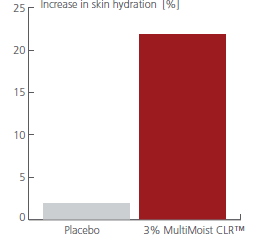
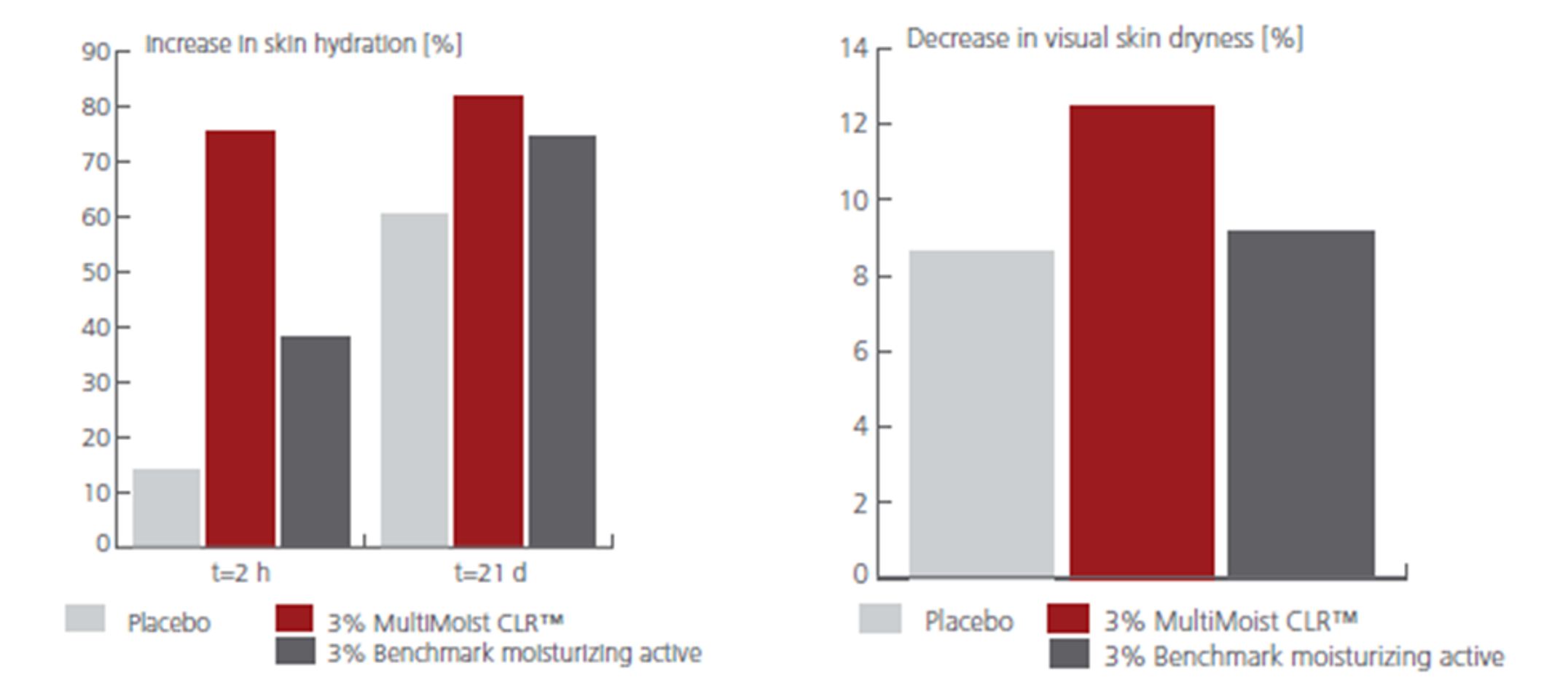
This distinction matters in substantiation planning. A single early timepoint may capture an immediate hydration increase, but it can miss the “by noon” failure that users report. For this category, a better approach is to formulate and test for multi-hour hydration performance, then pair those data with visible dryness and feel assessments.
2) Barrier weakness and reduced tolerance
Menopausal skin is often described as both drier and more reactive. That is a practical clue that barrier support and hydration should be built together, not treated as separate claims.
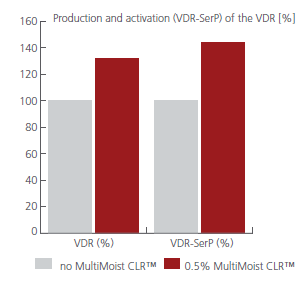
A useful biological framework here is epidermal differentiation. Skin hydration does not depend only on surface occlusion or water-binding ingredients. It also depends on how effectively the epidermis organizes and produces the structures needed for a functional barrier. Vitamin D receptor (VDR)-related signaling is relevant to keratinocyte differentiation and barrier-associated protein expression, which makes it a valuable pathway-level concept for explaining durable moisturization strategies.
3) Visible roughness, scaliness, and “crepey” texture
Consumers often interpret roughness and surface irregularity as “aging” before they notice changes in firmness. In menopausal skin, reduced hydration and barrier changes can make texture more visible by increasing dullness, scaling, and uneven light reflection.
This creates a practical formulation target: not just hydration values, but improvement in the look and feel of dryness. A formula that feels rich but leaves a heavy residue may not solve the problem if it does not improve visible texture. The better outcome is a system that supports smoother-looking skin while maintaining modern sensorial expectations.
A Two-Active Strategy for Menopausal Aging Skin
A strong menopause-focused hydration concept benefits from addressing two linked needs at once:
- Long-lasting moisturization and barrier-related support
- Resilience support for skin under daily stressors (environment, cleansing, friction, temperature shifts, and routine actives)
MultiMoist CLR™: Moisturization with a Differentiation-Linked Rationale
MultiMoist CLR™ is a water-soluble active commonly positioned as a vitamin D-like moisturization approach, built around fructooligosaccharides and beet root extract. Its value in this category is not only that it supports hydration, but that it provides a mechanism-based rationale tied to epidermal differentiation and barrier quality.
That is important for technical marketing. Menopausal skin often does not respond well to “just increase humectants” thinking. A differentiation-linked moisturization strategy helps explain why a formula may perform better over time and why hydration retention can improve without relying only on heavier occlusion.
Another strength is that this type of active is often supported by multiple instrumental moisturization readouts, including multi-hour hydration testing and imaging-based methods that make patchy dryness easier to visualize. For menopause-focused messaging, that combination is useful because it translates directly into claims around lasting comfort, visible dryness improvement, and smoother-looking skin.
Phytosan™ K: Resilience and Regeneration Support for Aging Skin
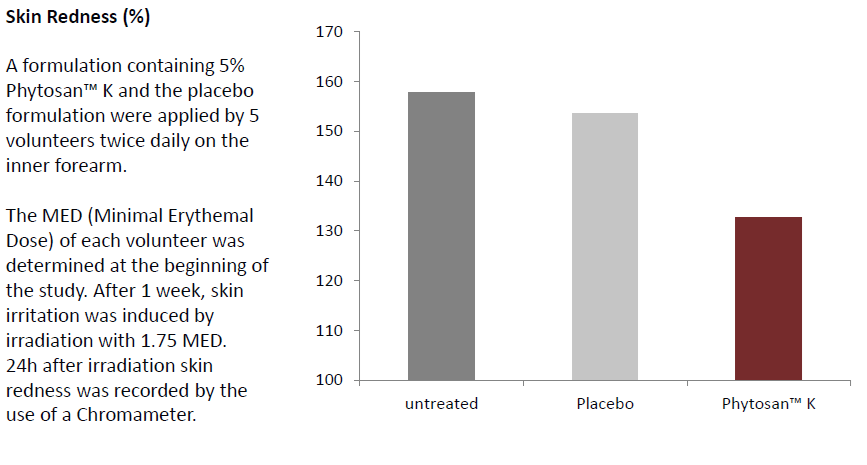
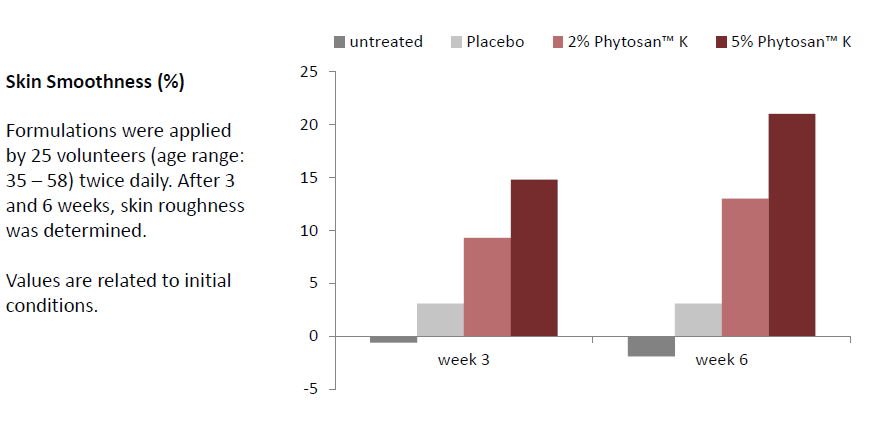
Phytosan™ K adds a complementary dimension. Rather than functioning primarily as a hydration lever, it fits the role of resilience support in aging skin, especially where visible roughness, reduced elasticity, and stress response are part of the product brief.
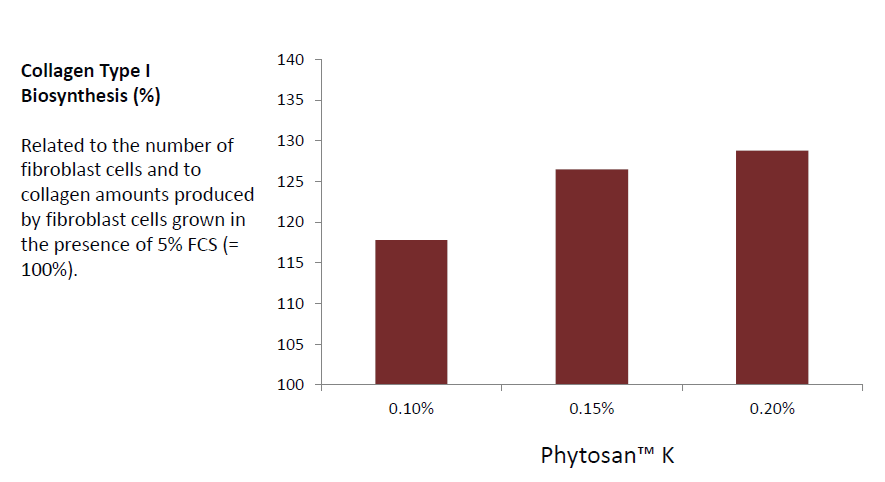
For menopausal skin, this matters because hydration alone may improve comfort without fully improving how skin looks and recovers. A resilience-oriented active helps broaden the formula from “moisturizer” to “aging skin support system,” especially in products designed for women reporting thin-feeling, fragile-feeling, or less bouncy skin.
UV exposure can still be referenced here, but as one example of a daily stressor rather than the article’s central focus. That keeps the story aligned with menopausal aging overall: hydration retention, visible texture, barrier comfort, and recovery capacity.
Why These Two Ingredients Work Better Together
Menopausal skin dryness often presents as a combination of:
- reduced hydration persistence
- compromised comfort/tolerance
- more visible surface texture
A single ingredient can support one of these domains, but rarely all three. A two-active strategy allows a formulator to build a more complete response:
- Hydration and barrier-related support (longer-lasting comfort, less “tight by noon” perception)
- Resilience and smoother-looking skin support (better visual and tactile outcomes)
- A broader, more defensible claim framework for 45+ skin concerns
This also creates a cleaner technical story for internal review. Instead of a formula that lists many “good ingredients,” the design becomes a system with clear roles and measurable outcomes.
Formulation Guidance for Menopause-Focused Product Development
Start with the complaint, not the ingredient list
A menopause-focused brief is most useful when translated into testable formulation targets. Common complaints can be converted into endpoints:
- “Feels tight again by noon” → multi-hour hydration performance
- “Looks crepey or rough” → visible dryness/texture assessment
- “Feels more sensitive than before” → comfort/tolerance-focused product design and usage testing
This approach helps align marketing and R&D early. It prevents the common issue where the formula is optimized for a claim keyword, but not for the user’s actual performance expectations.
Build for sensory acceptance as well as efficacy
Menopausal skin consumers may want richer care, but they do not necessarily want heavy residue. This is especially true in day products layered under sunscreen or makeup. A technically strong formula can still underperform commercially if the sensorial profile feels greasy, pills, or leaves persistent tack.
That makes texture engineering central to the concept. The hydration system should support lasting comfort and visible dryness reduction while maintaining a finish appropriate for repeated daytime use. In practice, this often means balancing humectancy, film-forming behavior, and barrier-supportive architecture rather than maximizing one category.
Watch formulation compatibility and preservation strategy
When formulating with multiple actives for mature skin, practical compatibility matters as much as mechanism. Electrolyte sensitivity, rheology system tolerance, pH range, and preservation strategy can all influence whether the final product remains stable and acceptable over shelf life.
This is especially relevant in modern gel-creams and water-gel systems, where aesthetics are high priority and thickeners may be sensitive to salts or other formulation components. Compatibility planning early in prototype development reduces rework and helps preserve the intended sensory profile.
Claims That Hold Up in Technical and Commercial Review
Menopause-focused claims perform best when they match both biology and user experience. The strongest positioning in this category is usually not “anti-aging” in the abstract, but specific support claims connected to visible and felt outcomes.
Useful claim territories include:
- long-lasting hydration
- improved skin comfort
- helps reduce the look of dryness and roughness
- supports smoother-looking skin
- supports skin resilience in mature skin
These claims are easier to defend when paired with a mixed substantiation strategy: instrumental hydration over multiple timepoints, visible dryness/texture methods, and controlled perception data. This combination reflects how users judge products in real life while still satisfying technical scrutiny.
It is also important to keep mechanism language in cosmetic territory. Pathway-level explanations can strengthen credibility, but the final claims should remain grounded in appearance and cosmetic performance rather than medical outcomes.
A Practical Product Architecture for 45+ Skin
One of the most efficient ways to build a menopause-focused line is to develop a single efficacy story that can be expressed across multiple formats. This supports brand consistency while allowing different usage occasions and sensorial preferences.
A practical architecture might include:
Water-gel serum
Designed for fast absorption and layering. Ideal for users who want hydration support without weight. This format can carry the “all-day comfort” message in a lightweight profile.
Gel-cream moisturizer
A strong primary format for balancing hydration persistence, visible dryness improvement, and modern sensory expectations. This is often the best platform for demonstrating the full two-active concept.
Body lotion for dry, texture-prone zones
Menopausal dryness frequently shows up in highly visible, comfort-sensitive areas like shins and forearms. A body product gives the brand an opportunity to demonstrate practical all-day performance where dryness complaints are often strongest.
Across all formats, the key is consistency in the product story: lasting hydration, better comfort, smoother-looking texture, and support for mature-skin resilience.
The Better Brief for Menopausal Skin
The most effective menopause-focused formulas are not built by simply increasing richness or adding more familiar humectants. They are built by recognizing that menopausal skin often needs a broader solution: hydration that persists, barrier comfort that improves tolerance, and visible texture support that consumers can actually see.
That is the advantage of a two-active strategy built around complementary roles. One ingredient supports durable moisturization and barrier-related skin organization. The other supports resilience and regeneration-related outcomes in aging skin. Together, they create a formulation path that is easier to explain, easier to test, and more likely to hold up in both technical review and market use.
For brand and R&D teams, that is the real opportunity in this category: not another “menopause moisturizer,” but a product system designed around how menopausal skin actually behaves.
Ready to evaluate these 45+ skin hydration actives?
Move from insight to formulation planning. Review the data and explore where MultiMoist CLR™ and Phytosan™ K may fit into your next menopause-focused hydration and resilience concept.
Resources
- Bikle, D. D. (2012). Vitamin D and the skin: Physiology and pathophysiology. Dermato-Endocrinology, 4(3), 253–265.
https://pmc.ncbi.nlm.nih.gov/articles/PMC3687803/ - Kendall, A. C., Kaur, M., Hall, W., Rhymer, J., Kurian, J., & Nicolaou, A. (2022). Menopause induces changes to the stratum corneum ceramide profile which are prevented by hormone replacement therapy. Scientific Reports, 12, Article 21424.
https://www.nature.com/articles/s41598-022-26095-0 - Lephart, E. D. (2020). Menopause and the skin: Old favorites and new innovations in cosmeceuticals for estrogen-deficient skin. International Journal of Molecular Sciences, 21(2), 655.
https://pmc.ncbi.nlm.nih.gov/articles/PMC7859014/ - Viscomi, B., et al. (2025). Managing menopausal skin changes: A narrative review of the role of hormone replacement therapy and adjunctive approaches.
[Peer-reviewed review article].
https://pmc.ncbi.nlm.nih.gov/articles/PMC12374573/ - CosmeticsDesign-Europe. (2024, August 14). Formulating skin care for menopausal women.
https://www.cosmeticsdesign-europe.com/Article/2024/08/14/formulating-skin-care-for-menopausal-women/ - CLR Berlin. (n.d.). MultiMoist CLR™ brochure [Technical brochure PDF].
https://www.deverauxspecialties.com/wp-content/uploads/2026/02/multimoist-clr-brochure.pdf - CLR Berlin. (2018). Phytosan™ K: Anti-photoaging & skin regeneration [Technical brochure PDF].
https://www.deverauxspecialties.com/wp-content/uploads/2026/02/phytosan-k-anti-photoaging-skin-regeneration_2018.pdf
Citation Note
Peer-reviewed and open-access publications were prioritized to support claims related to
menopausal skin dryness, barrier lipid changes, and epidermal biology. One industry media source was included to reflect current product-development framing, and technical brochures
were included for ingredient-specific figures and formulation-context data used in the article.